
Why offset printing for acrylic products is a different buying decision
Offset printing for acrylic products sounds straightforward until a buyer tries to match appearance, adhesion, and throughput in the same job. Acrylic is not paper. It is smoother, less forgiving, and often chosen because the finished piece is supposed to look clean, rigid, and durable. That means the printing method matters as much as the design. For sourcing managers and product teams, the real question is not simply whether the image will transfer, but whether the process is stable enough for repeat production and the finish will hold up in the field.
In practice, this topic sits at the intersection of print quality, substrate handling, and production economics. A shop may use a large industrial printing press for sheet-fed work, or an industrial flatbed digital printing machine for rigid panels. The right choice depends on volume, surface treatment, image complexity, and whether the job is a one-off display panel or a recurring product line. The wrong choice can mean wasted material, inconsistent color, or a finish that looks fine at dispatch and disappointing a few weeks later.
Quick takeaways for buyers
If you are evaluating Offset Printing Acrylic options, start with the end use. Decorative signage, retail displays, machine faceplates, branded panels, and presentation pieces all place different demands on the print. High-volume, repetitive graphics often favor sheet-fed offset workflows where the setup cost is justified by quantity. Lower-volume or highly variable work may be better suited to a flatbed digital process, especially when rigid sheets need direct printing.
That distinction matters because some buyers assume a single press can cover every acrylic job. It usually cannot, or at least not economically. A long multi-module press line with enclosed housings and a central digital status display is designed for continuous production, but it is typically a different animal from a gantry-based flatbed machine built for rigid substrates. Both can belong in a modern print operation. They are not interchangeable.
What makes acrylic challenging to print on
Acrylic presents a smooth, hard surface with little natural absorbency. That is one reason it looks premium, but it also makes ink behavior less predictable than on paper or board. Surface preparation, ink compatibility, and curing or drying method all become more important. In some cases, pre-treatment is needed; in others, the process relies on the machine, inks, and substrate specification working together from the start. Buyers should be cautious about any supplier who treats acrylic like a routine sheet material.
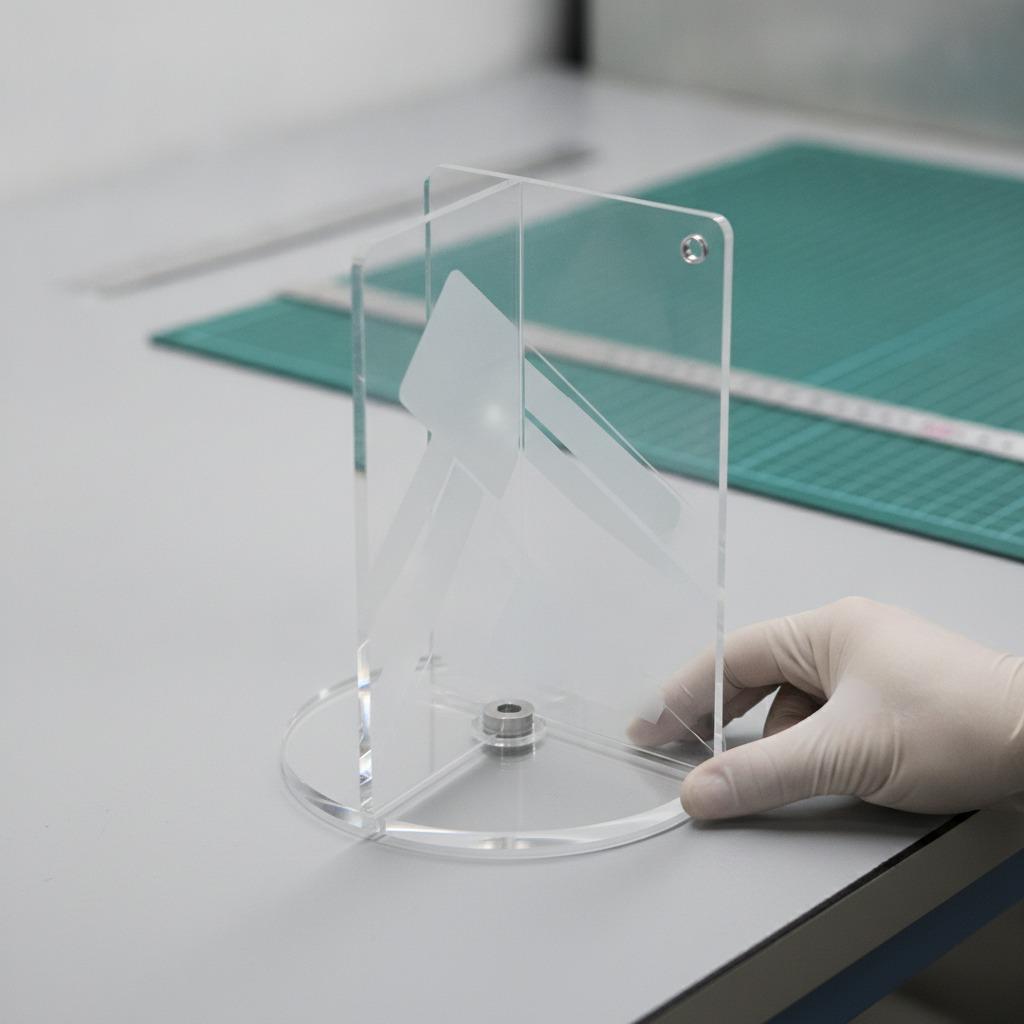
There is also the matter of handling. Acrylic sheets can scratch, pick up dust, and show edge defects more readily than many printed substrates. A clean workshop environment and stable sheet transport help. If the machine is a sheet-fed offset press, the feeding and stacking system should be appropriate for rigid or semi-rigid sheets where the process allows it. If it is a UV flatbed printer, the bed size, carriage movement, and alignment system become the key production variables.
Offset printing versus flatbed digital printing
When offset makes sense
Offset printing is usually strongest when the job size is large, the artwork is fixed, and unit economics matter. It is a familiar process for commercial print shops that already run brochure, catalog, or packaging work. For acrylic-related applications, offset may be used where the workflow includes coated sheets or where the acrylic product is part of a broader production chain. The advantage is repeatability once the press is tuned.
When a flatbed system may be the better fit
An industrial flatbed digital printing machine is often more practical for direct printing onto rigid sheets and panels. The gantry bridge, moving carriage, and wide bed are suited to signage, displays, and industrial panel production. If the job includes variable graphics or smaller batches, the flatbed route can reduce setup friction. That said, buyers should confirm whether the machine truly supports the required substrate thickness and whether the print finish meets the project’s appearance target.
Where Secondary Heidelberg Printing fits into the picture
Some buyers also look at Secondary Heidelberg Printing as a sourcing route for used or pre-owned commercial offset equipment. That can be a sensible way to expand capacity without buying new machinery, especially for shops that already understand press maintenance and calibration. The caution, of course, is condition. A used press may still be capable of excellent output, but only if the service history, controls, and production wear are properly checked. A low purchase price can disappear quickly if the machine is uneven, poorly maintained, or unsuitable for the intended substrate range.
Selection criteria that matter in real production
For acrylic-related work, buyers should ask practical questions rather than rely on generic machine claims. What sheet sizes will actually be run? Does the finish need to be glossy, matte, or somewhere in between? Is the product handled by end users, or does it live behind a counter or on a wall? Does the application demand color consistency across long production runs? And how much rework can the program tolerate?
Machine layout matters too. A long press line with multiple connected sections suggests continuous production capability, while a cabinet-style flatbed system with control interface and gantry motion points to wide-format rigid sheet processing. Those visible design cues tell a buyer something useful even when exact model details are not available. They hint at workflow, not just hardware.
Common mistakes buyers make
The most common mistake is treating print quality as the only criterion. For acrylic products, adhesion, scratch resistance, handling marks, and batch consistency often matter just as much. Another frequent issue is underestimating setup. A beautiful sample printed once on a clean trial sheet may not tell you much about actual production behavior.
Buyers also sometimes ignore downstream finishing. Acrylic products may need trimming, mounting, protective films, or edge finishing. If the printing process conflicts with those steps, the whole job becomes harder than it should be. A good supplier will talk about the full workflow, not just the image on the sheet.
Practical next step
If you are comparing Offset Printing for Acrylic Products against flatbed digital alternatives, ask for a substrate-specific sample and a plain explanation of the production route. The right machine is the one that fits your volume, your surface requirements, and your tolerance for changeovers. If you are sourcing equipment, look closely at the machine architecture, the control system, and whether the press or printer is better aligned with rigid-sheet work or high-volume commercial offset production. That choice will shape your quality, your lead time, and probably your margins too.