
Why a CNC Acrylic Charm Is More Than a Small Accessory
A CNC Acrylic Charm looks simple at first glance: a clear, palm-sized piece with printed artwork, a metal clasp, and a clean cut outline. But for sourcing teams and product designers, this kind of item is a useful example of how acrylic, digital printing, and precision cutting come together in a repeatable manufacturing workflow. The real decision is not whether the charm looks good in a photo. It is whether the production method can hold up across short runs, custom artwork changes, and the finish buyers now expect from fandom merchandise, souvenirs, and branded gifts.
That matters because charm-style accessories sit in a difficult middle ground. They are small, but customers inspect them closely. They are decorative, but they still need practical hardware. And they are often sold as collectible items, so edge quality, print alignment, and visual clarity can make the difference between a product that feels premium and one that feels rushed.
What the Finished Part Suggests About the Manufacturing Route
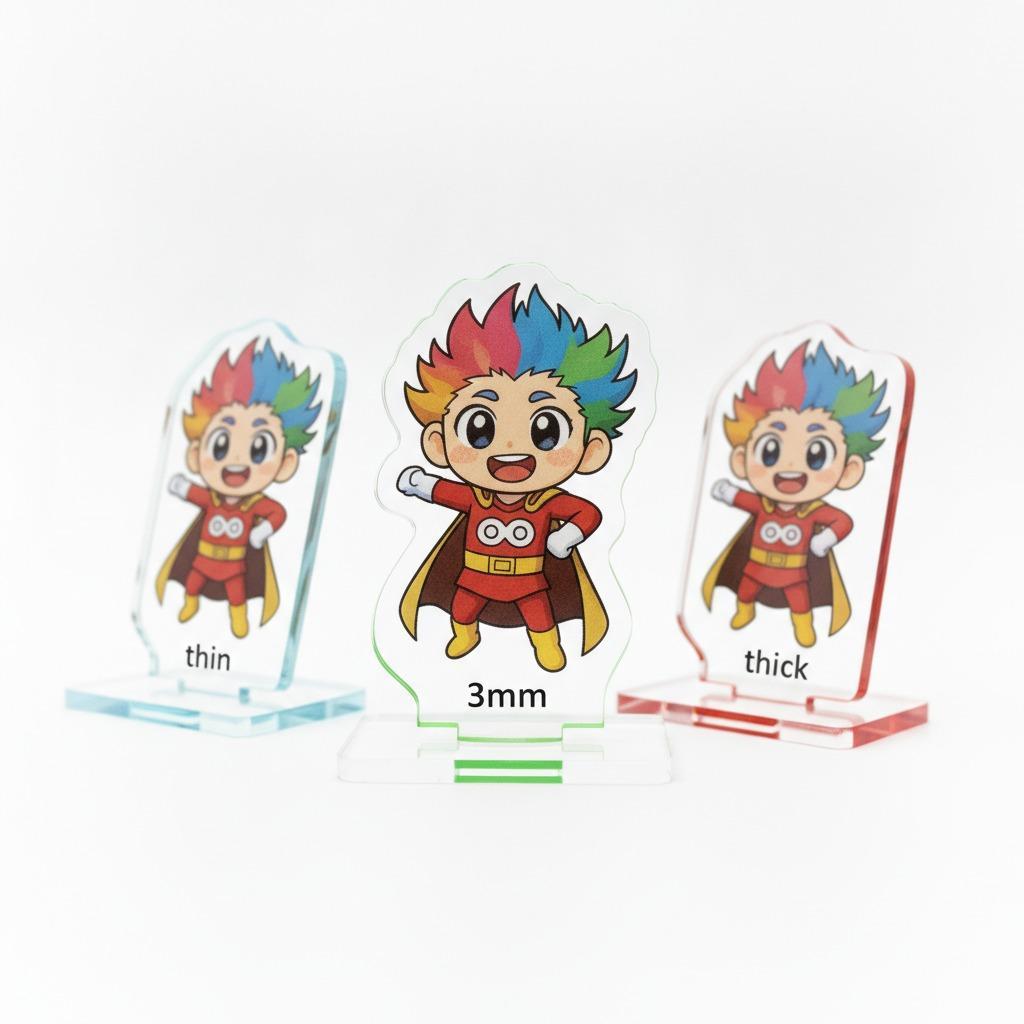
Based on the provided product information, the charm appears to use transparent acrylic with full-color anime-style artwork, a glossy surface, rounded custom die-cut edges, and metal swivel lobster clasp hardware. A likely production route would combine UV printing or a printed insert with laser or CNC die-cutting, followed by assembly of the metal connector. That said, the exact process is not confirmed, so buyers should treat this as a practical inference rather than a guaranteed build spec.
In real production, the appeal of this type of part is consistency. Once artwork placement, cut path, and hardware attachment are set, the same format can be adapted for different characters, logos, or commemorative designs. For contract manufacturers, that means fewer tooling changes than traditional molded accessories, and for buyers it means faster design iteration when the visual content changes frequently.
Where Precision Matters Most
With a CNC Acrylic Charm, the critical details are often the ones people do not notice until they are wrong. A slightly off-center print can make the character art look cheap. Rough edges around the acrylic border can catch light in an unpleasant way, or worse, snag on fabric. If the clasp sits awkwardly, the charm may rotate too much or hang crooked on a bag zipper.
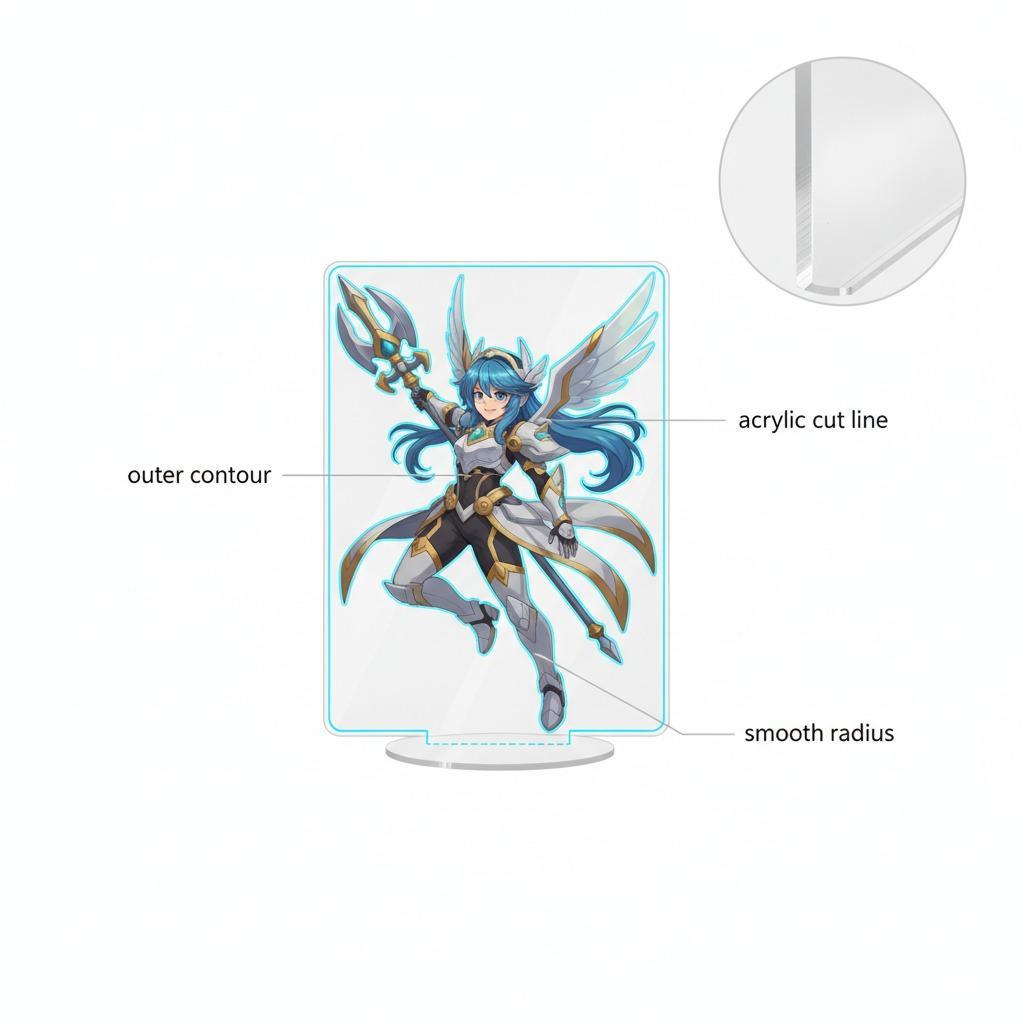
That is why Precision Acrylic Cutting is not just a production phrase; it is a quality-control issue. The cut needs to respect the visual contour of the artwork and leave a clean border. The finish should look deliberate, not hacked out of a sheet. Buyers should also pay attention to how the metal hardware is joined to the acrylic piece. The connector may be small, but it is the load-bearing point in everyday use.
How a Large-Format Flatbed Printer Fits Into the Workflow
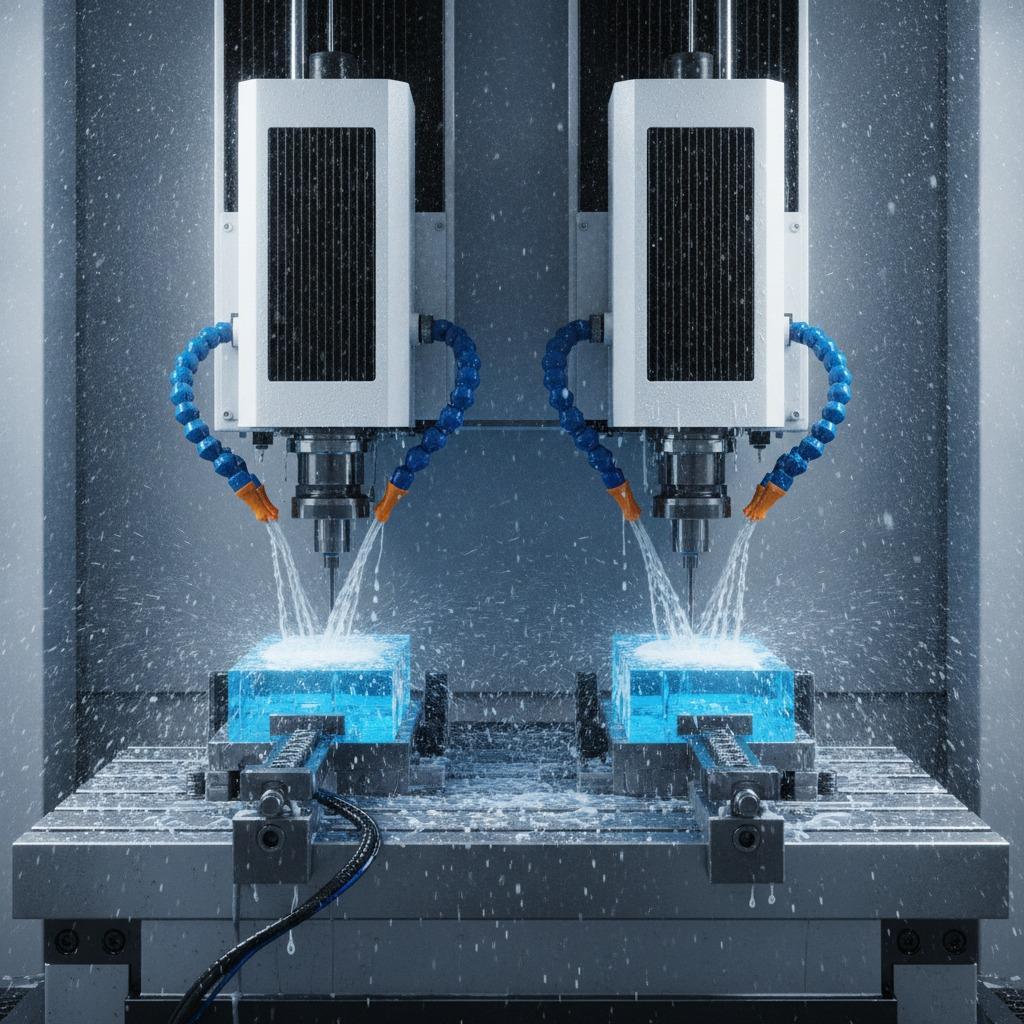
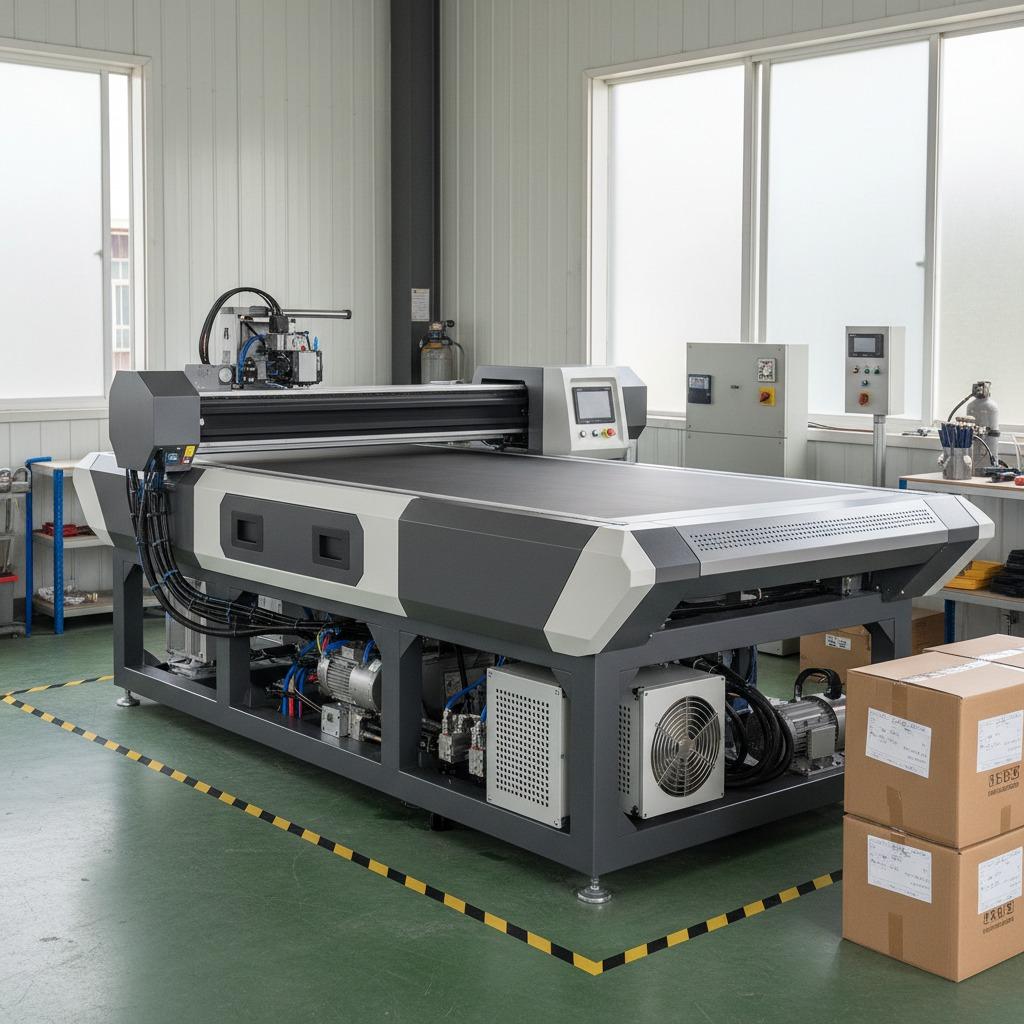
The industrial machine described in the preparation data looks like a large-format flatbed printer with an enclosed metal body, a flat worktable, a horizontal gantry, and guided carriage motion across the bed. That setup is consistent with digital printing on rigid substrates such as acrylic, PVC, wood composites, display boards, and packaging samples. It is not possible to confirm the exact print technology from the image alone, but the machine’s structure strongly suggests an automated industrial printing system designed for sheet-fed or flat material output.
For charms and similar acrylic products, this kind of printer is useful when manufacturers need short-run customization or artwork changes without committing to screens or plates. It can also support prototype development, where the image, color balance, or layout may change several times before final approval. That flexibility is one of the main reasons digital flatbed printing has become so common in decorative product manufacturing.
Practical Buyer Criteria for Sourcing Teams
If you are evaluating a supplier for a custom acrylic charm program, start with the end use. A bag charm for daily wear has different expectations than a collectible display piece. Then review three things carefully: print clarity, edge finish, and hardware quality.
Print clarity should be checked under normal viewing distance, not only under studio lighting. Edge finish should be inspected for chips, haze, or uneven contours. Hardware quality should be judged by the clasp action, the rotation of the connector, and the way the acrylic piece is anchored. None of these details sound glamorous, but they are exactly what separate a souvenir customers keep from one they toss in a drawer.
It is also worth asking how artwork is protected during handling. Acrylic surfaces can show scuffs, and printed graphics can lose visual sharpness if the process is not controlled. The data provided does not confirm scratch resistance, thickness, or packaging, so those should remain open questions in any RFQ.
Common Mistakes When Ordering Acrylic Charms
One common mistake is approving artwork without checking the cut line. A design that looks balanced on screen may feel crowded once the outline is die-cut. Another is assuming the metal hardware is interchangeable across all accessory types. In practice, a clasp that works for a zipper pull may not be ideal for a keychain or heavier bag charm.
Buyers also sometimes focus too much on the image and too little on the base material. Transparent acrylic can look clean and bright, but only if the edges and print registration are handled well. If the supplier cannot explain the production sequence clearly, that is a warning sign.
Quick Guide: What to Ask Before You Place an Order
Ask whether the artwork is directly UV printed or built as a laminated layer. Confirm whether the charm is single-sided or double-sided if that matters to the application. Request a sample for hardware feel and attachment method. And if the charm will be sold as fandom merchandise or a collectible, make sure the visual finish is reviewed in natural light as well as under warehouse lighting. Small products can hide big problems in bad photos.
FAQ
Is CNC the only way to make this kind of acrylic charm?
No. Laser cutting, die-cutting, and other finishing methods may also be used. The right choice depends on volume, shape complexity, and the quality target.
Why use a flatbed printer for rigid accessories?
Because it supports direct printing on sheet materials and makes short-run customization more practical. That is useful for varied artwork and small-batch product lines.
What should a buyer verify first?
Start with artwork registration, edge quality, and clasp performance. If those three are solid, the rest of the purchase is usually easier to manage.
Next Step for Product Teams
If you are planning a custom acrylic accessory line, use the sample above as a checklist, not just a design reference. Ask suppliers how they print, how they cut, how they assemble the hardware, and how they control finish quality across repeat orders. For a small item, the manufacturing details carry outsized weight. That is especially true when the product is meant to be handled, displayed, and judged up close.