
Why acrylic charm accessories keep showing up in sourcing conversations
Acrylic Charm Accessories sit in an odd but useful corner of the promotional and gift market. They are small enough to travel cheaply, visual enough to carry artwork well, and simple enough to turn into a retail SKU, an event giveaway, or a fandom merchandise line. For buyers, that combination creates a familiar question: how do you choose a charm that looks good on day one and still makes sense when you factor in assembly, packaging, and end-use?
The answer depends on more than the artwork. Hardware, cut quality, edge finish, and attachment method all affect how the product feels in hand and how long it survives everyday use. A decorative charm may never see industrial abuse, but it will still be tugged from bags, dropped on pavement, and exposed to repeated contact with keys and zippers. That is usually where design shortcuts start to show.
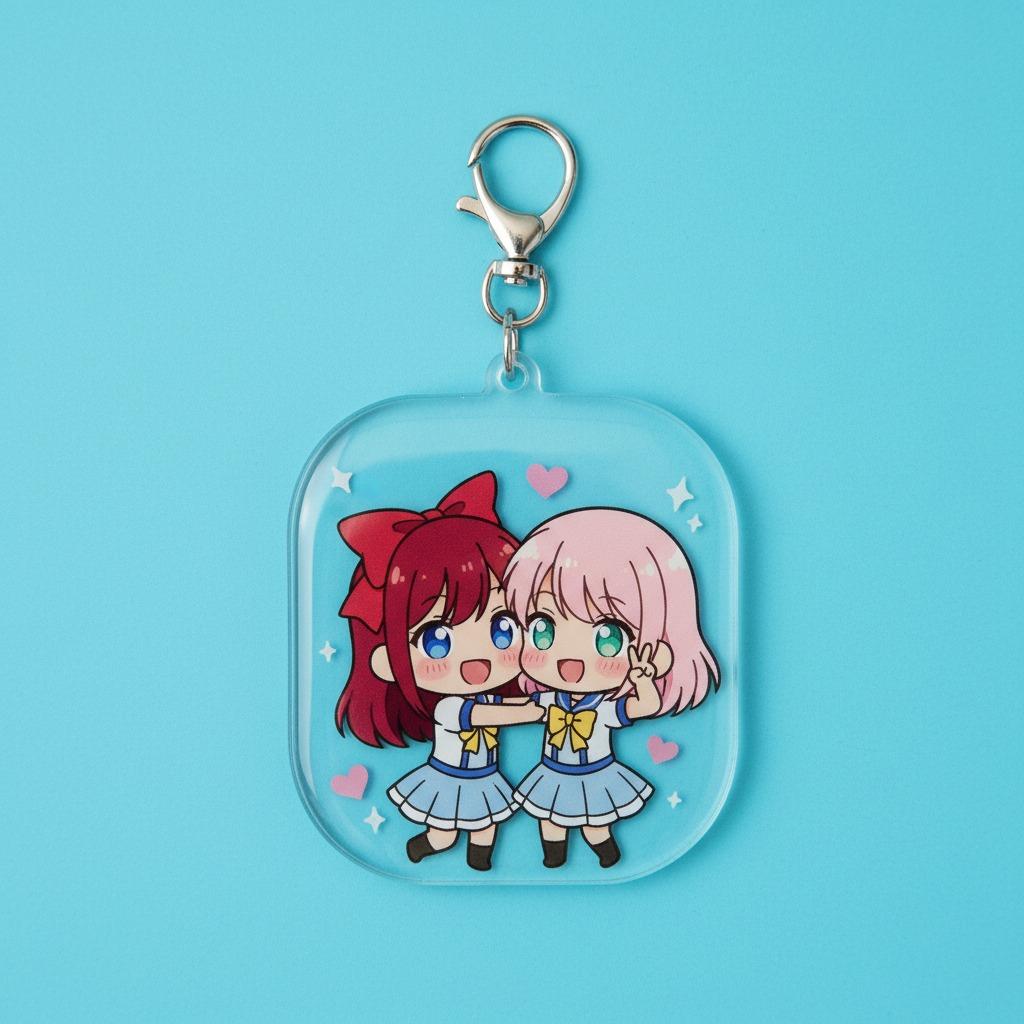
What this type of charm actually is
The product described here is a clear or translucent acrylic charm with a glossy printed front, cut into a custom silhouette around the illustration. It uses a metal split ring and a swivel lobster clasp, joined by a short metal connector. There also appears to be a small brass-colored eyelet or reinforcement ring near one lower edge, which is the kind of detail that often gets overlooked until a buyer has to think about stress points.
In practical terms, this is not a functional tool; it is a decorative accessory for keys, backpacks, purses, lanyards, display boards, or fan merchandise sets. That distinction matters. Buyers looking for a souvenir or retail add-on will care most about appearance and perceived value. Buyers planning broad distribution, meanwhile, will care about assembly consistency and whether the hardware feels secure enough for everyday handling.
How these charms are typically made
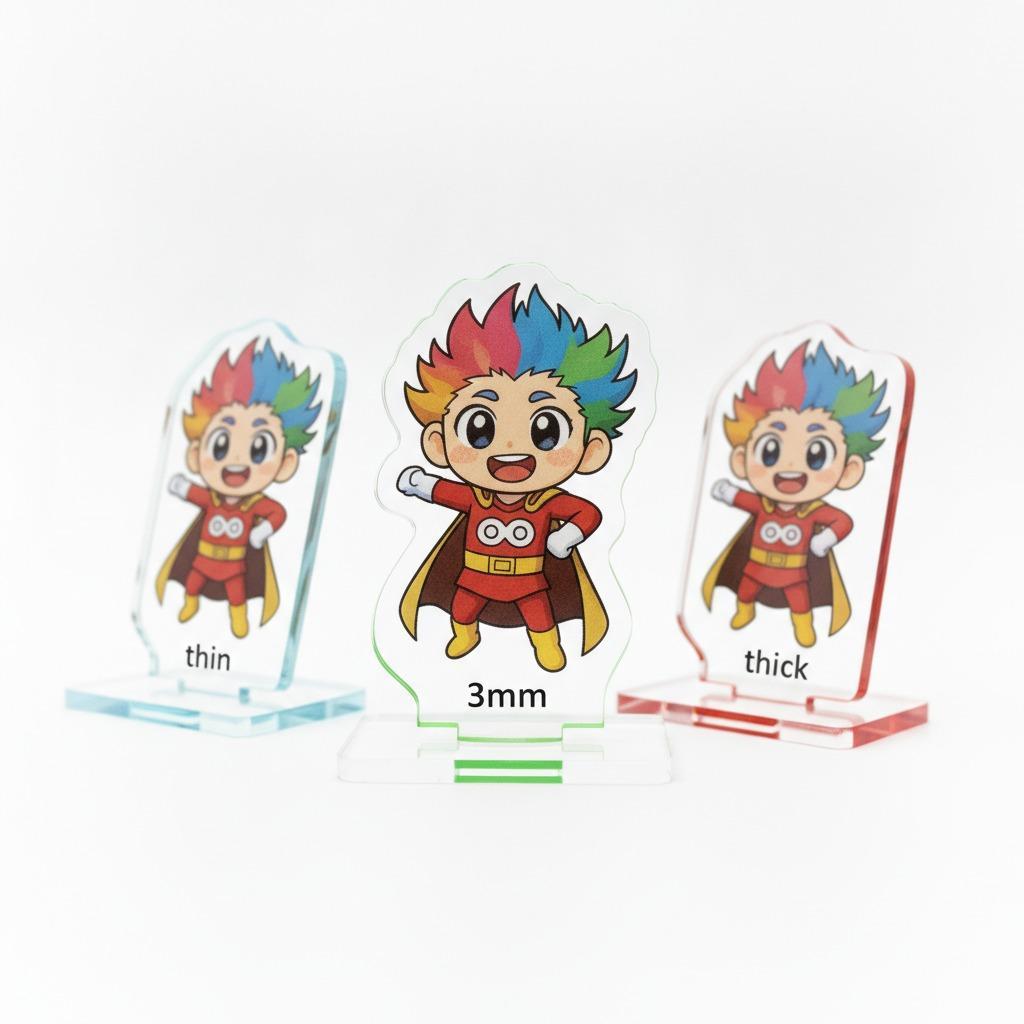
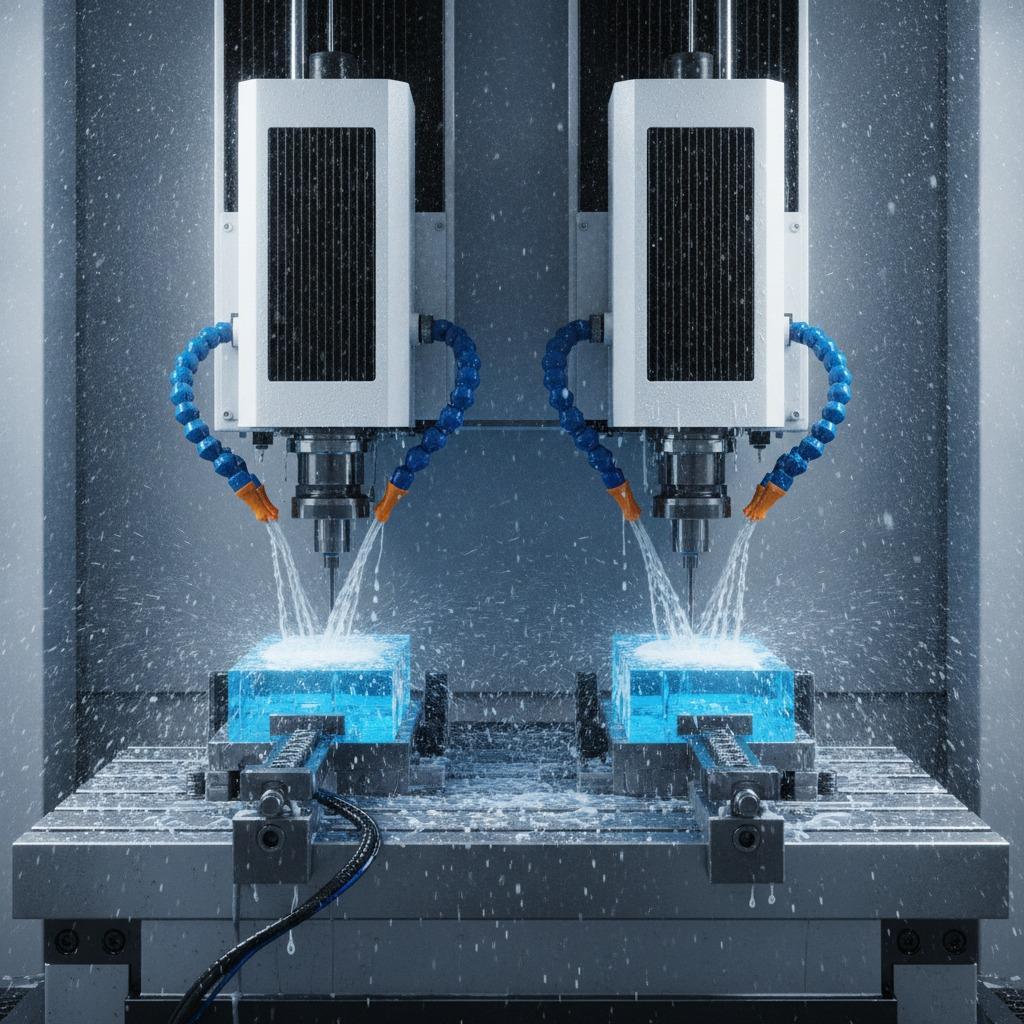
Based on the visible structure, the charm likely uses UV-printed acrylic with a laser- or CNC-cut outline. That is a common route for small-batch decorative goods because it supports bright color, sharp linework, and custom shapes without requiring a heavy tooling investment. The layered look comes from the printed artwork sitting against the transparent body, which gives the piece more depth than a flat printed card or sticker.
The hardware assembly is just as important as the art. A split ring gives a familiar keychain interface, while a swivel lobster clasp adds flexibility for bags, straps, or removable accessories. For buyers, that dual attachment setup is useful, but it also means more components to inspect. A clean print cannot compensate for a weak connector or a sloppy attachment point.
Quick buyer reference: what to compare before placing an order
Artwork execution
Look at line sharpness, color saturation, and whether small design elements remain readable at handheld size. Chibi-style art, stars, bows, and pastel fills tend to work well on acrylic because the material supports bright contrast without feeling heavy.
Cut quality and edge finish
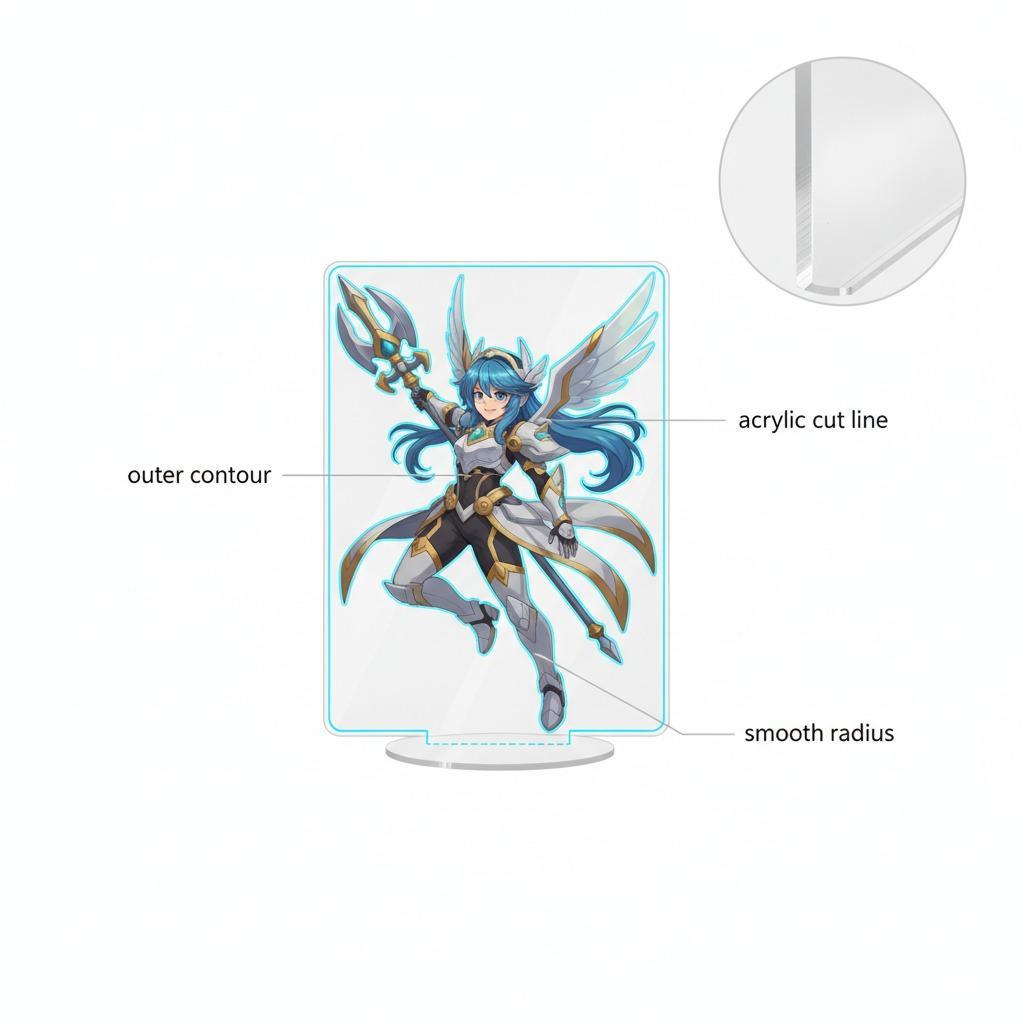
Custom silhouettes should follow the artwork cleanly. Rough edges, visible burn marks, or inconsistent contours can make a product look inexpensive even when the print is strong.
Hardware choice
Check the split ring, lobster clasp, connector length, and any reinforcement eyelet. Even for a novelty accessory, the attachment points need to be robust enough for repeated use. If the charm is intended for bags or lanyards, the hardware is not a side note.
Use case fit
Acrylic Charm Accessories are best when the buyer wants a lightweight decorative item with strong visual appeal. They are less suitable when the application demands abrasion resistance, outdoor exposure, or load-bearing performance.
Common mistakes buyers make
The first mistake is treating all acrylic merch as interchangeable. A charm for a convention giveaway does not need the same specification as a retail item that will hang on a backpack for months. The second mistake is focusing only on the printed image and forgetting the metal components. Hardware failure usually creates more complaints than a slightly dull print.
Another practical caution: do not assume the presence of a brass-colored eyelet means the whole piece has been engineered for heavy duty use. It may simply be a reinforcement detail, and its real value depends on how it was installed. If the supplier cannot explain the attachment method clearly, that is worth a follow-up question.
Where Ball Chainc and Metal Eyelet details matter
Some buyers still ask about a Ball Chainc-style option for lighter merchandising, especially when the charm is meant to hang from packaging or display cards. Others prefer a Metal Eyelet because it can help stabilize a stress point near the edge of the acrylic. The right choice depends on the expected motion of the product. A keychain sees twisting. A bag charm sees swinging. A display charm may do almost nothing at all, which is sometimes the easiest life of the three.
Who should consider this product format
This style of charm is a strong fit for fan shops, independent illustrators, souvenir programs, brand mascots, and event organizers who need a compact item with immediate visual recognition. It also works well as a low-profile retail add-on where price sensitivity matters and the buyer wants a product that is easy to stock, pack, and ship.
For sourcing managers, the key decision is whether the product is being bought for decoration, promotion, or resale. That determines how strict the spec needs to be on print appearance, hardware finish, and packaging. Small accessories can become surprisingly expensive when assembled badly, so it pays to ask for sample photos and confirm the exact attachment configuration before scaling up.
Practical next step for buyers
If you are evaluating Acrylic Charm Accessories for a new product line, start with three checks: artwork legibility, edge finish, and hardware security. Then decide whether the charm is meant to be a collectible, a giveaway, or a daily-use accessory. That one distinction will shape most of the sourcing conversation.
When reviewing supplier options, ask for confirmation of the acrylic type, print method, cut profile, and metal component details. Those are the details that tend to separate a decent novelty item from one that feels deliberate.