
Why custom acrylic standees keep showing up on desks, counters, and retail shelves

A Custom Acrylic Standee looks simple at first glance, but it solves a very practical merchandising problem: how to turn a character, mascot, or campaign visual into a small object that stands upright, travels well, and still looks deliberate rather than flimsy. That matters to product teams, sourcing managers, and event planners because tabletop display pieces are expected to do a lot with very little footprint. They need to catch the eye from a distance, survive handling, and fit into a package that is affordable to ship.
That is why acrylic has become such a common choice. It gives the artwork a clean, glossy presentation, and the rigid structure keeps the piece from curling the way paper displays can. For fan merchandise, retail souvenirs, giveaways, and desk décor, the format is familiar enough to feel safe, but flexible enough to adapt to different artwork styles. The decision buyers are really making is not whether the item looks attractive in a mockup; it is whether the standee will hold up as a product in the real world.
What the format is actually doing
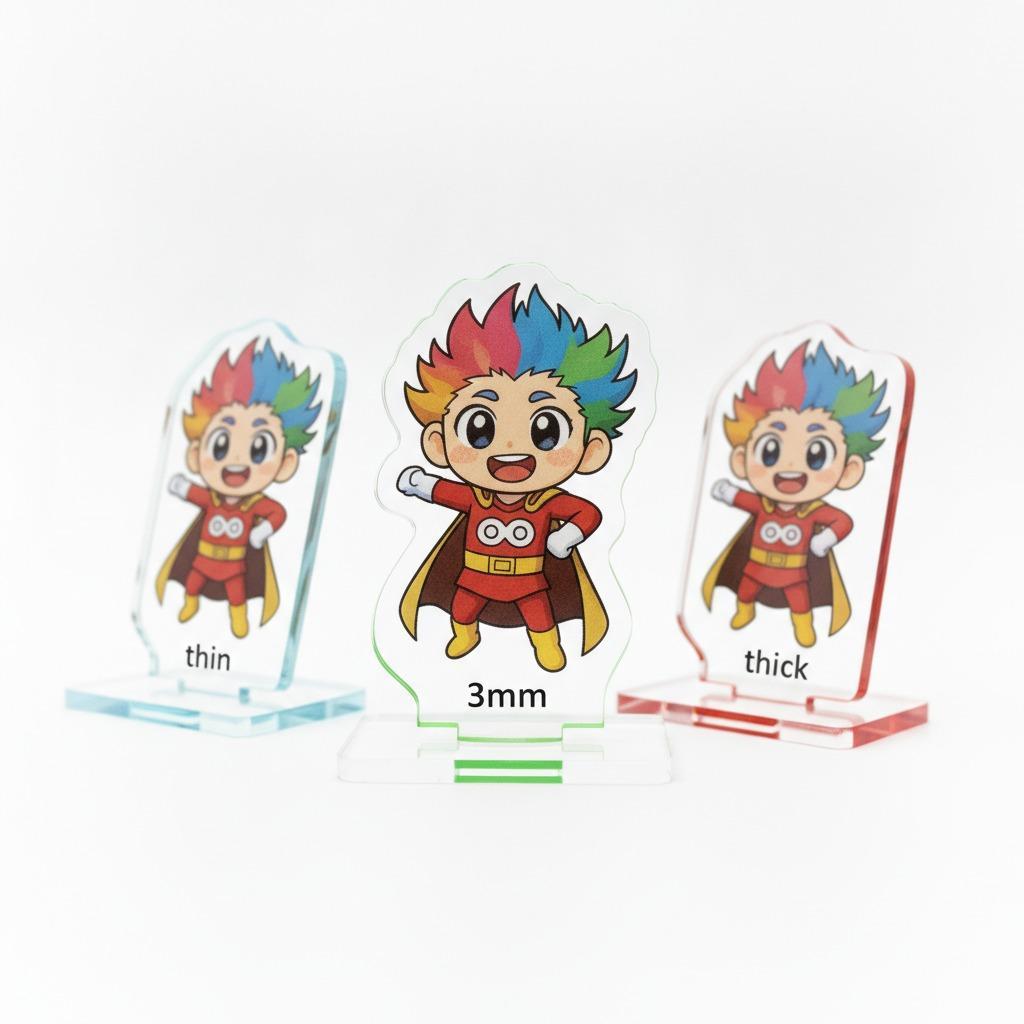
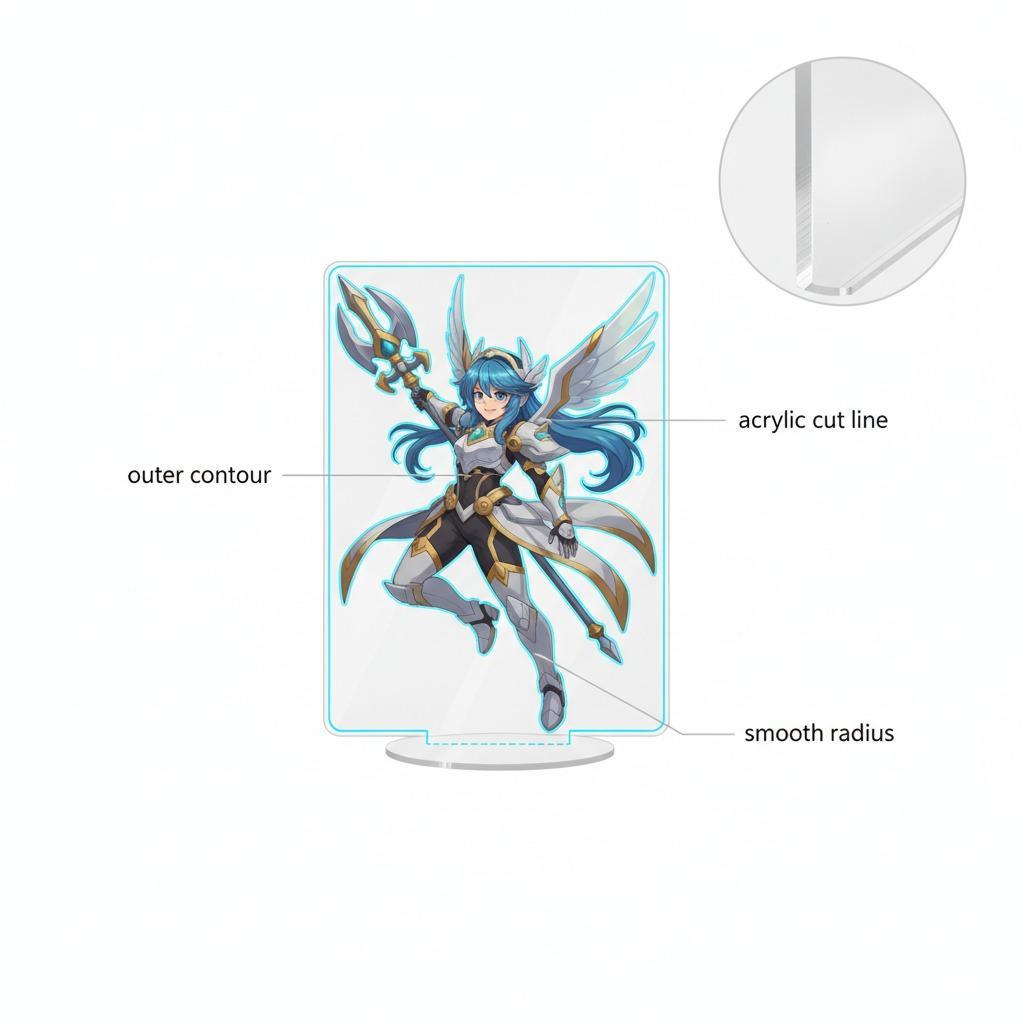
The visible construction of this type of product usually includes a printed main panel, a freestanding base, and a cut shape that gives the design more personality than a plain rectangle. In the sample described here, the standee appears to use a portrait-oriented panel with die-cut side details and a curved oval base. That combination gives the piece a light, collectible feel while still providing stability on a desktop or shelf.
From a buyer’s perspective, the value is in the balance. A flat card is cheaper, but it can feel disposable. A molded figure can be more striking, but it is harder to produce, package, and standardize. Acrylic stands sit in the middle. They present artwork cleanly and can be produced in small or medium runs without the complexity of fully sculpted goods.
Quick comparison for procurement teams
Paper standees are lighter and less expensive, but less durable.
Molded figures create more dimensional impact, but usually raise tooling and logistics complexity.
An acrylic display stand offers a compact, glossy presentation with a more premium feel than paper and less manufacturing burden than a figure.
How the product is typically made
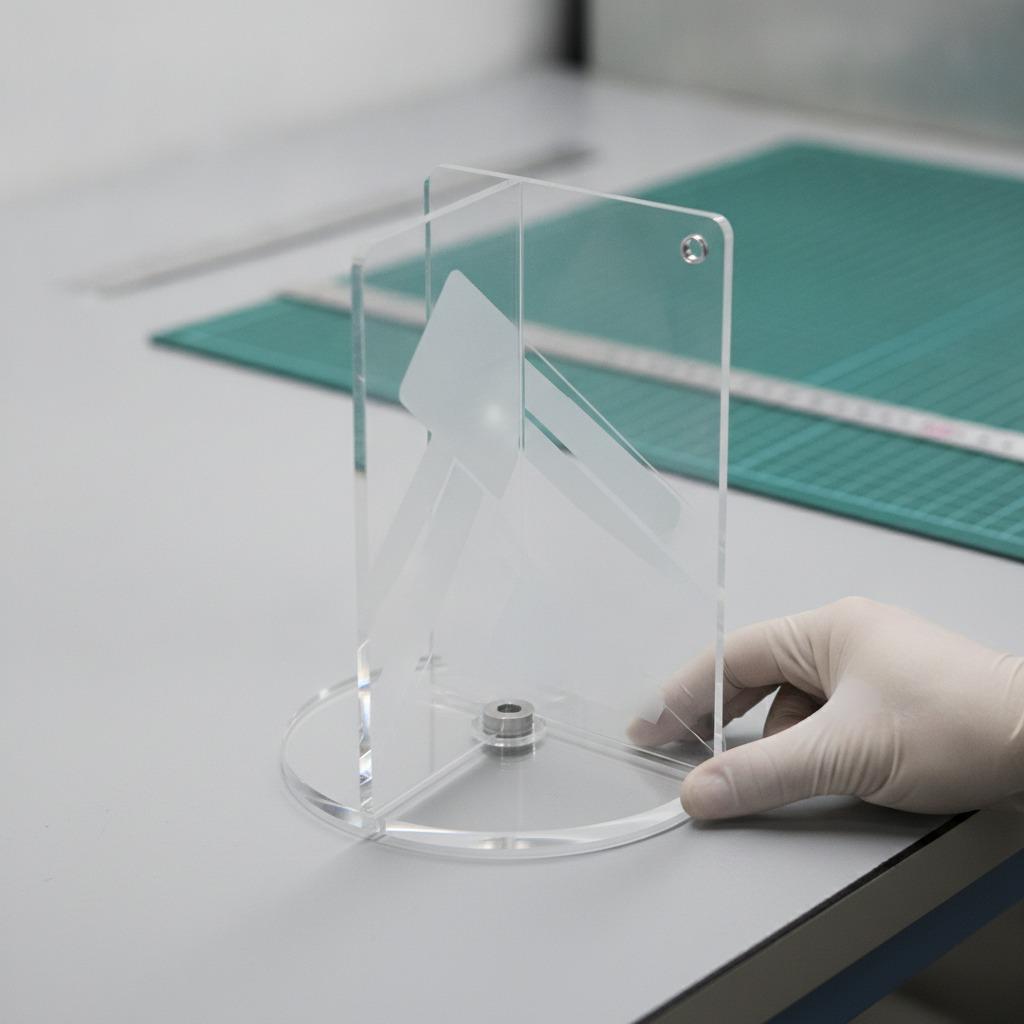
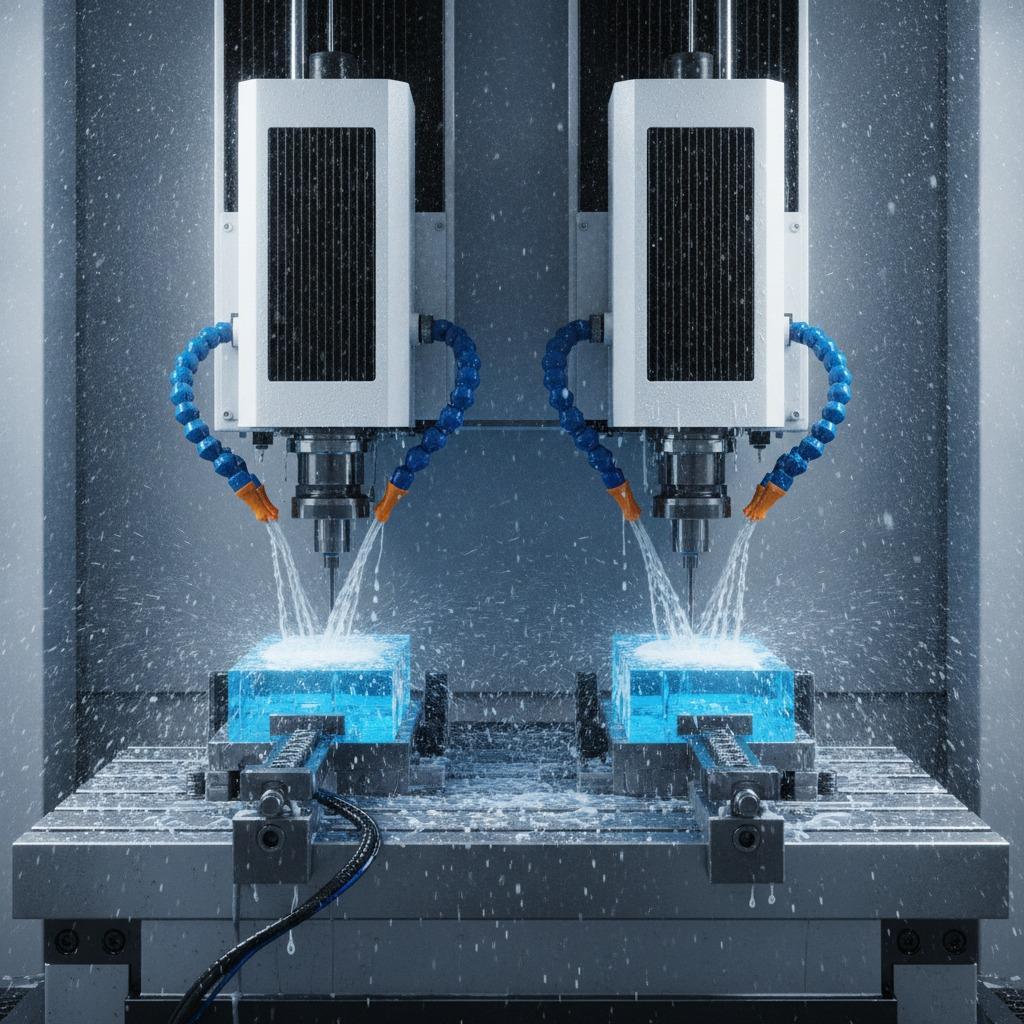
While the exact process can vary, a custom acrylic display stand is commonly produced by printing artwork onto acrylic, then cutting the sheet into the final silhouette. Flatbed UV printing is a common approach for this kind of full-color surface decoration, though other print methods may be used depending on the supplier and artwork requirements. The layers visible in the sample suggest a design that may be built from separate pieces or interlocking parts, which is useful when the goal is to make the piece stand securely without bulky supports.
That layered look is not just decorative. It can also help the product feel more dimensional. For anime-style or game character merchandise, this matters. Buyers are often looking for a presentation that preserves clean linework, bright color, and a strong outline. If the artwork is crowded or the base is too large, the effect can get muddy fast.
Where the format works best
An Anime Acrylic Standee is especially effective when the character art has a strong silhouette, bold color blocks, or a pose that reads quickly. The same is true for a Custom Character Stand used in branded promotions. These products work well as event giveaways, retail counter displays, souvenir items, or desk accessories for fans and collectors.
They are also useful in places where space is tight. A compact acrylic display stand can sit beside a register, on a trade show table, or on a workstation without dominating the surface. That is a small operational detail, but it often decides whether a display gets used consistently or gets pushed into a drawer after the first week.
Selection criteria that matter more than the mockup
Buyers should look beyond the rendered artwork and ask a few practical questions.
Will the base be stable enough for the intended surface?
Does the silhouette remain readable at the actual size, not just on screen?
Is the print handling scratches, fingerprints, and repeated setup?
Are the edges and slot areas clean enough to support a polished retail feel?
These are not glamorous questions, but they are the ones that determine whether the product feels like a premium collectible or a novelty item that ages quickly.
A useful caution: acrylic shows print quality honestly. If the artwork is low resolution or the cut line is awkward, the flaws stand out. The material does not hide much. That is an advantage when production is controlled; it is a problem when approvals are rushed.
Common buyer mistakes
The most common mistake is overestimating how much detail a small standee can carry. Fine lines, tiny text, and busy backgrounds may look fine in a proof and disappear in the finished piece. Another easy miss is ignoring the base shape. A visually appealing character panel can still feel unstable if the footprint is too narrow or the center of gravity is off.
Some teams also forget that display products are handled by people, not just photographed for catalogs. If the standee is meant for retail counters or event distribution, packaging and assembly simplicity matter more than buyers sometimes expect. A product that takes too long to set up can lose its charm fast.
What to ask a supplier before placing an order
Ask what acrylic thickness is recommended for the design, how the print is applied, whether the base is separate or interlocking, and how the finished parts are protected during shipment. If the product is meant for branded use, confirm whether the artwork will be single- or double-sided printed, because that changes both appearance and cost structure. If licensing is involved, make sure ownership and usage rights are clear before tooling or print work begins.
For sourcing teams, it helps to request a sample with the actual silhouette and base style rather than approving from a flat image alone. A standee is a small object, but small objects are where proportion mistakes hide.
Practical takeaway
A Custom Acrylic Standee is a smart choice when you need a compact, visually sharp display item that feels more substantial than paper and less complicated than a figure. It is best suited to artwork that reads well in profile, supports clean printing, and benefits from a glossy, collectible finish.
If you are comparing options for merchandising or promotional use, start with the artwork, then the base, then the handling requirements. That order is usually safer than chasing visual appeal first and figuring out stability later.
Next step for buyers
Before you commit to a run, prepare the artwork in the intended final size and ask the supplier to show how the silhouette, base, and print layers will translate into a real tabletop piece. A good acrylic standee should look effortless on the desk. The work is in making that effort invisible.