
OEM Acrylic Display: why buyers keep coming back to it for awards, merchandising, and fan products

An OEM Acrylic Display is one of those products that looks simple on a desk and complicated behind the scenes. For sourcing teams, that is exactly the appeal. It can serve as a corporate award, a sponsorship gift, a commemorative plaque, or a retail display piece, while still giving the buyer room to shape branding, artwork, and presentation. When the job is done well, the result feels more premium than its material stack might suggest.
That matters because most buyers are not just shopping for something that stands upright. They are deciding how a logo, message, or character image will be seen in a real environment: a reception counter, a trade show table, an employee recognition shelf, or a fan merchandise display. The wrong material or weak print can make even a good design look disposable. The right OEM approach gives the product structure, clarity, and a cleaner brand impression.
What the sample products show about the category
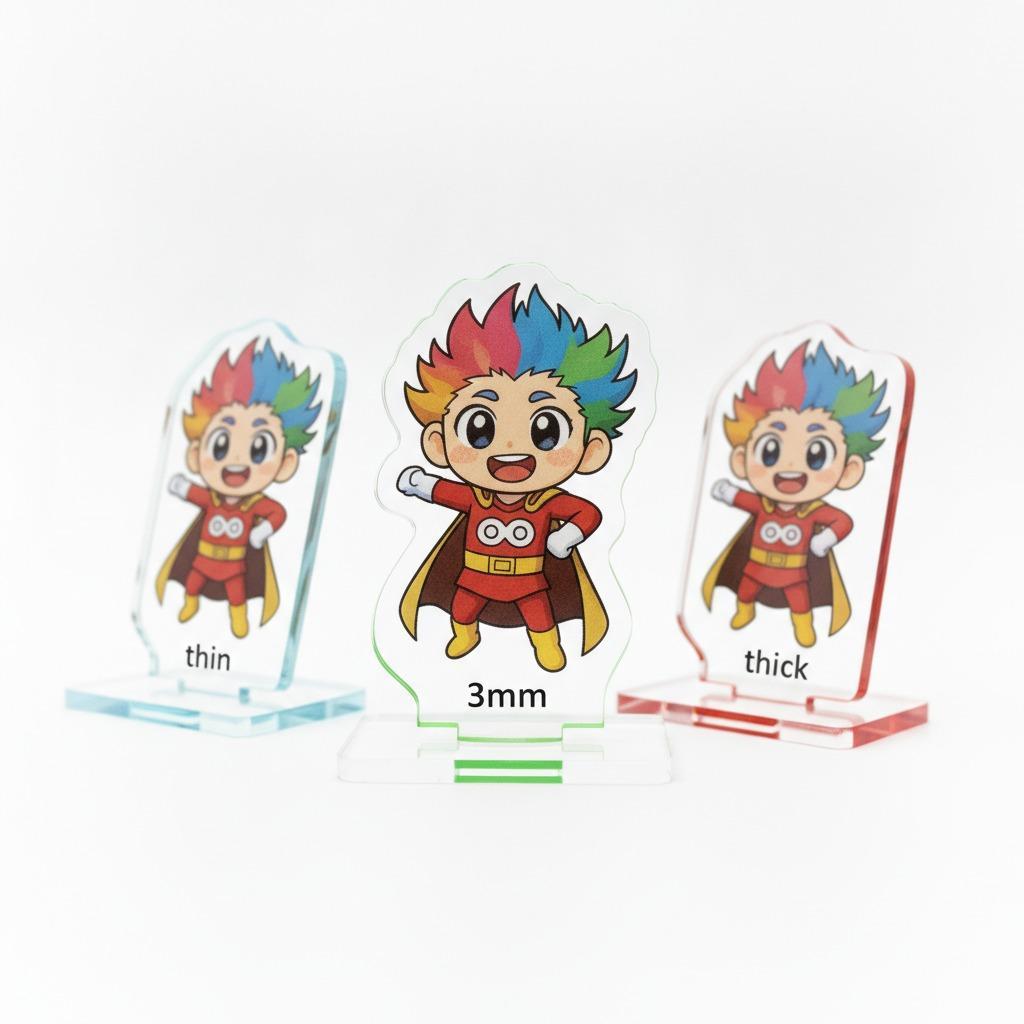
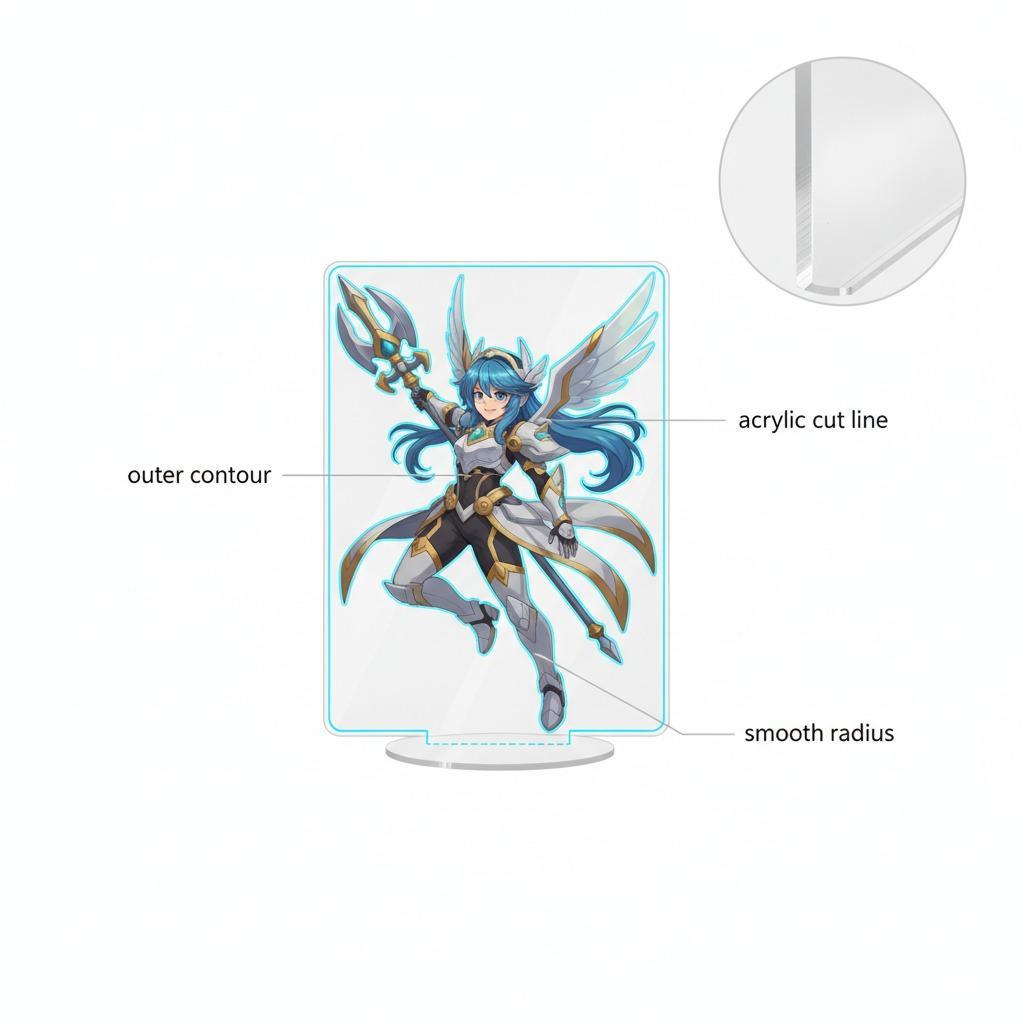
The available product information points to two common display directions. One is a desktop award or commemorative trophy built from a clear disc set into a curved wooden cradle with a rectangular base. The other is a printed character standee-style display, likely aimed at anime merchandising or retail decoration.
Those examples are useful because they show how broad the OEM Acrylic Display category can be. In one version, the appeal is formal and corporate: transparent front face, engraved or printed text, wood contrast, and a stable tabletop footprint. In the other, the appeal is visual and promotional: full-color character art, a compact base, and a form that works as a collectible or point-of-sale piece. Different buyer, same underlying need — a custom display that holds up on a table and communicates quickly.
Why acrylic-style displays are practical for B2B buyers
Acrylic, or acrylic-like display construction, gives buyers a few advantages that are hard to ignore. It offers a polished front surface, supports printing or engraving, and can be cut into shapes that feel more custom than flat paper goods. For awards and presentation pieces, that means a more finished look. For fan merchandise or retail displays, it means bright graphics and a display that can carry character art without looking flimsy.
There is also a manufacturing advantage. OEM buyers usually want a product that can be adapted without retooling the whole program. A display format built around print, laser engraving, UV printing, die-cutting, CNC shaping, and assembly is often easier to customize across campaigns than a fully molded item. That does not make production effortless, but it does give the buyer more control over artwork changes, messaging, and seasonal variants.
How to judge the right build for your project
The main decision is not “acrylic or not.” It is what the display has to do in the field.
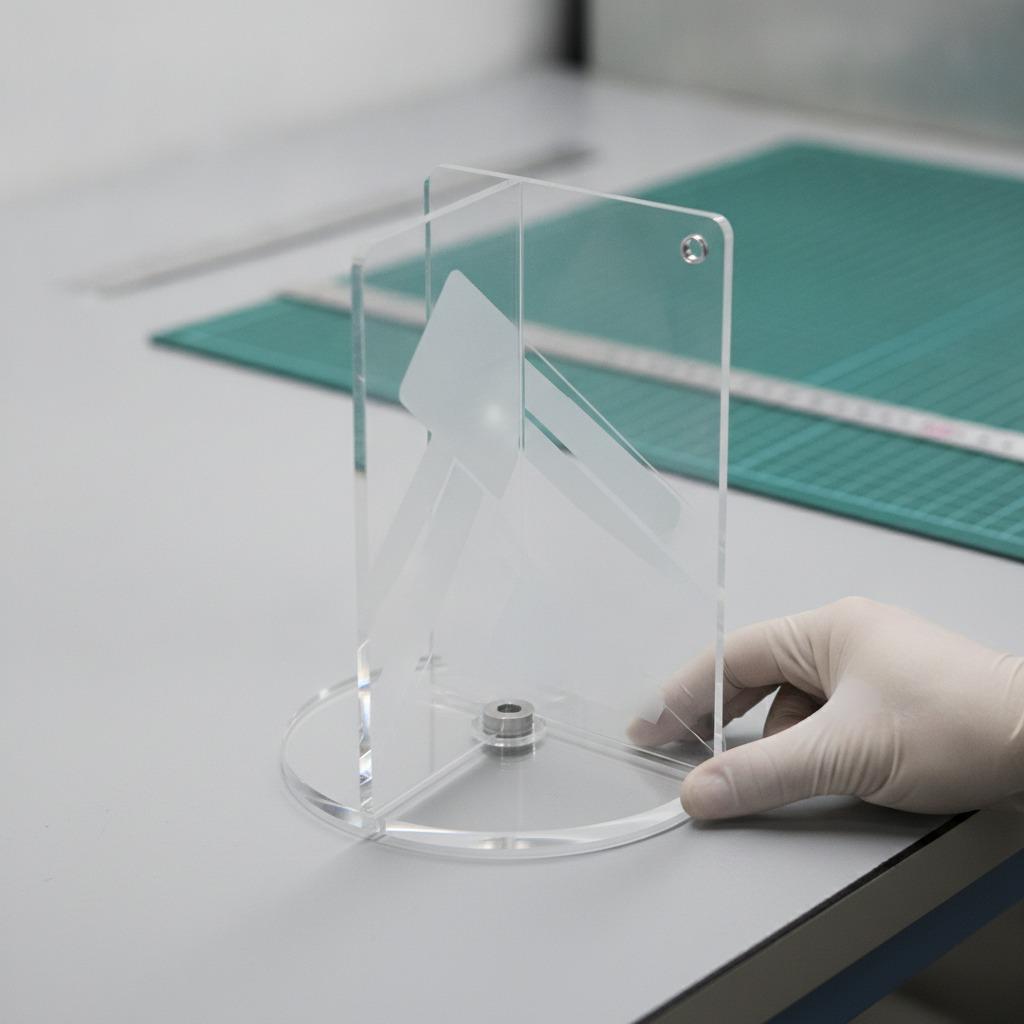
For corporate recognition, a transparent panel with engraved or printed text usually benefits from cleaner typography, stronger base stability, and a finish that feels appropriate on an executive desk. A wood cradle or pedestal can add weight visually, though buyers should be careful not to assume every wood-toned product is made the same way. The visible grain and darker finish in the sample suggest a deliberate presentation style, but exact material and coating are not confirmed.
For anime merchandise or other custom character goods, the priorities shift. Print quality, color saturation, shape accuracy, and base size matter more than formality. A standee can succeed even when it is simple, but only if the artwork is crisp and the figure holds its visual balance. A crowded composition can look lively in a mockup and messy on the shelf. That is a common buyer trap.
Quick buyer checklist
Clarify whether the piece is meant for award presentation, fan retail, or promotional giveaway.
Ask how the image will be applied: engraving, UV print, or another process.
Confirm whether the base is intended to be detachable or permanently assembled.
Review the artwork at final size, not just on a screen.
Check how the piece will stand in real use, especially on narrow counters or crowded shelves.
Common mistakes when sourcing custom display products
The first mistake is over-focusing on price and under-focusing on presentation. A display piece lives or dies on surface finish and stability. If it tips easily or looks cheap under office lighting, it damages the message it was supposed to carry.
The second mistake is assuming all custom display products use the same substrate. The provided material information notes that the exact substrate in the character display is not identifiable from the image. That is a reminder worth repeating: acrylic, coated board, paperboard, PVC, and glass-like materials all behave differently in print, handling, and shipping.
The third mistake is approving artwork that is technically correct but visually too busy. This is especially common with custom anime merchandise, where strong character art and decorative effects can overwhelm a small footprint. If the base is compact, the composition needs discipline.
Practical advice for procurement and product teams
If you are sourcing an OEM Acrylic Display for a corporate program, ask for samples that show both front-facing appearance and base stability. If it is for merchandise, request an artwork proof that reflects actual color balance and edge treatment. A buyer should also verify packaging assumptions early. Flat, fragile, or highly polished display items can be frustrating to ship if the carton design is treated as an afterthought.
A sensible supplier will be able to adapt the format for different campaigns: award plaques, sponsorship recognition pieces, event gifts, store-opening commemoratives, internal recognition items, or fan displays. That flexibility is part of the value. Still, flexibility is only useful if the supplier understands where visual polish matters more than structural complexity.
FAQ: what buyers usually ask
Is an OEM Acrylic Display only for awards?
No. It can be used for awards, commemorative gifts, retail displays, anime merchandise, desk decoration, and promotional presentation pieces.
Can the same display concept work for corporate and fan markets?
Yes, but not with the same artwork approach. Corporate pieces usually need restraint and cleaner typography, while fan products depend on vivid graphics and character accuracy.
What should I verify before approving production?
Confirm material choice, printing or engraving method, base design, assembly method, artwork placement, and packaging. If any of those are unclear, ask before mass production.
If you are planning a custom program, the next step is simple: define the use case first, then ask for a sample or proof built around that use case. That is the fastest way to avoid a display that looks acceptable in photos but underperforms on the shelf or desk.