
Why acrylic standee thickness is a bigger decision than many buyers think
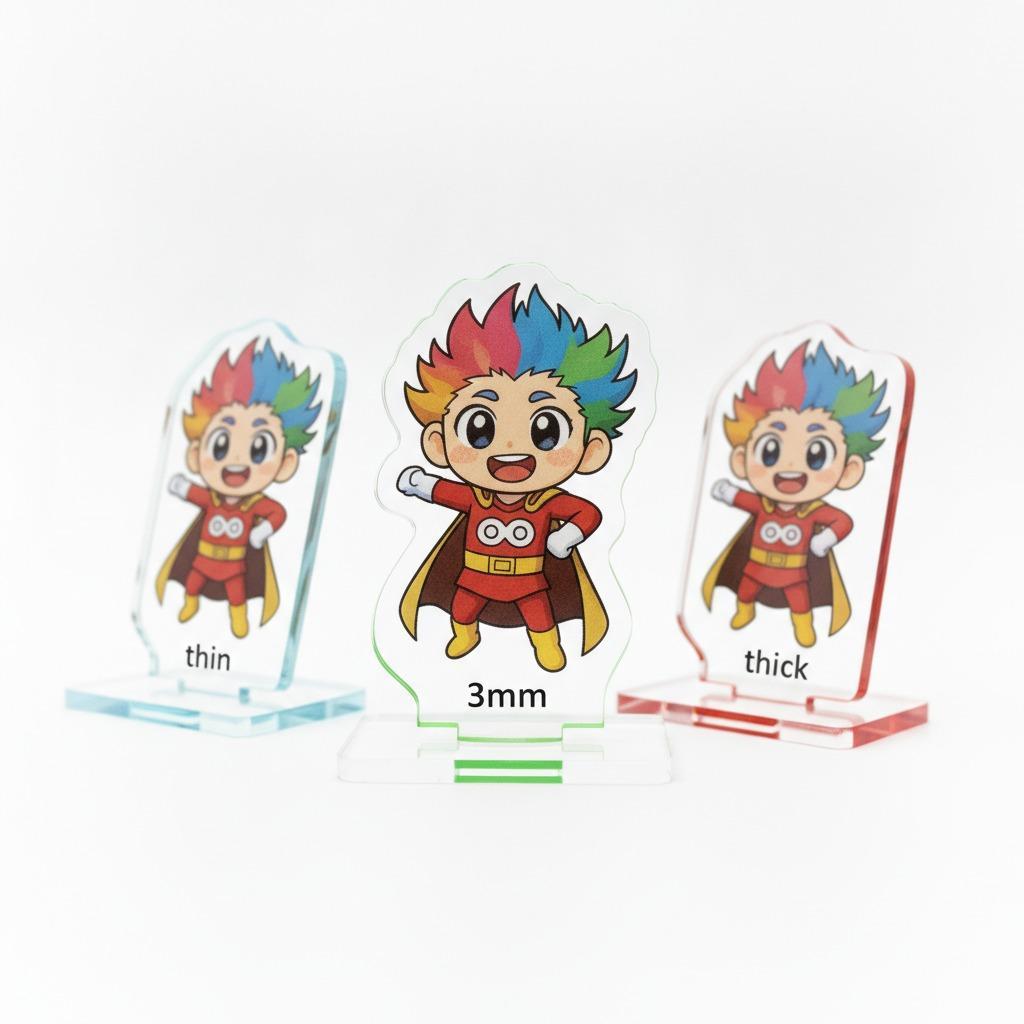
If you source displays, packaging inserts, or desk merch, acrylic standee thickness is not a tiny finishing choice. It changes how the piece stands, how it feels in hand, how it survives shipping, and whether the printed image still looks crisp once the product is on a counter and under store lighting. Too thin, and you get wobble, flex, or a standee that feels cheap. Too thick, and the cost and slot requirements can climb fast, sometimes for no real gain.
That tradeoff matters because buyers are usually deciding between presentation and practicality. A promotional standee for a seasonal campaign may only need short-term stability. A desktop display for retail or an office lobby may need a more rigid profile and a base that seats cleanly. The right answer is not “thicker is always better.” It is closer to: what thickness gives you the stiffness you need, the acrylic standee base fit you can actually assemble, and the look your audience expects?
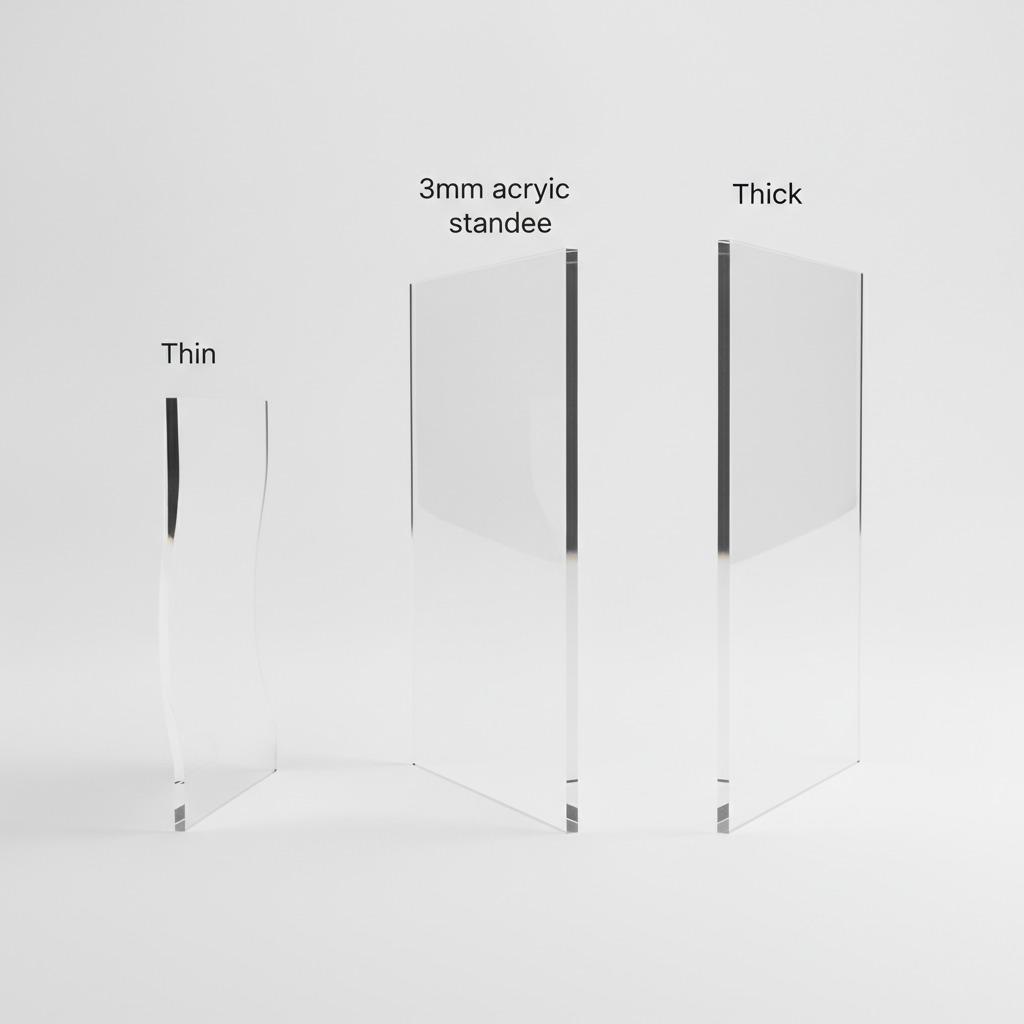
What thickness usually affects first
In plain terms, thickness drives three things: rigidity, slot compatibility, and visual presence. A thin panel can be perfectly acceptable for small or lightweight designs, but once the artwork gets larger or more vertically oriented, bending becomes more obvious. That is especially true if the standee has a narrow contact area or a tall silhouette.
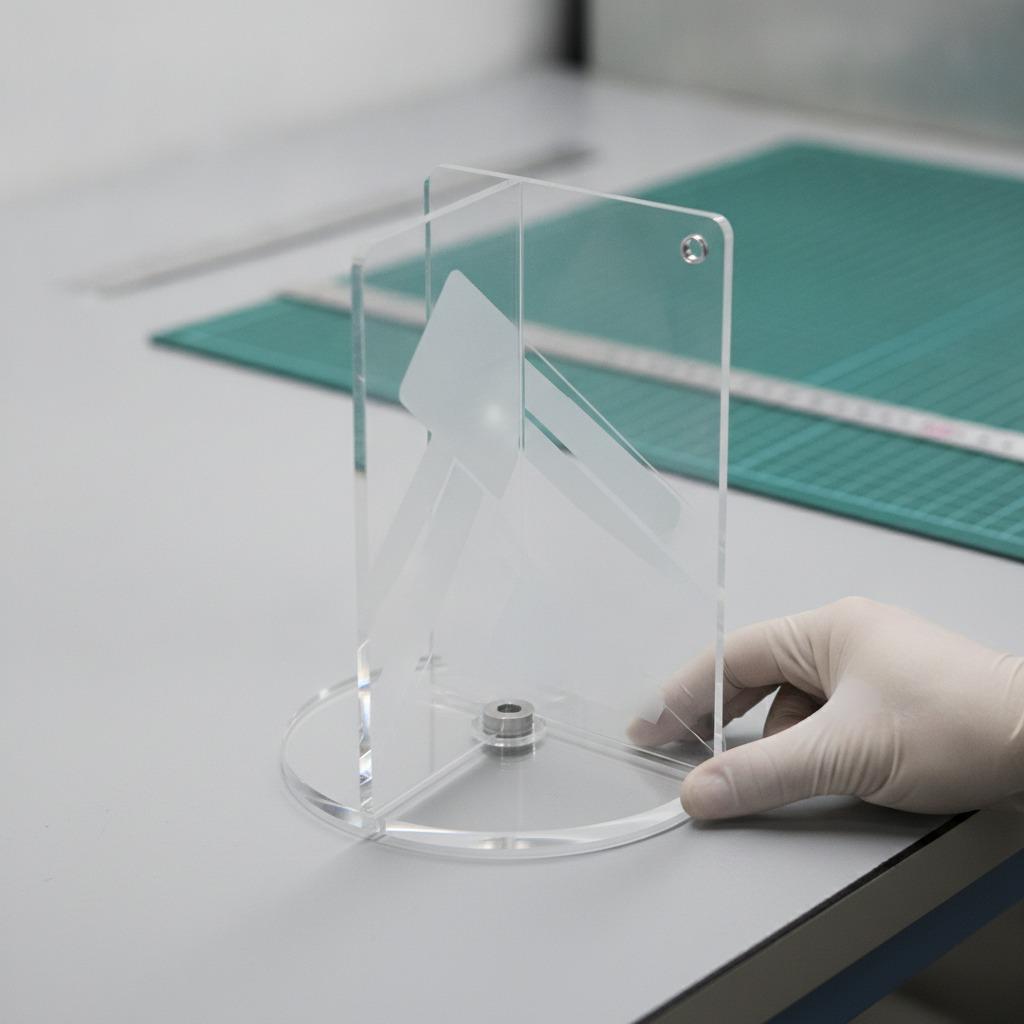
Thickness also affects the base. Buyers often focus on the printed figure and forget the slot. If the standee slot size does not match the actual sheet thickness well enough, assembly becomes annoying or unstable. A snug slot is usually better than a loose one, but an over-tight fit can be just as bad because it stresses the edge and makes insertion awkward.
Quick reference: where different thicknesses tend to make sense
There is no universal rule, but in the market, thinner sheets are often used for compact giveaways, while mid-range sheets are more common for table displays and retail pieces. Buyers asking for 3mm acrylic standee parts are often looking for a practical middle ground: enough stiffness for a small to medium display, without turning the product into a heavy object.
For larger pieces, especially those with broad artwork or a wide base footprint, thicker material can improve acrylic display stability. Still, once the standee gets oversized, the question is not only thickness. Base geometry, engraving or slot design, and the center of gravity all start to matter more than people expect.
How to think about the product before you pick the thickness
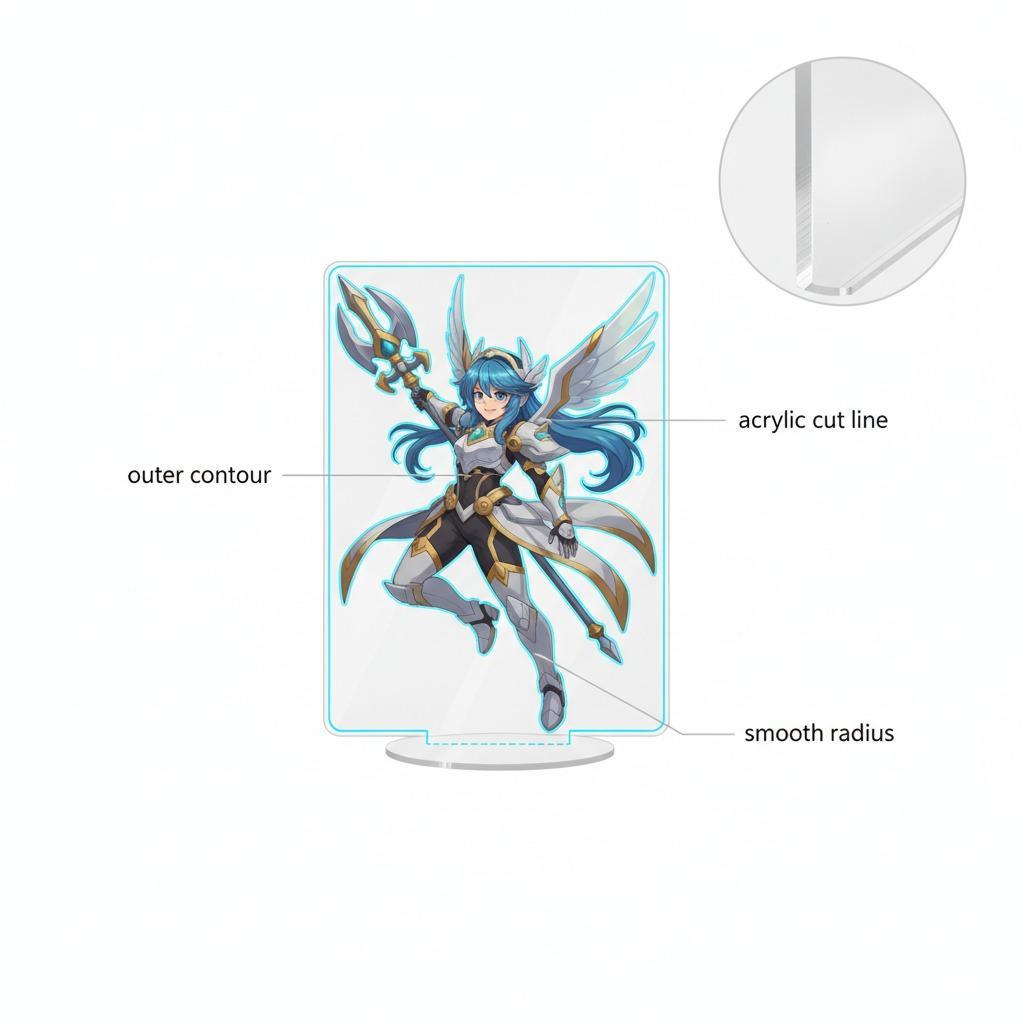
The artwork matters. A simple, compact character illustration needs less structural support than a tall scene with extended shapes or a heavy-looking top section. In a design with multiple visual elements, like a circular festival illustration or a decorative composition with repeated motifs, the visual weight can be misleading. What looks light on screen may still need a sturdier acrylic body once scaled into a physical object.
That is why I would not choose thickness in isolation. Ask first: is this a countertop item, a shelf piece, a giveaway, or a collector-style object? Is it meant to be assembled and disassembled often? Will it travel in a mailer, or sit permanently in a fixed location? The more handling and shipping the piece sees, the less forgiving a very thin sheet becomes.
Base fit is where many projects go sideways
Manufacturing teams often discover late that the intended acrylic standee base fit is not as simple as the concept drawing suggested. Slots that are too tight create assembly friction. Slots that are too loose create leaning, rotation, or a standee that slowly loses its stance after repeated handling.
Practical buyers usually ask for a sample fit before full production. That sounds basic, but it saves time. A small tolerance mismatch can turn an otherwise good design into a product that feels unreliable on the shelf.
Buyer mistakes worth avoiding
The most common mistake is assuming the thickness alone will solve instability. It won’t. A thicker sheet cannot fully compensate for a poor base shape or a narrow contact point. Another mistake is copying a previous project’s slot size without checking the actual material spec from the current supplier. Acrylic suppliers may offer similar-looking sheets that behave differently once cut and inserted.
Another caution: if the design relies on a delicate printed edge, rough handling during insertion can leave visible marks. That is less about aesthetics than it sounds. For branded displays, a small scuff can make the whole piece look second-rate.
How to make a better sourcing decision
If you are sourcing acrylic standees for a campaign, ask for three things up front: the target thickness, the proposed slot size, and a sample or prototype of the assembled base. If the order is for a themed decorative graphic, poster-style display, or seasonal art piece, also check whether the artwork scale changes the weight distribution. A design with a central focal point and surrounding elements may look balanced graphically but still need stronger support physically.
I would also push for a simple use-case check. Is the display for short-term festival promotion, stationery merchandising, or a repeat-use retail counter item? That one answer often clarifies whether you should prioritize low cost, easier assembly, or display durability.
Practical takeaway
There is a reason experienced buyers do not talk about acrylic standee thickness as a standalone spec. They talk about it with base fit, slot size, and stability in the same breath. That is the real purchasing decision.
If your next project involves a printed acrylic standee, start with the application, not the number. Define how it will stand, how often it will be handled, and how much rigidity the artwork needs. Then match the thickness to the job instead of chasing a generic “standard.”
Next step
Before you approve production, request a fit check or sample build and confirm the intended acrylic sheet thickness against the slot design. A small verification step now is usually cheaper than reworking a batch later.