
Why metallic printing on acrylic shows up everywhere in decorative products
Metallic printing on acrylic is popular for a simple reason: it gives a flat polymer surface the look of metal without turning the part into metal. For product teams, that matters when the goal is visual impact, controlled weight, and repeatable decoration on a transparent or translucent base. In accessories, point-of-purchase pieces, display components, and gift items, the finish can make a low-profile part read as premium at arm’s length.
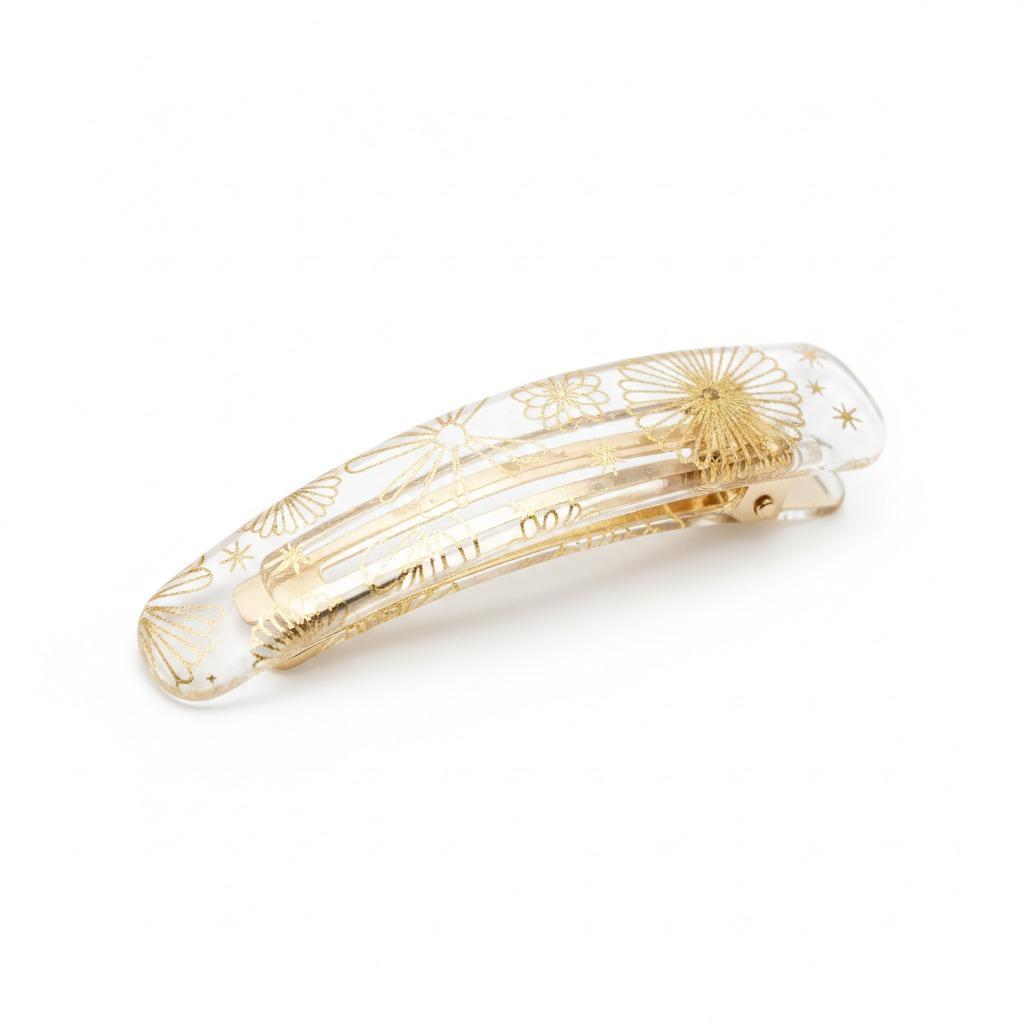
A decorative translucent hair clip is a good example. The body may be molded from acrylic or a similar clear plastic, then finished with gold linework, star accents, or character graphics. The effect is not only ornamental. It also helps the product stand out under store lighting, which is often where these items are judged. Buyers usually want to know whether the decoration will survive handling, whether the surface will remain glossy, and how much design freedom the process allows.
What the decoration process is trying to solve
On a translucent part, plain color can look heavy. Metallic decoration gives contrast without hiding the underlying depth of the material. That is especially useful on iridescent or milky acrylic, where the base itself already carries visual interest. A gold foil acrylic look, for example, can add a festive or boutique feel while keeping the part lightweight.
From a manufacturing point of view, the key challenge is adhesion and registration. A decorative acrylic finishing step has to land cleanly on a smooth surface that may already be glossy. If the ink, foil, or etched detail sits poorly on the substrate, the effect can look cheap quickly. That is why process selection matters more than many buyers expect.
Common methods used for metallic effects on acrylic
Screen printing
Screen printing acrylic parts is often chosen for opaque linework, logos, stars, or simple graphics. It can deposit metallic ink in a controlled pattern, which is useful when the shape is curved but not highly textured. The method is straightforward in principle, though the real-world result depends on surface prep and curing. On a fashion accessory, fine gold outlines around a character motif are the sort of detail that screen printing can handle well if the artwork is kept disciplined.
Foil transfer or hot-stamp style effects
Foil can produce a brighter metallic shine than ink. In buyer language, this is often what people mean when they ask for gold foil acrylic styling, even if the actual process differs by supplier. The caution here is practical: foil gives strong visual punch, but edges and tight radii can be limiting. On an irregular looped clip body, the process may need careful tooling to avoid wrinkling or weak transfer.
Laser etching or engraved accents
Some products use etched lines or recessed details that are then left clear, painted, or filled with metallic color. This can work well for small star cutouts or outline artwork. It is not always the best route for high-volume decorative items, but it can create a crisp appearance when the design is simple.
What to look for in a decorated acrylic accessory
For a hair clip or barrette, the base shape and decoration have to work together. A wide curved form distributes the visual field, which helps metallic printing on acrylic read clearly. The attached hardware matters too. A visible metal clip mechanism, plus small charms or rings, adds tactile contrast and can make the item feel more finished.
Buyers should look closely at three things: surface gloss, print placement, and the interface between the plastic body and the metal hardware. If the clip is supposed to function daily, decoration should not interfere with the grip area or the hinge region. That sounds obvious, but in low-cost fashion accessories, design features sometimes crowd the working parts.
Selection criteria for sourcing teams
When comparing suppliers, ask how the acrylic body is formed, how the decoration is applied, and what happens after printing. Does the part get a protective overcoat? Is the metallic effect an ink, foil, or etched accent? Is the finish expected to hold up under cosmetic contact, light abrasion, and repeated handling? Those answers shape both the appearance and the likely return rate.
It is also worth checking whether the printed area is meant to be purely decorative or whether it carries branding. Branding usually demands tighter repeatability. Decorative motifs can tolerate a little more variation, but only up to a point. A star motif that drifts too close to an edge or a character outline that loses alignment can change the perceived quality of the entire piece.
Common mistakes buyers make
The biggest mistake is assuming all shiny finishes are equivalent. They are not. Metallic ink printing, screen printing acrylic, and foil transfer each produce a different visual tone and a different durability profile. Another common issue is over-specifying the artwork without considering the substrate. A delicate design that looks fine on paper may disappear on a translucent base or crowd the small printable area.
There is also a handling caveat. Glossy acrylic shows fingerprints, scuffs, and edge defects more readily than matte plastic. If the item is a seasonal gift or boutique accessory, that may be acceptable. If it is meant for heavier daily use, packaging and transport need more attention than buyers sometimes budget for.
Practical buyer advice
If you are sourcing a decorative acrylic accessory with metallic accents, ask for process samples, not just artwork proofs. Compare the look under warm and cool light. Check how the gold tone behaves against the translucent base. Then confirm that the decoration supports the product’s actual use case, whether that is holding hair back, seasonal gifting, or novelty retail display.
For small-run fashion pieces, a decorative acrylic finishing approach that combines molded form, metallic linework, and metal hardware can deliver strong shelf appeal without excessive complexity. For higher-volume programs, consistency in decoration placement and assembly becomes the real cost driver.
FAQ
Is metallic printing on acrylic always the best choice?
No. It is a strong choice when visual impact matters, but if the design needs extreme abrasion resistance or heavy flexing, another finish may be more practical.
Can the same effect be achieved without foil?
Yes. Metallic ink or etched detailing can create a similar premium impression, though the brightness and texture will differ.
What should a buyer request first?
A real sample, a clear description of the decoration method, and a view of the finished part assembled with hardware. That will tell you more than a polished render ever will.
Next step
When you evaluate metallic decoration on acrylic parts, treat the finish as part of the product engineering, not just the artwork. Ask how the surface is made, how the metallic effect is applied, and how the decoration holds up once the clip is assembled and handled. That is usually where the real difference between a good sample and a sellable product shows up.