
How rotating acrylic standees are made, and why the build matters
If you are trying to understand how rotating acrylic standees are made, the short answer is that they sit somewhere between printed display graphics and a small mechanical assembly. That sounds simple until you look closely at the parts: a printed acrylic or plastic base, clear cut figures, a central axle or hub detail, and a decorative motion element that may turn by hand or by a built-in mechanism. For sourcing teams and product developers, the real issue is not just what the item looks like on a desk, but how the layers, print quality, and pivot structure affect durability, appearance, and cost.
This matters because a standee is not only a picture on a base. It is a piece of movable merchandise, often sold as fan décor, collectible giftware, or retail counter display. If the motion feels loose, the print looks muddy, or the cut edges are rough, the product loses value quickly. Buyers usually notice that before they notice anything else.
What the finished product appears to be
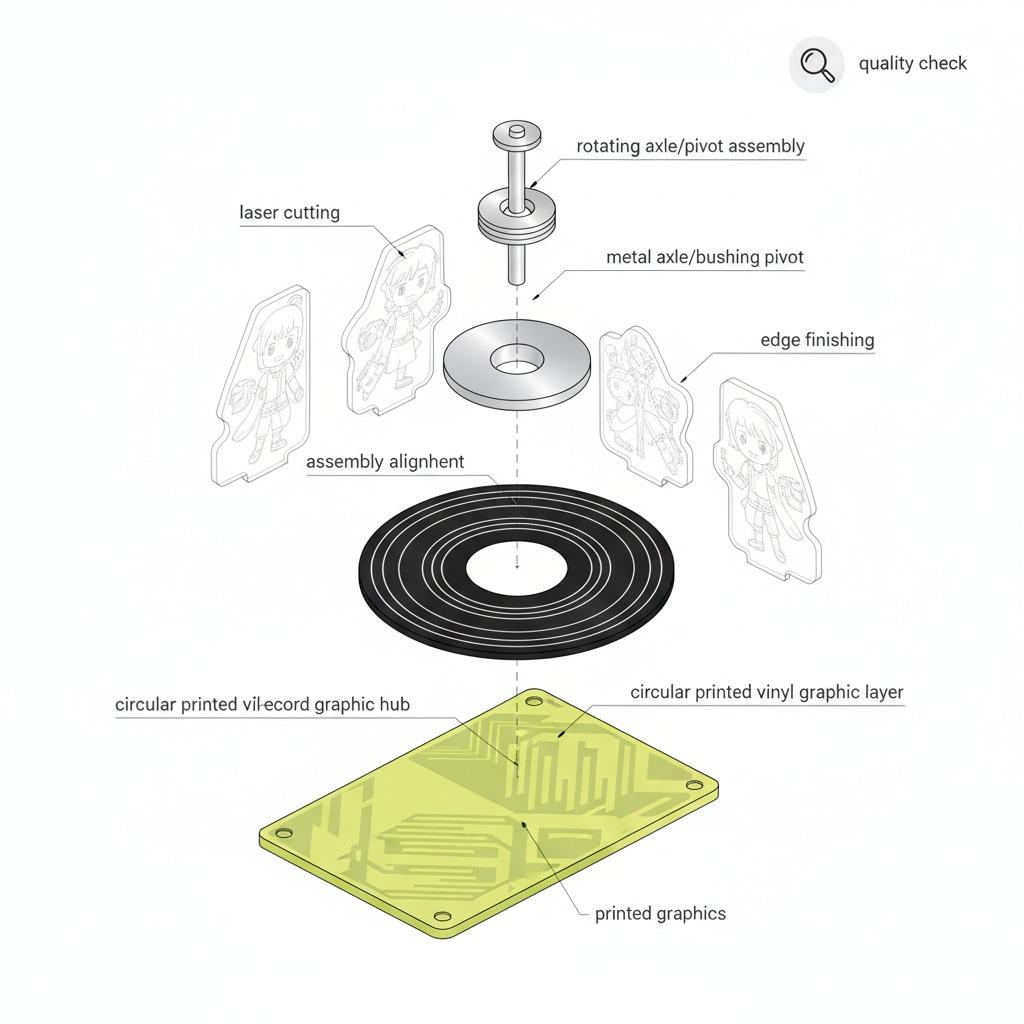
Based on the provided product information, the item has a square yellow-green base panel, a large circular black vinyl-record graphic, a central hub detail that looks metallic or faux-metallic, and two clear die-cut character figures on the left side. The artwork includes Vietnamese text: “NGƯỜI TÔI ĐỂ Ý KHÔNG PHẢI CON TRAI.” That suggests a fandom-driven novelty product, likely intended for desk display or collectible merchandising.
The visible construction points to printed acrylic or plastic with a glossy surface and clean cut edges. The exact material mix is not confirmed, so it is safer to treat it as a layered decorative display rather than assume one specific substrate throughout.
The typical acrylic assembly process
In a product like this, the acrylic assembly process usually starts with graphic preparation. Artwork is laid out to fit the base panel and any clear character cutouts. If the design uses transparent parts, the printer has to manage white ink, color density, and alignment carefully. On clear acrylic, poor registration is obvious immediately.
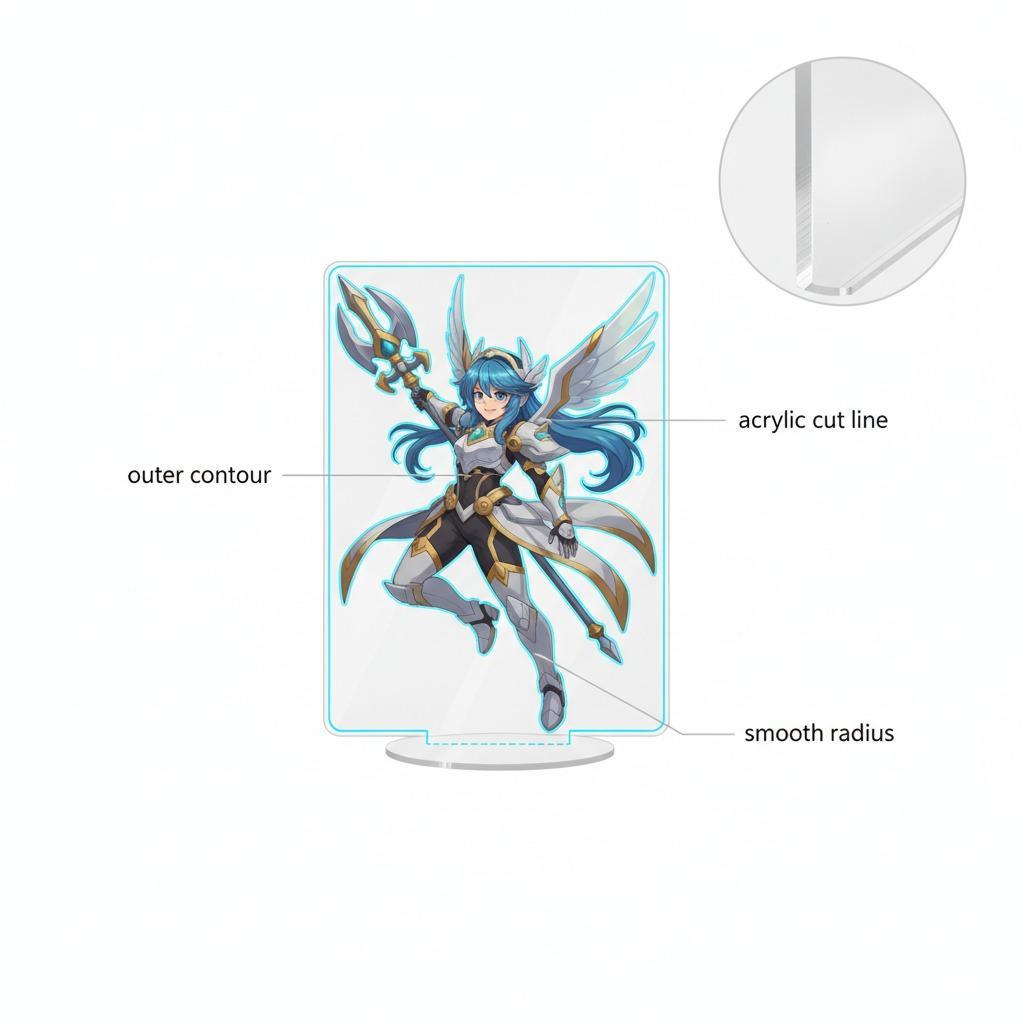
Next comes cutting. Laser cutting is common for acrylic display products because it gives crisp contours and small internal details, though die-cutting or other precision cutting methods can also be used depending on the material. The clear edges visible on the figures suggest a clean shaping process rather than a rough manual trim.
After cutting and printing, the parts are assembled. In products with a rotating feature, a rotating acrylic mechanism may include a center pin, rivet, bushing, or decorative axle. If metal is used, it is often for the visible hub or shaft because it gives the piece a more finished look and can handle repeated motion better than soft plastic. The term metal axle acrylic display is a useful shorthand, but the actual build can vary widely from one factory to another.
Where the motion comes from
Not every “rotating” standee rotates the same way. Some have a free-spinning record disc. Others use a fixed decorative disc and only suggest motion through the artwork. In either case, the engineer or buyer should ask the same question: what part is moving, what keeps it aligned, and what stops it from wobbling after repeated handling?
A small pivot that feels fine in a sample can loosen after retail display use. That is one of those boring details that becomes a customer complaint later.
Materials and finish choices that change the outcome
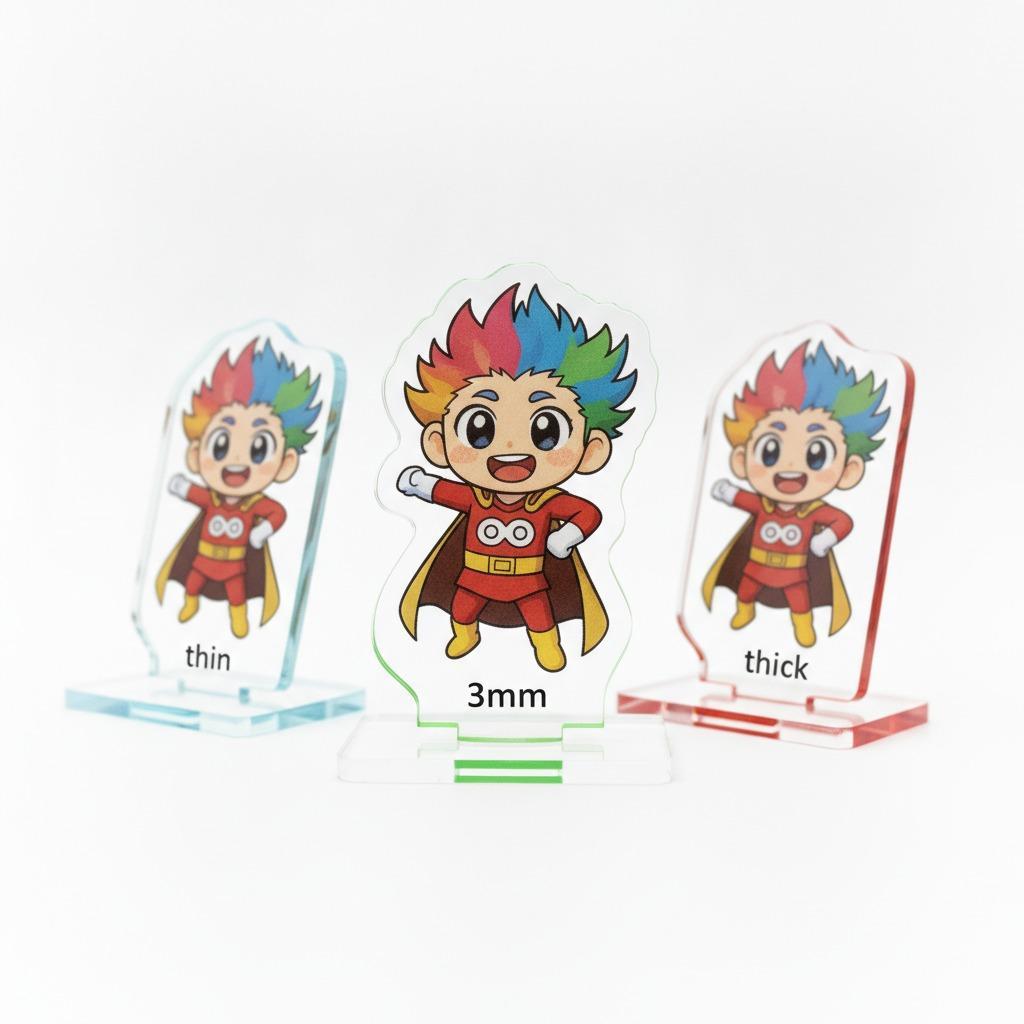
For this type of product, the finish is as important as the structure. Glossy printing can make colors pop, which suits anime-style artwork and record-player themes. Clear acrylic works well for cutout characters because it adds depth without making the piece heavy. Printed board or laminated plastic can be more economical, but it may not give the same premium feel at the edge.
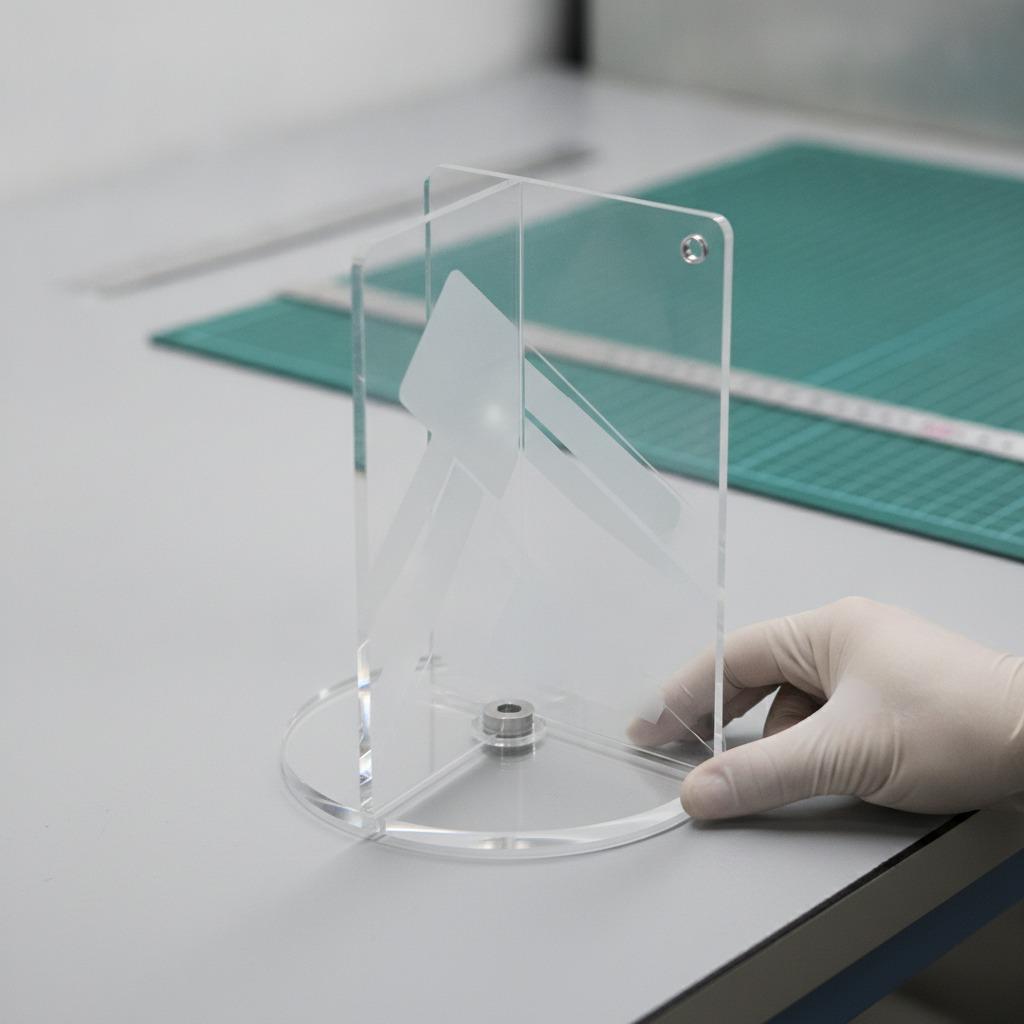
Buyers should also pay attention to the visible edge quality, ink opacity on dark graphics, and whether the central hub looks intentional or merely decorative. In a desk product, small flaws read as quality issues because the consumer sees them up close.
Selection criteria for sourcing teams
If you are evaluating a supplier, focus on a few practical checks:
The print should stay sharp on both solid color areas and fine text.
The cut edges should be smooth, especially on the clear figure shapes.
The rotating element, if functional, should turn consistently without scraping.
The assembled piece should sit flat and look balanced from the front.
The product should survive normal shelf handling without the hub loosening.
Those are simple checks, but they tell you more than a polished sample photo does.
Common mistakes in movable merchandise
The most common failure is overcomplicating a small display. Designers add motion, layered graphics, and multiple materials, then discover that the product is difficult to assemble or too fragile for shipping. Another issue is assuming that any clear plastic will behave like acrylic. It often does not. Material choice affects cut quality, print adhesion, and the way edges age over time.
There is also a retail caution here: if the item is meant to reference a licensed character or quote-based design, buyers should confirm the licensing status separately. The visible copyright mark is not enough to prove authorization.
What buyers should ask before placing an order
Ask what material each layer uses, how the print is applied, and whether the center pivot is a true mechanical joint or only a decorative element. Ask for photos of the edge finish, not just the front view. If the supplier says the piece rotates, request a sample video of the motion. That is a small ask, but it can save a lot of argument later.
If the item is intended for bookstore, comic shop, or anime merchandise channels, ask how it will be packed for retail display and whether the finished piece can stand up to frequent handling.
FAQ
Is this always an acrylic product?
Not necessarily. The visible features suggest acrylic or plastic, but laminated board or mixed-material construction is also possible.
Does every rotating acrylic standee use a metal axle?
No. Some use metal parts, others rely on plastic pivots or decorative fixed hubs. The build depends on target price and durability requirements.
What is the main risk when sourcing this type of item?
Mismatch between the design concept and the actual moving assembly. A product can look premium in artwork and still feel flimsy if the pivot or cut quality is weak.
Next step for product teams
If you are sourcing a similar piece, start with a sample that shows the print, cut quality, and rotation behavior in one unit. That one sample will tell you more about the manufacturing standard than a dozen catalog photos. Once the structure is confirmed, you can decide whether the item belongs in premium fan merch, impulse giftware, or simple tabletop décor.