
Why custom die-cut acrylic cutouts keep showing up in interiors and displays
When a buyer starts looking at custom die-cut acrylic cutouts, the first question is usually not about decoration. It is about control: how closely can the finished piece follow a character, logo, mascot, or irregular artwork without looking clumsy at the edges? That matters whether the item is going into a nursery, a classroom, a retail display, or a themed brand wall. A clean contour cut can make a simple printed panel feel deliberate; a poor one looks cheap from across the room.
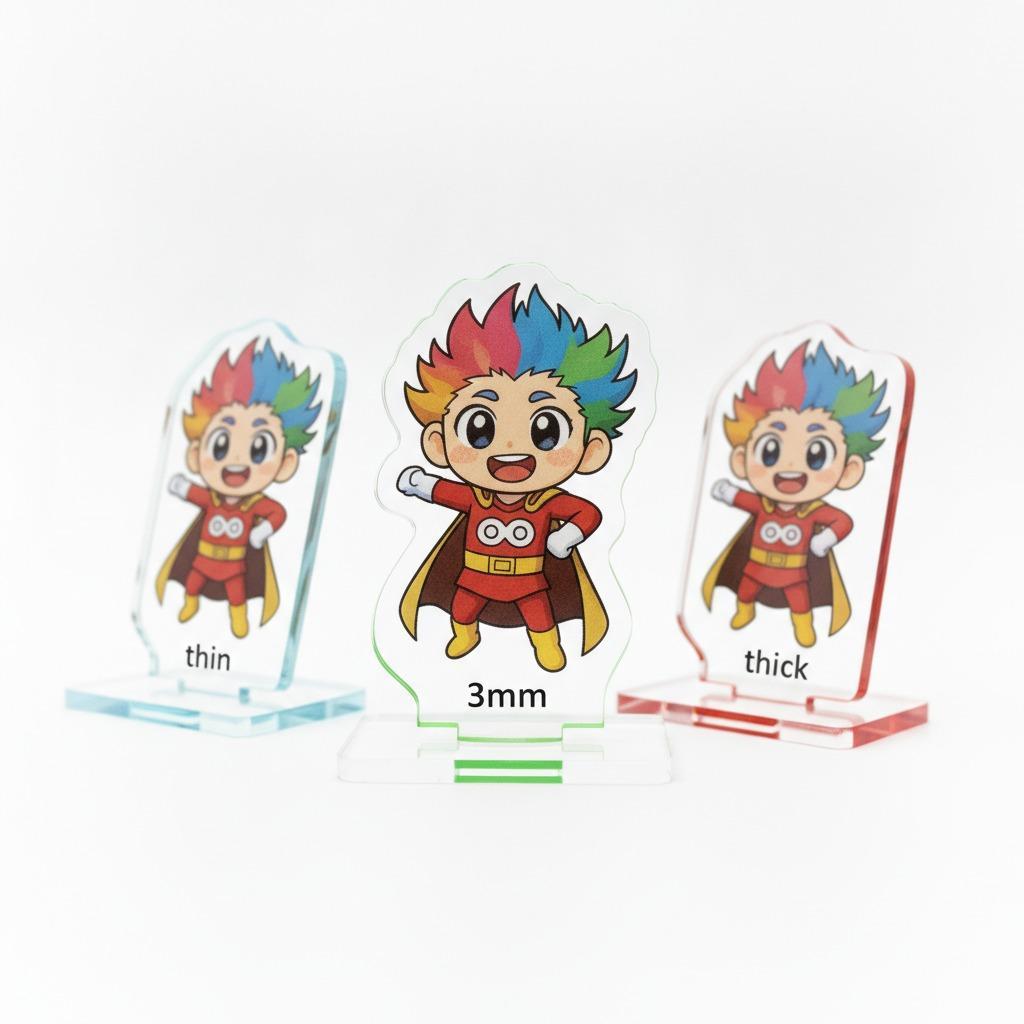
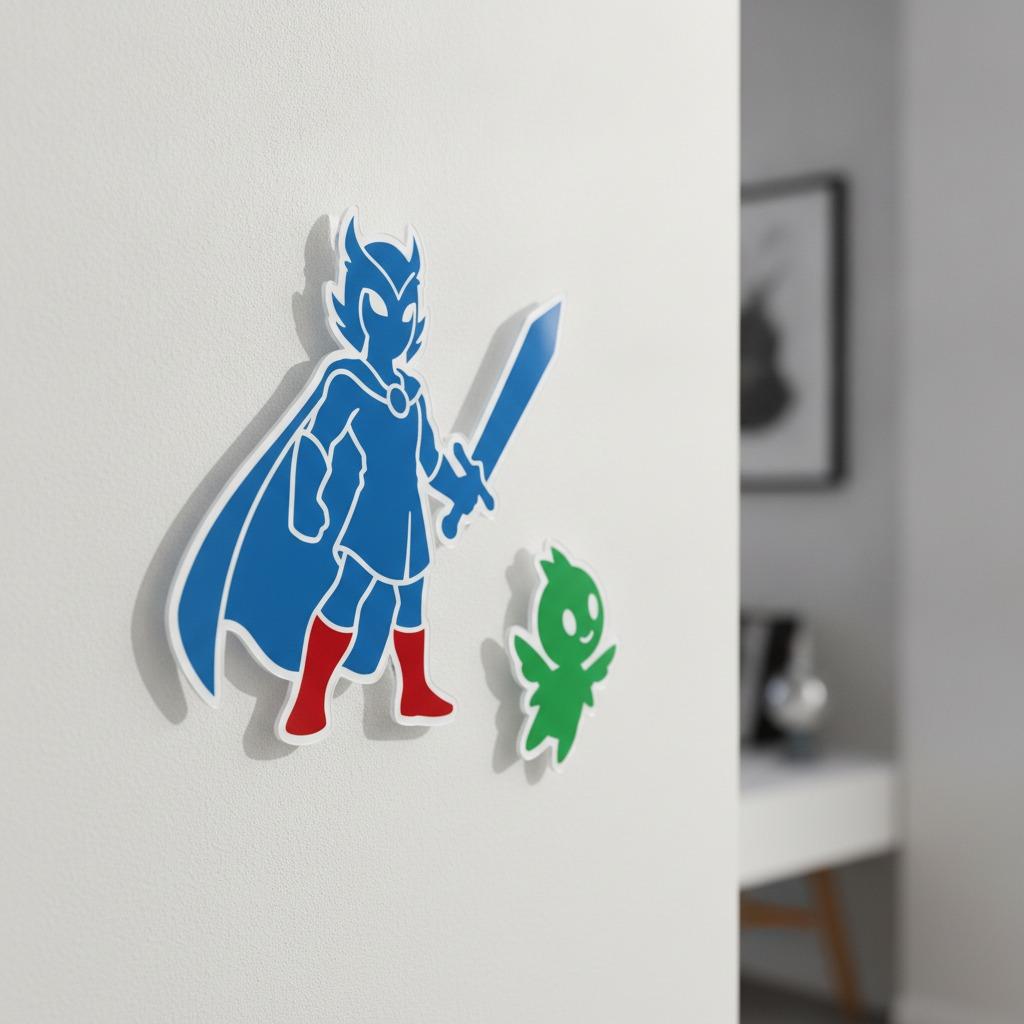
The sample concept here points to a character-shaped panel with a cartoon figure, a smaller companion, and a crisp white border around the contour. That is the kind of visual language many sourcing teams want from an acrylic character cutout: bold shapes, readable graphics, and no wasted background. The actual base material could vary, of course, and that is one of the first things a buyer should confirm before approving a run.
What buyers are usually trying to solve
Most procurement decisions in this category come down to three practical issues. First, the piece needs to match the artwork closely enough that the shape itself becomes part of the design. Second, it has to print cleanly, because strong outlines and flat color blocks expose defects faster than busy graphics do. Third, it needs to fit the intended installation environment, which may be a child’s room, a classroom wall, or a retail backdrop where the piece will be seen at close range.
That is why people comparing a custom acrylic plaque with other sheet goods often focus less on the name of the product and more on the finish, edge quality, and how the cut line tracks the artwork. If the shape is irregular, the cutting step becomes just as important as the print step. In some jobs, the print is fine but the contour is slightly off, and that ruins the visual rhythm of the whole panel.
Typical manufacturing route for irregular display pieces
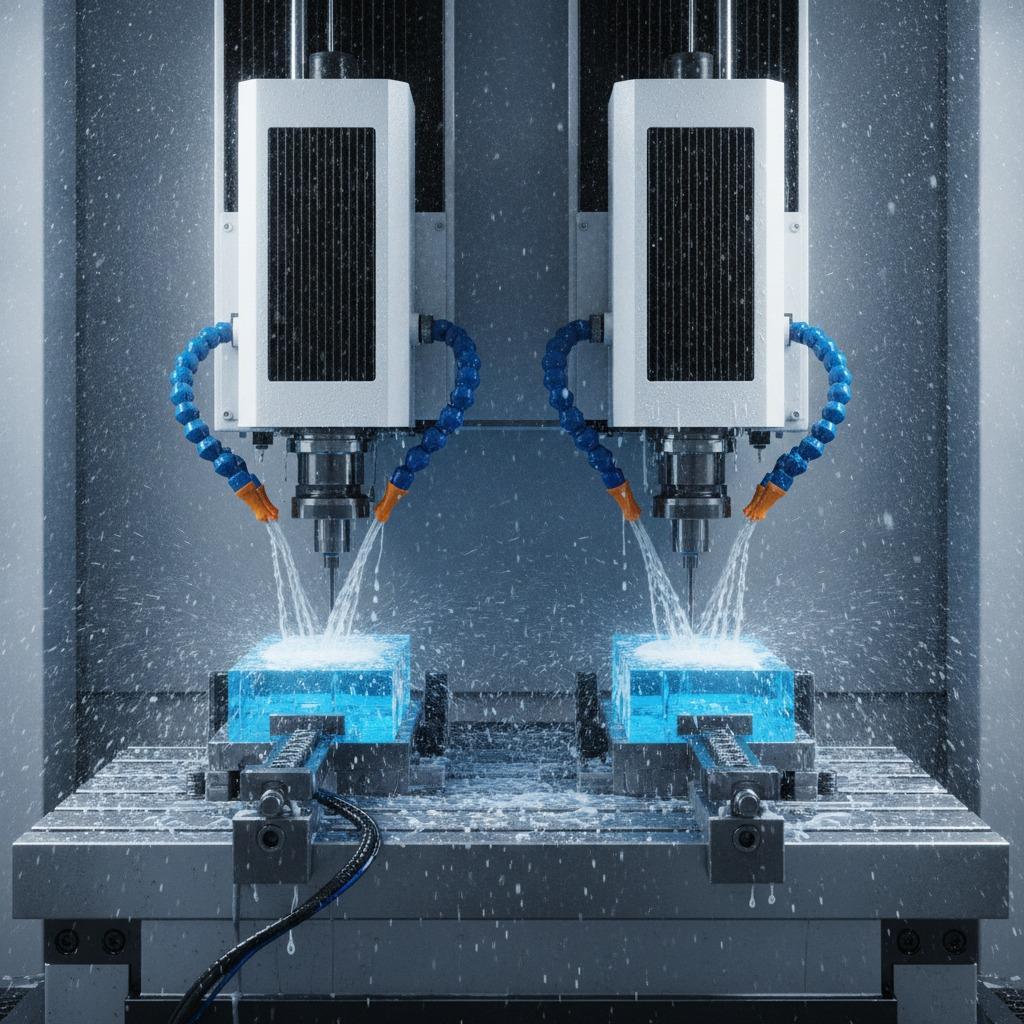
For products like these, the common workflow is straightforward in theory and picky in practice: artwork preparation, digital or UV printing on sheet material, then contour cutting or CNC cutting to the final outline. The product can be made as a decorative sign, a panel, or a sticker-style display item, depending on the substrate and back-end finishing. The image suggests a flat printed panel with a white die-cut border, which is a familiar look for themed decor and branded graphics.
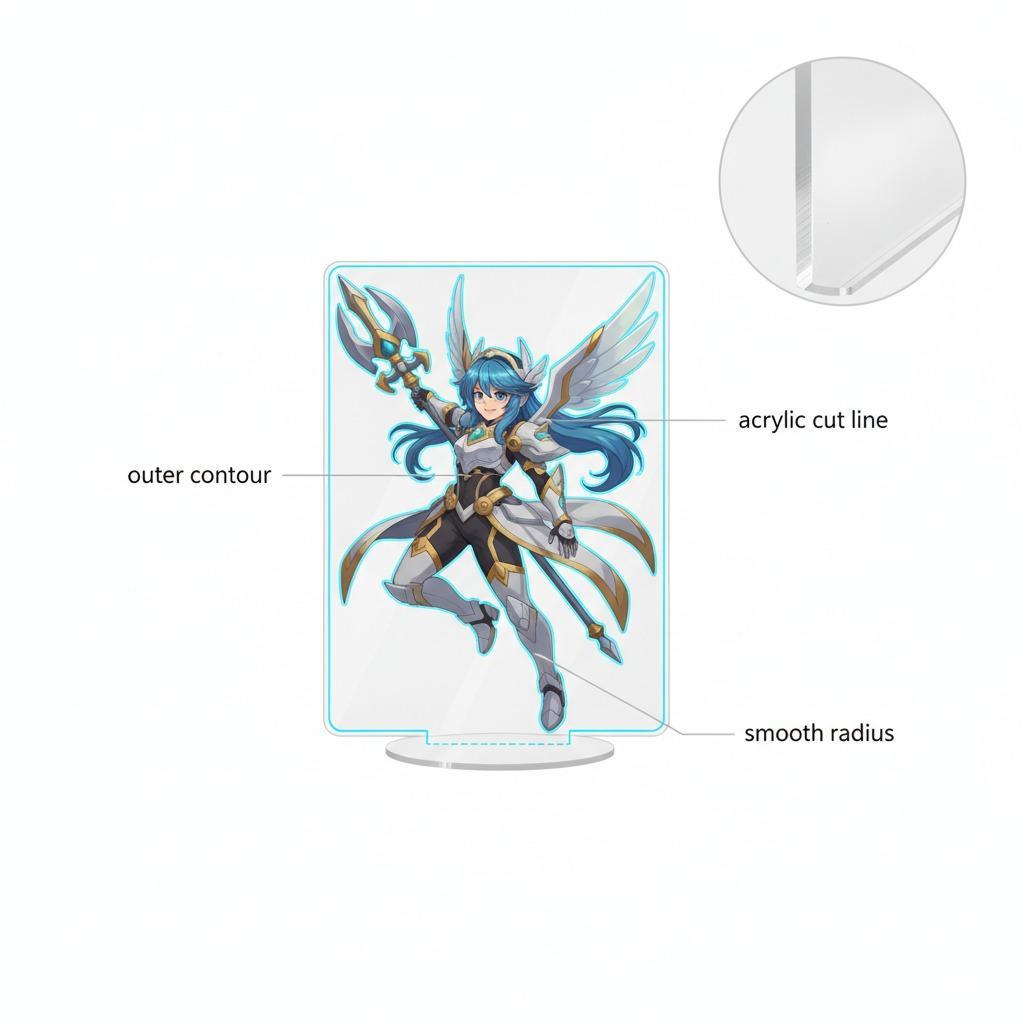
That white border is not just a styling choice. It helps separate the illustration from the wall or background surface, especially when the graphic has bold outlines. For an irregular acrylic shapes order, that border can also hide minor cut tolerances better than a tight edge-to-edge contour. It is a small thing, but buyers notice it immediately when the piece hangs in a room with daylight falling across the surface.
What to check before approving artwork
Ask for a proof that shows the cut line, not just the printed image. Confirm where the border starts and ends. If the design includes several small elements, such as the smaller companion character in the sample concept, check whether those details remain legible after contour cutting. Thin protrusions and tiny internal corners are the first places where production issues tend to show up.
How to choose the right supplier
A buyer looking for an anime acrylic manufacturer or any supplier working in character-based display goods should judge capability by more than a glossy sample photo. Look at whether the supplier can handle full-color artwork, irregular outlines, and repeatable cutting quality. Ask how they handle edge smoothness, color alignment, and surface protection during packing. These are not glamorous questions, but they are the ones that keep a shipment from arriving with scuffed corners or a misregistered outline.
It also helps to know where the product will live. Nursery decor and classroom decor usually call for safe, light visual language and easy wall presentation. Retail and event uses may need stronger visual contrast and better distance readability. If the piece is part of a photo backdrop, surface sheen and reflection matter more than many first-time buyers expect.
Common buyer mistakes
The most common mistake is assuming all printed cutouts are the same. They are not. A flat board sign, a sticker-style cutout, and an acrylic panel can look similar in a product photo, but they behave differently in production and installation. Another mistake is approving artwork without considering the outline. A beautiful character can become awkward once the cut line is added if the designer has not allowed enough margin around the figure.
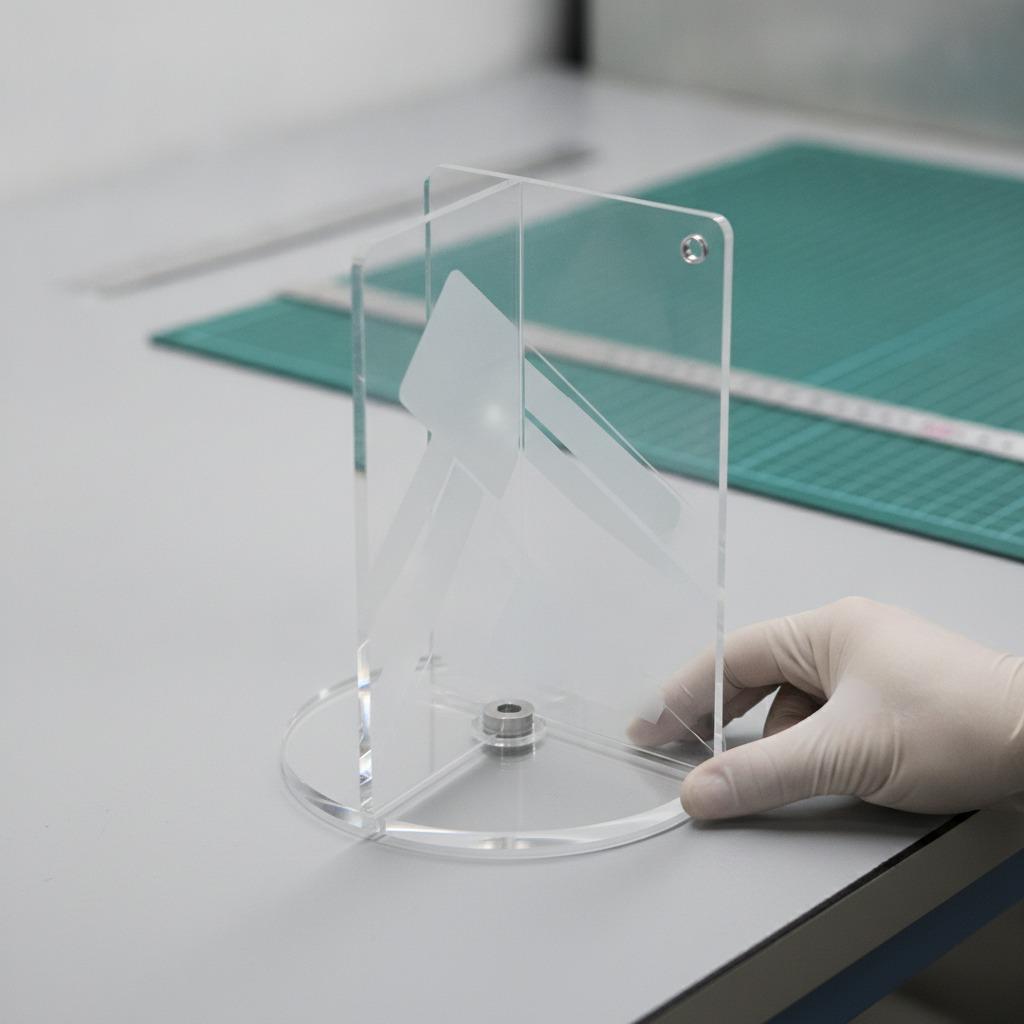
Another small warning: do not over-specify based on the prototype image alone. The visible sample shows a smooth, bold, cartoon-like composition, but that does not tell you everything about material thickness, mounting, or durability. Those should be asked directly. If you are sourcing for repeated orders, consistency matters more than one perfect sample.
Where these cutouts fit in real projects
In practice, custom die-cut acrylic cutouts are often chosen because they sit somewhere between signage and decor. They are easy to theme, easy to scale, and visually stronger than a plain rectangle. That makes them useful for playrooms, classrooms, themed shops, seasonal displays, and branded interior accents. The format also gives designers room to use character-led artwork without losing shape definition.
For teams comparing options, the decision usually comes down to this: do you need a generic panel, or do you need the silhouette itself to carry the message? If it is the second case, then contour cutting is not a finishing detail. It is the product.
Next step for sourcing teams
If you are evaluating a supplier, send artwork with the intended outline, ask for a pre-production proof, and confirm the exact material before ordering. That simple sequence prevents most of the avoidable back-and-forth. For character decor and branded irregular panels, the best results usually come from suppliers who treat print and cutting as one coordinated process, not two separate jobs.