
CNC Acrylic Cutting sounds straightforward until a production team has to decide what actually counts as a clean, repeatable cut. Acrylic can behave well on the right equipment, but it can also chip, edge-whiten, or waste time if the machine setup is built for the wrong kind of sheet work. That is why buyers usually end up looking beyond the word "CNC" and asking a more practical question: will the machine hold the sheet flat, follow the path consistently, and leave an edge that does not force extra finishing?
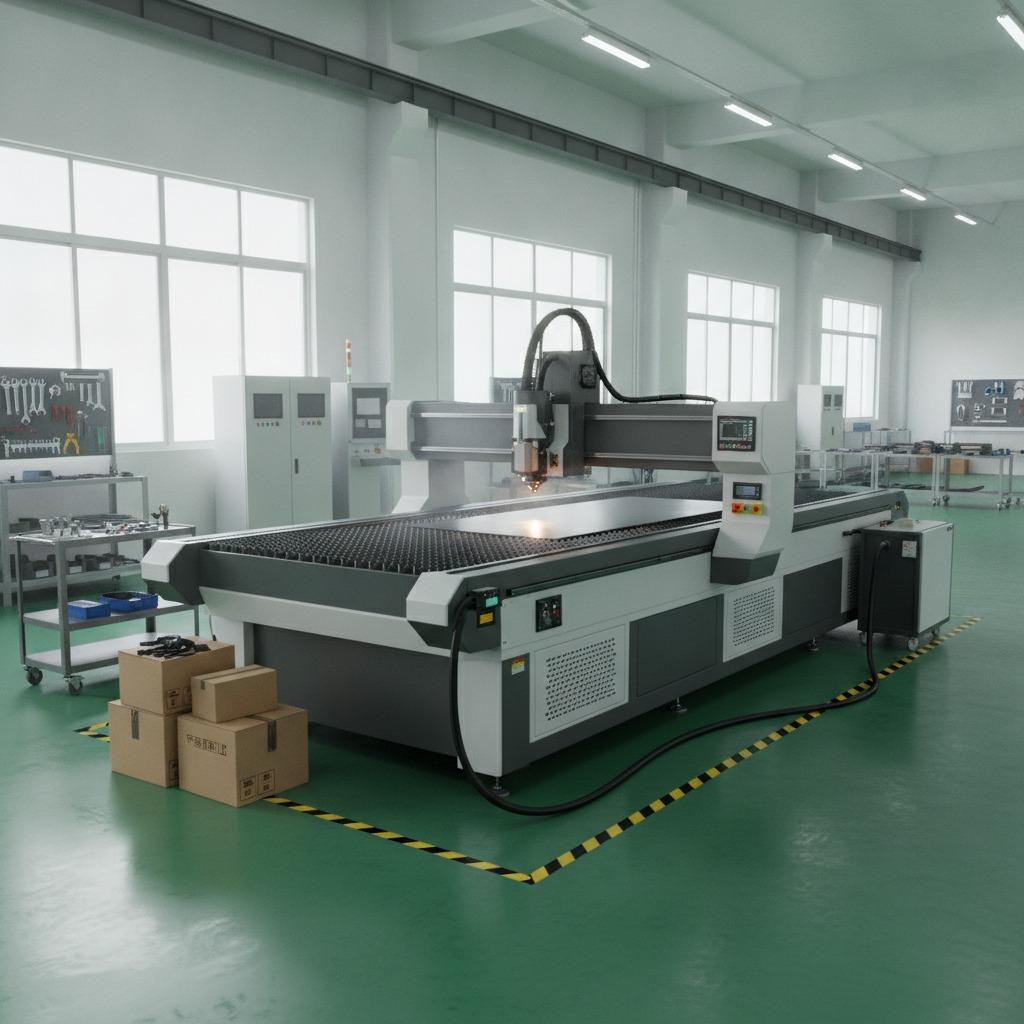
In a shop that runs signs, display parts, protective panels, or industrial sheet components, the answer often depends on the cutting platform itself. A large-format industrial digital cutting table with a vacuum-compatible bed, overhead gantry, moving tool head, and integrated control screen is designed for production use, not hobby work. The layout matters. A long rectangular bed gives operators room for wide sheets, while the enclosed base frame and cable carrier help the machine stay stable through long shifts. That kind of floor-standing equipment is usually chosen when repeatability matters more than improvisation.
What buyers really need from acrylic cutting
The first decision is not the software or the brand badge. It is whether the cutting method matches the acrylic job you actually have. Acrylic can be cut in more than one way, and the right approach depends on thickness, finish expectations, and whether the part will be seen close up. Since the exact tool on a digital cutting table is not always obvious from the outside, buyers should confirm the cutting head, tooling options, and material suitability before assuming a machine is a fit.
For production teams, the appeal is simple: once the job is programmed, the machine should repeat the same path again and again with minimal operator drift. That matters when a part is part of a larger assembly, or when one bad edge can slow a whole downstream workflow. It also matters when sample-making and short runs have to share the same machine time as regular production.
Why a flat-bed digital cutting table is often considered
The visible structure of this type of machine tells a useful story. A flat vacuum bed or conveyor-compatible work surface helps keep sheet stock in place. The gantry bridge moves the tool head across a wide area. The enclosed frame and underframe components suggest a machine meant to live on a factory floor, not on a bench. For acrylic work, that kind of rigidity is often valued because sheet material behaves better when support is even and motion is controlled.
That said, buyers should be careful not to treat every large-format cutter as automatically suitable for acrylic. Some setups are better for flexible materials such as textile or foam, while others are aimed at more rigid or semi-rigid sheet goods. The machine may be excellent for one job and only acceptable for another. The real question is not whether it can move accurately; it is whether the tooling, hold-down method, and workflow support the edge quality the part requires.
Selection criteria that save trouble later
Most disappointment in CNC Acrylic Cutting comes from skipping the dull, practical questions. How large are the sheets? How often does the layout change? Do you need sample-making one day and repeated production the next? A large working area is helpful, but only if it matches the material flow in the plant. Operators also need an interface they can use without turning every changeover into a support ticket.
It is also worth asking how the machine handles dust or chips, especially if the surrounding line is sensitive. The more industrial the environment, the more these small issues matter. An enclosed machine frame can help keep the system organized, but buyers should still think about extraction, housekeeping, and access for maintenance. These are not glamorous details, yet they usually decide whether the machine stays productive after the first few months.
Common mistakes
One common mistake is assuming the same setup works for every acrylic thickness or finish requirement. Another is ignoring workholding and focusing only on speed. A third is buying a machine for the showroom demo and then discovering that the operator workflow in a busy production line is less forgiving. It is also easy to underestimate the value of test cuts. A few sample pieces can reveal more about edge behavior than a spec sheet ever will.
Practical buyer advice from the floor
If you are evaluating equipment for acrylic work, ask for a real material trial, not just a cycle-time claim. Bring the stock you actually use. Check how the sheet sits on the bed, how the machine handles start-stop motion, and whether the edge needs extra cleanup. If the supplier cannot clearly explain the cutting method, the workholding approach, and the expected operator routine, keep asking. That hesitation is usually more useful than a polished brochure.
For many teams, the best machine is the one that makes production calmer. Parts come off the bed more consistently. Rework drops. Sample jobs stop disrupting the main line. The machine becomes part of the rhythm of the shop instead of a special event.
FAQ
Is CNC Acrylic Cutting only for acrylic? No. Equipment in this class is often used for other sheet or roll materials as well, depending on the tool set and setup.
Does a larger machine always mean better results? Not necessarily. The working area should match your material sizes and production flow, or the extra footprint just becomes expensive floor space.
Should buyers focus on the machine body or the tool head? Both matter. The frame, bed, motion system, and operator interface all affect the final result.
Next step
If you are comparing CNC Acrylic Cutting options for a production line, start with a sample run and a clear discussion of material type, edge quality, and workflow. A large-format industrial digital cutting table can be a strong fit, but only when the tooling and material handling match the job. That is the part worth confirming before anyone signs off on the purchase.