
Why Acrylic Keychain Thickness Matters
Acrylic Keychain Thickness is one of those small specification choices that can quietly decide whether a merch item feels premium, flimsy, or awkward to carry. Buyers often focus on artwork first, which is understandable, but thickness affects the real-world experience: how much a keychain flexes, how well it survives daily knocks, how cleanly edges finish after cutting, and whether the piece still looks crisp once a chain, clasp, or protective film is added.
That matters for sourcing managers and product teams because the right thickness is not just a cosmetic decision. It changes shipping weight, perceived value, breakage risk, and even how confidently a design can be made in a clear acrylic format. A thin piece may look elegant on a desk display or novelty item, but the same choice can be too delicate for heavy keys and constant handling.

Start With the Use Case
Before choosing a thickness, decide what the item needs to do. A decorative souvenir, fan item, or seasonal gift can usually prioritize appearance and print quality. A keychain that will be attached to a backpack, store lanyard, or set of house keys needs more stiffness and edge strength. That sounds obvious, but it is where many projects go wrong: the design is approved as artwork, then later the hardware and use conditions expose weak material choices.
If the piece is mainly a display item, thickness can be chosen to support visual depth and a polished edge. If it is meant for daily carry, a slightly heavier structure often feels better in the hand and holds up longer. There is no universal best answer; the point is to match the material to the use.
Practical Thickness Considerations
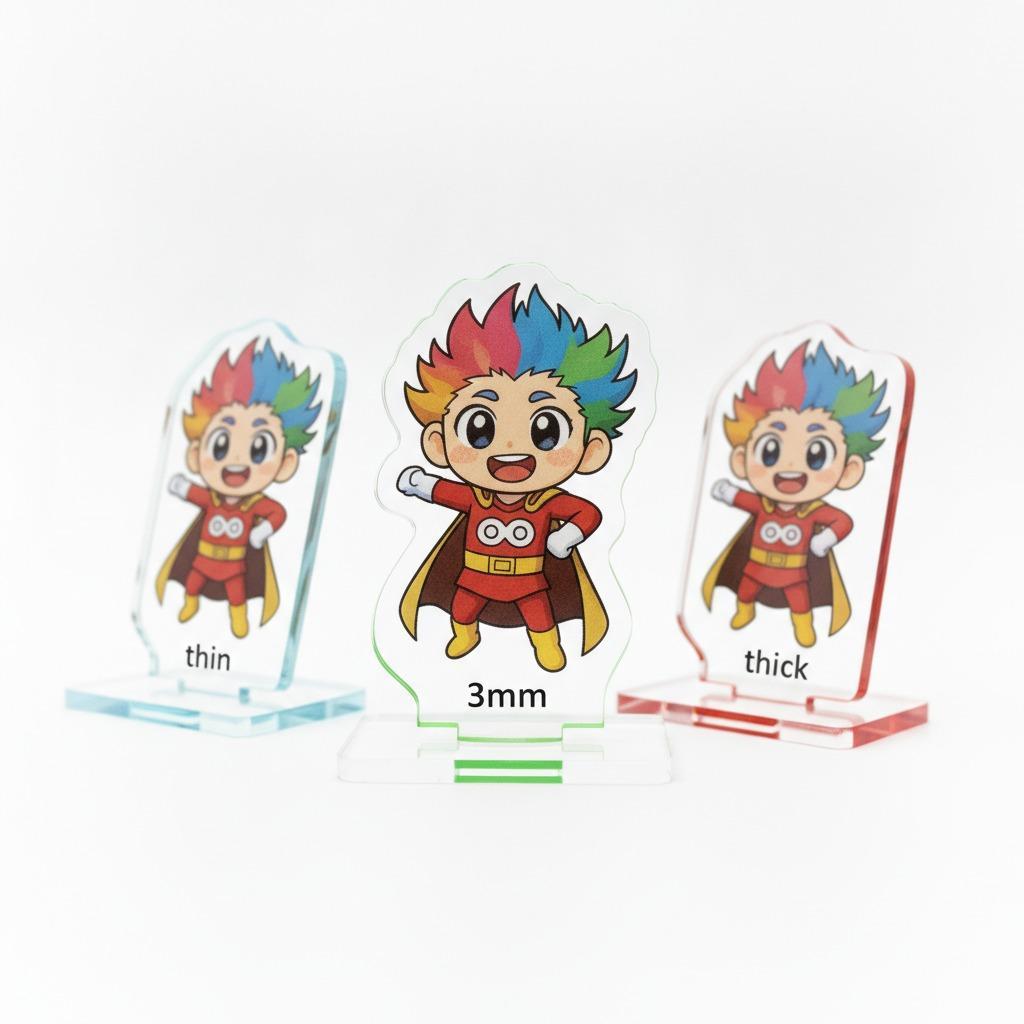
In general manufacturing practice, thinner acrylic gives a lighter feel and can reduce material cost, while thicker acrylic creates a sturdier, more substantial product. For acrylic merch, that tradeoff is easy to understand but still easy to underestimate. A piece that looks good on screen may feel too fragile once it is cut, printed, drilled, and fitted with hardware.
For clear acrylic products with full-color artwork, thickness also affects visual depth. Transparent material can make printed graphics appear floating inside the piece, especially when the outline is carefully cut. That effect is useful for desk standees, ornaments, and collectible items. On the other hand, too much thickness can make a small design bulky, and buyers sometimes read bulk as cheapness when the artwork is delicate.
As a practical aside, edge finishing matters more as thickness changes. Laser-cut acrylic or CNC-routed acrylic can both show clean edges when the process is well controlled, but thicker stock tends to magnify any roughness, chips, or tool marks. If the product is supposed to look giftable, that detail is worth checking early.
How the Manufacturing Process Affects the Choice
The visible product data suggests two relevant manufacturing worlds: clear acrylic novelty pieces and CNC machining for flat parts. Those are not the same thing, but they share a useful lesson. The material has to survive the cutting method cleanly before it can serve the design.
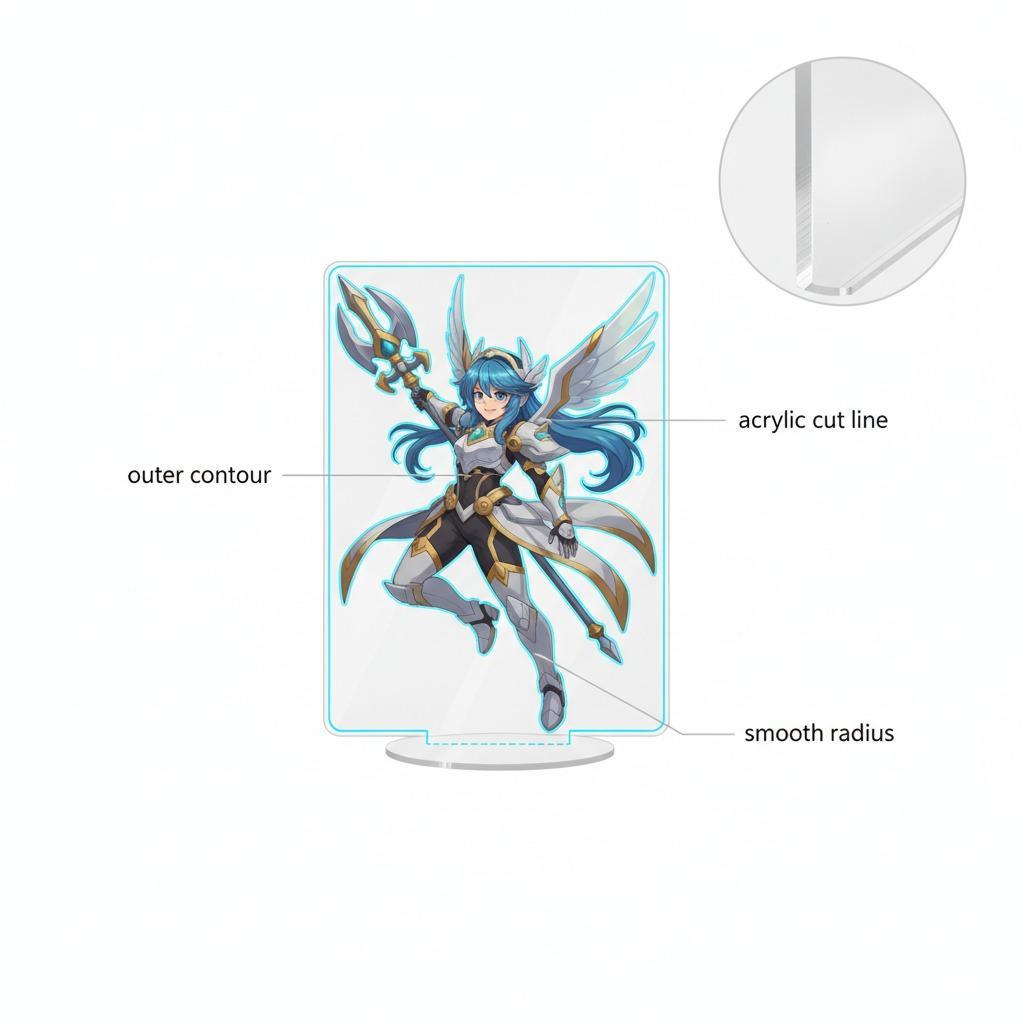
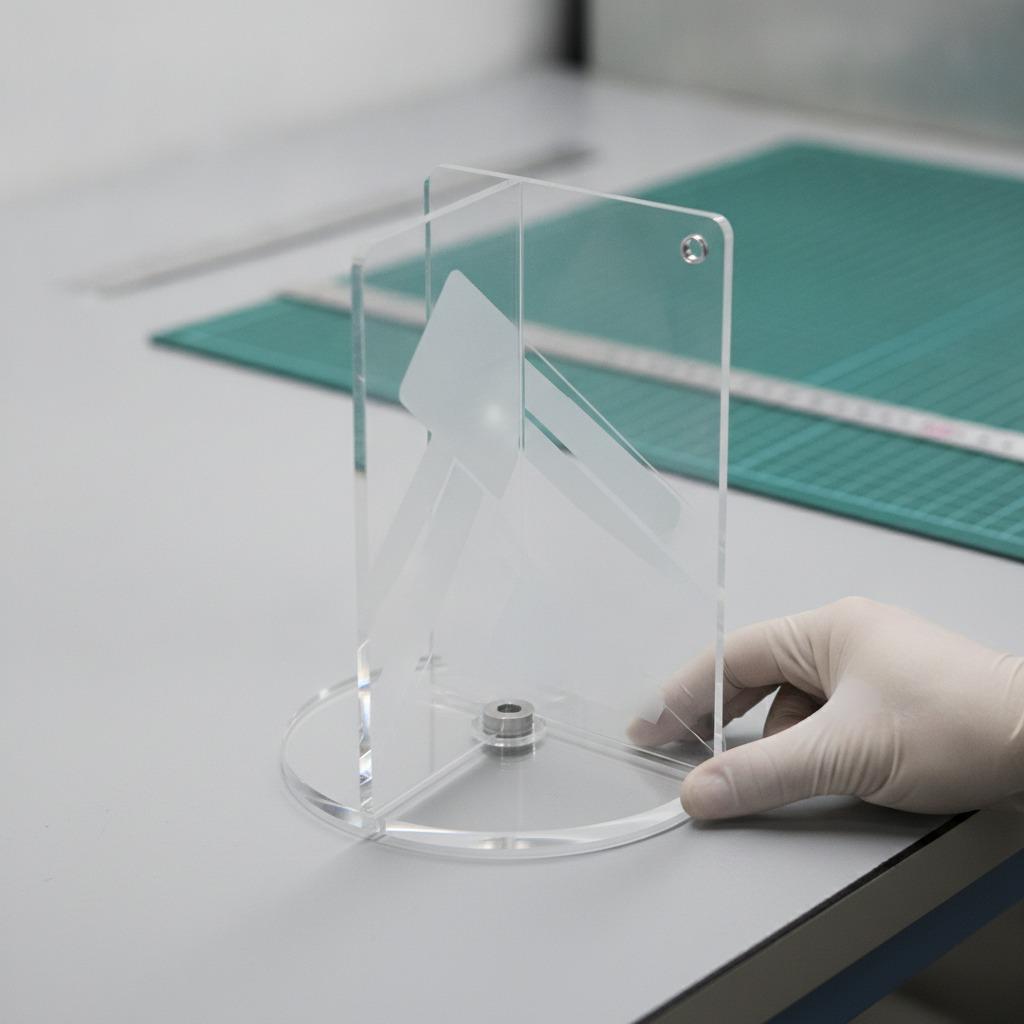
For acrylic merch, laser cutting is often associated with crisp outlines and neat shapes, while UV printing or a similar direct print process is commonly used for full-color graphics on clear sheet. CNC routing, meanwhile, is often used for panel cutting, prototypes, fixtures, or other flat parts where the machine moves a spindle over a worktable. In either case, thickness influences stability during processing. A sheet that is too thin can vibrate or distort; one that is too thick may require different tooling or slower processing to keep edges clean.
That is why it helps to think about the whole job, not just the finished item. If the design includes a rounded silhouette, printed art, a flat base, or a layered look, confirm how the thickness will behave in cutting, printing, and assembly before sending artwork to production.
Quick Selection Guide
Choose thinner material when
The item is decorative, light-duty, or intended to stay attached to a display rather than heavy keys. Thin stock is also useful when visual delicacy matters more than impact resistance.
Choose thicker material when
The product will be handled often, sold as a premium gift, or attached to heavier accessories. Thicker acrylic usually gives a more reassuring feel and is less likely to bend in use.
Recheck the design when
The artwork has fine text, narrow cutouts, small hanging holes, or sharp internal corners. Those features can be the first to fail if the thickness and tooling are not matched well.
Common Buyer Mistakes
One mistake is assuming every acrylic product should be as thick as possible. That is not true. Excess thickness can make a small keychain clumsy, increase cost, and reduce the clarity of fine printed details. Another mistake is treating thickness as a finishing issue rather than a structural one. Once the cut line, print layer, and hardware are set, thickness choices become harder to fix without reworking the whole design.
Buyers also sometimes compare samples only by look, not by feel. That is risky. A clear acrylic piece can appear substantial under showroom lighting and still flex too much when hung from a ring. The better test is simple: handle the sample the way the customer will.
What To Ask Your Supplier
Ask what thickness they recommend for the intended use, how the edge will be finished, and whether the artwork will be printed directly onto the acrylic or applied another way. If the design includes a stand, pedestal, or layered section, ask how that affects perceived rigidity. If the supplier uses CNC routing for related parts, it is reasonable to ask how they manage chip removal, workholding, and surface finish on similar acrylic sheet.
Also ask for a sample or a pre-production proof if the order is new. That is especially important for novelty products, seasonal gifts, or fan merchandise where the visual effect matters as much as the physical spec. A sample quickly shows whether the thickness feels balanced with the artwork.
FAQ
Does thicker always mean better? No. Better depends on the product’s role. Decorative pieces and carry items have different needs.
Can thickness affect print appearance? Yes. On clear acrylic, thickness can change the sense of depth and the way light passes through the artwork.
Should a display item use the same thickness as a keychain? Not necessarily. Desk ornaments, standees, and keychains are handled differently, so their structures should not be treated as identical.
Take The Decision Back To Use, Not Guesswork
If you are sourcing acrylic merch, start with the user scenario, then work backward to the material spec. That simple habit prevents most problems. Acrylic Keychain Thickness is not just a line on a drawing; it shapes durability, appearance, and customer perception all at once.
For new projects, the safest next step is to request a sample in the intended thickness range, inspect the edge quality, and test the piece with the actual hardware it will carry. That is usually where the right choice becomes obvious.