
Why acrylic hair clip hardware matters in fashion accessory sourcing
Acrylic hair clip hardware sits at an awkward but important intersection: it has to look decorative on a retail peg, yet still hold hair in place without feeling flimsy. For buyers, product teams, and accessory brands, that balance is where margin and return rates are often decided. A clip can carry a charming silhouette, an iridescent finish, and a gold-tone accent, but if the underlying hardware is weak or poorly assembled, the product quickly becomes a complaint item.
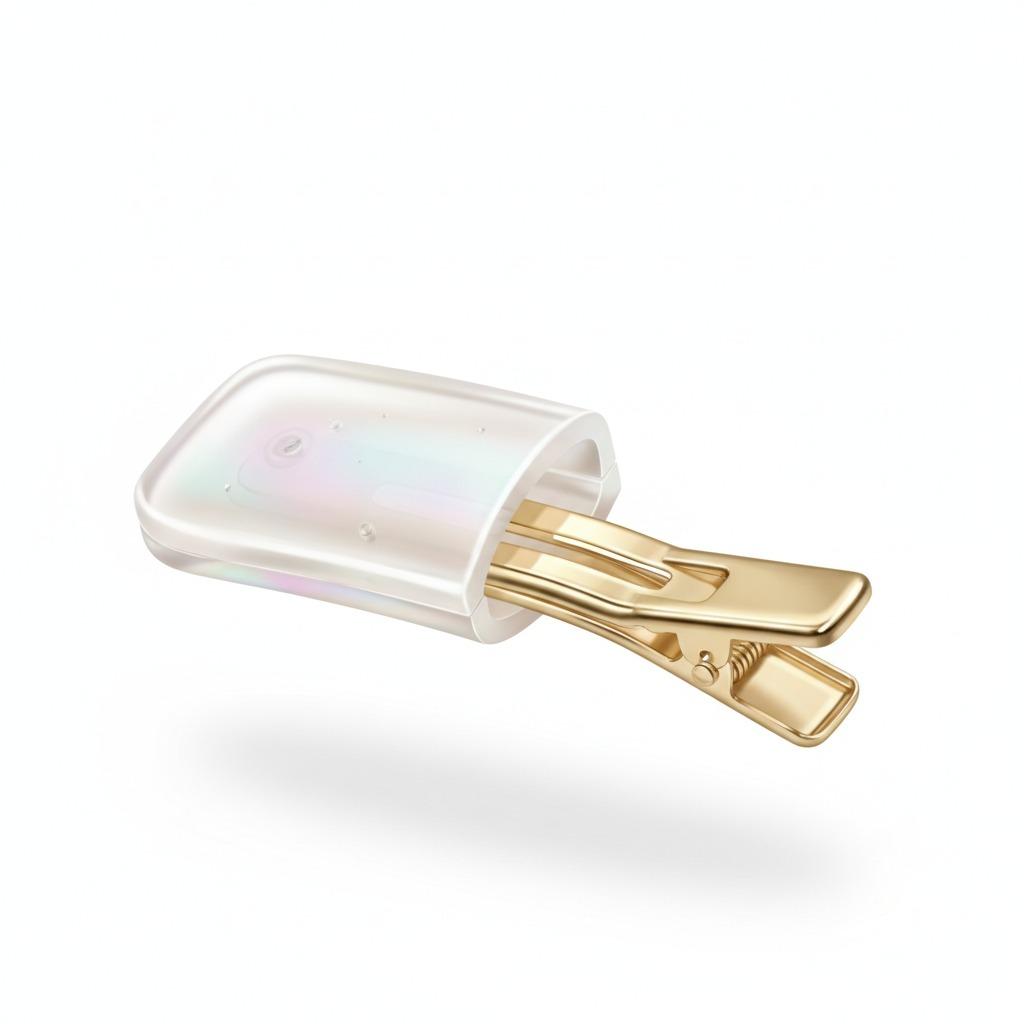
This is especially true for oversized novelty styles. The visible body may be a translucent milky-white acrylic-like piece with an opalescent sheen, but the business question is more basic: does the form translate into a sellable, usable fastening product? If the answer is yes, then the next question is which metal barrette hardware or insert style supports it best, how the decoration is attached, and where the design may create manufacturing risks.
What this type of accessory is trying to do
The product profile here suggests a decorative hair accessory rather than jewelry or a pure ornament. The large open curved frame, the lower gripping section, and the visible metal bar or pin point to a hair-holding function. At the same time, the molded character silhouette and metallic gold outline make it clear that aesthetics are doing a lot of the selling.
That dual role matters. Buyers sourcing novelty fashion accessories are rarely looking for one feature alone. They need a design that photographs well, reads clearly at retail distance, and still performs as a practical everyday styling item. In this category, decorative pendants, star details, and cartoon-style motifs can be the difference between a generic accessory and a product that earns a place in themed assortments or gift sets.
Key construction features to look at
Main body and visual finish
The visible body appears to be molded from plastic or a resin-like material, with a translucent milky-white look and iridescent reflection. That finish is useful because it catches light without needing heavy coloration. For fashion accessories, this is often a smart route: the product looks richer than a plain opaque clip, but the design still stays lightweight enough for daily wear.
Still, there is a practical caution here. Decorative surfaces can hide sink marks, uneven molding, or thin sections at the edges. If the product is going into retail, those issues show up quickly under store lighting or in product photography. A sample should always be checked from multiple angles, not just from the front.
Hardware and assembly
The gold-tone metal element visible on the piece appears to be part of the fastening structure, possibly a straight bar or pin with a small attached charm or ring. In sourcing terms, this is the part that often determines long-term usability. Even a well-designed shell can fail if the insert is not aligned properly, if the bar flexes too easily, or if the attachment point loosens during handling.
For buyers comparing options, metal barrette hardware should be evaluated alongside the decorative shell. The shell may be the hero, but the hardware carries the load. If the intended use is everyday styling, that distinction is not academic.
Manufacturing routes that are likely, and what they imply
The most likely path for this kind of product is plastic molding or resin casting for the main body, followed by printing, engraving, or surface decoration, then assembly of the metal components. The exact process is not certain from appearance alone, so it is better to treat it as a likely production model rather than a confirmed one.
From a sourcing standpoint, that uncertainty is useful. It reminds the buyer to ask the right questions: Is the decorative layer printed, embossed, or applied as a separate element? Is the metal hardware inserted before or after finishing? Are the star details part of the mold or added later as assembly pieces? Those details influence cost, consistency, and scrap risk.
How to evaluate acrylic hair clip hardware before placing an order
Start with function, not the pretty face of the product. Does the shape suit the amount of hair it is meant to hold? Is the opening geometry practical for fastening, or is it mainly ornamental? Then check the tactile side: edges, clasp action, and how the metal and plastic meet. Decorative charm accessories often fail at the seam where materials meet, not in the broad molded areas.
Next, think about the channel. If the accessory is aimed at children’s or novelty assortments, the silhouette may sell strongly, but the buyer still needs to consider safety expectations, age positioning, and packaging clarity. If the target is a fashion retail line, then finish quality and color consistency become more important than cartoon detail alone. Different shelves, different rules.
Common mistakes buyers make
One common mistake is overvaluing the visual sample. A clip can look excellent in a product photo and still be awkward in real use. Another is assuming that all acrylic-like bodies behave the same; some are more brittle, some scratch easily, and some show surface haze under heat or pressure. Since exact material composition is not always obvious, buyers should confirm the material spec before scaling.
Another frequent miss is ignoring the hardware visibility. If the product includes gold-tone metal elements, those parts need to be integrated cleanly. A decorative pendant that shifts position or a pin that sits off-center can make the whole item feel cheap, even when the molded body is attractive.
Quick buyer takeaways
If you are sourcing this kind of decorative hair accessory, judge it on three layers: appearance, holding function, and assembly quality. The visible finish may win the first sale, but the hardware and build quality decide whether the item survives repeat wear and retail scrutiny. That is the real sourcing decision here.
For teams comparing acrylic hair clip hardware options, ask for close-up photos, assembly details, and sample checks from the side and back. The front view tells only part of the story.
What to ask suppliers next
Request confirmation of the main body material, the exact hardware structure, and the decoration method for any printed or etched outline. If decorative pendants or star elements are part of the design, clarify whether they are molded in, attached separately, or fixed with a ring. Those small details can affect both durability and final presentation.
If you are building a themed assortment, ask whether the same platform can support alternate shapes or colors. In novelty accessories, platform flexibility often matters more than a single standout design.
Practical next step
For sourcing teams, the best next step is a sample review focused on assembly, finish, and real holding behavior. If the product passes those checks, it has a better chance of becoming a reliable retail line rather than just a good-looking sample on a desk.