
Static vs Interactive Acrylic Standees: Why the Difference Matters for Buyers
When people compare static vs interactive acrylic standees, they are usually trying to answer a practical question, not a design one: which format will actually do the job for a fan product, desk display, or retail promotion? The choice affects perceived value, shipping risk, cost structure, assembly, and even how long the item stays on a shelf before it becomes background clutter.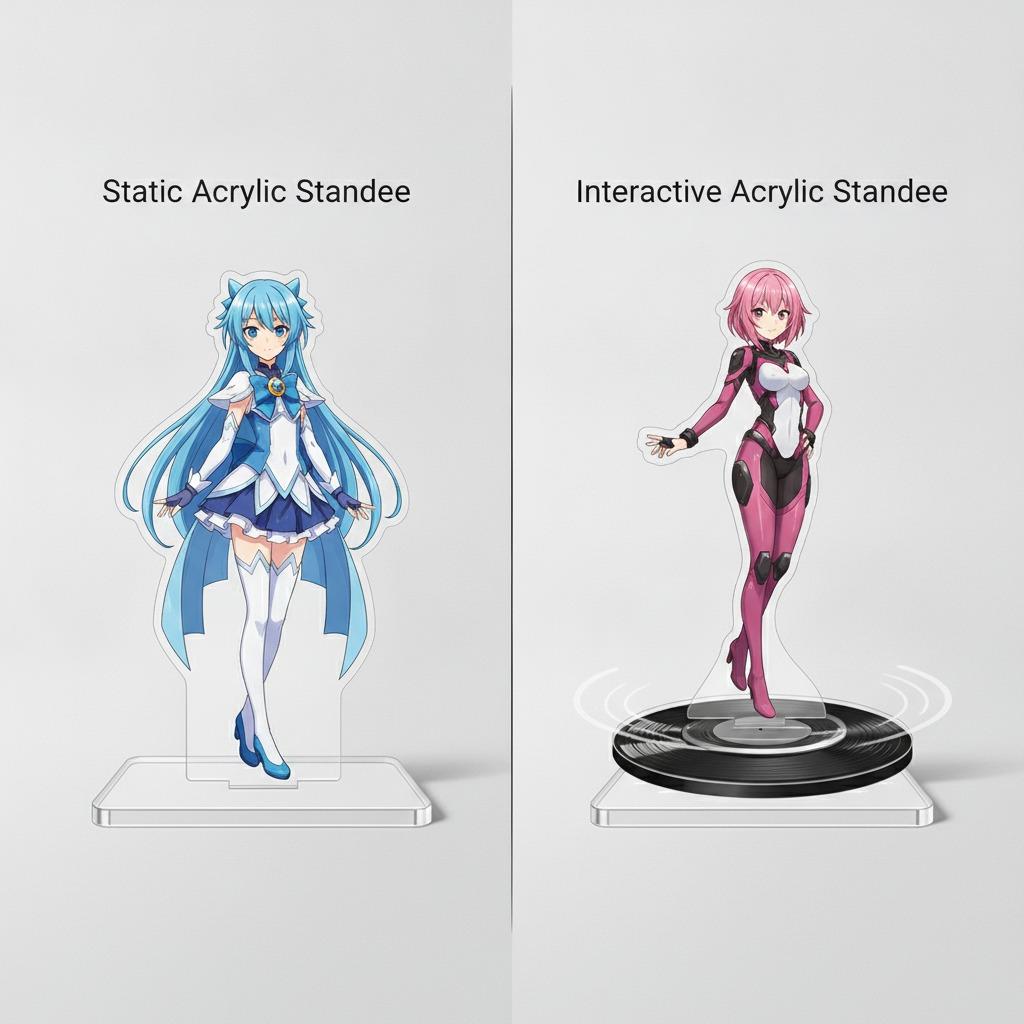
That matters whether you are sourcing anime merchandise, planning a collectible drop, or building a branded display that needs to catch a glance in a crowded environment. A standee that only looks good in a product photo can be a poor seller if it feels flat in person. On the other hand, an interactive piece can add motion, touch, or a visual gimmick that earns attention, but it can also add complexity that a buyer or distributor may not want.
What We Mean by Static and Interactive
A static standee is the simpler format. It is usually a printed acrylic display with one or more cut pieces, a base, and a fixed pose or scene. It relies on artwork, shape, and color contrast to do the work. In manufacturing terms, it is easier to cut, print, pack, and repeat.
An interactive standee adds a second layer of engagement. That can mean a rotating part, a moving insert, a layered assembly, a tactile element, or a design that invites the user to reposition components. In merchandise terms, “interactive” does not have to mean electronic. Often it simply means the product offers motion or participation rather than a fixed image.
A Quick Acrylic Display Comparison
If the goal is shelf presence with minimal risk, static usually wins. If the goal is novelty, collector appeal, or social-media-friendly presentation, interactive often has the edge.
Static acrylic standees tend to be:
- easier to manufacture consistently
- cheaper to pack and ship
- less likely to fail in transit
- straightforward for bulk orders and promotions
Interactive acrylic standees tend to be:
- more memorable at first glance
- better for gifting and fandom products
- more vulnerable to loose-fit issues or breakage
- slightly harder to explain in a product listing, which is not a small detail
Reading the Sample Product: A Design Built Around Movement Cues
The product data here points to a decorative acrylic or plastic display plaque with two anime-style character cutouts on the left and a record-player or turntable graphic on the right. The base panel is rectangular with rounded corners and uses a bright yellow-green color palette, while the circular black disc graphic and small music-note elements give it a music-themed presentation.
Visually, this is the kind of item that sits between static and interactive. The artwork itself appears fixed, but the turntable motif suggests motion and playfulness. That is a useful design trick in interactive anime merchandise: even if the object does not physically move, it can still imply activity and create a stronger story than a plain figure stand.
One visible line of Vietnamese text reads: “NGƯỜI TÔI ĐỂ Ý KHÔNG PHẢI CON TRAI.” That tells you the product is built for a very specific fandom or cultural audience, not a generic gift market. For buyers, that matters because localized text can raise desirability in one market and narrow it in another.
When Static Makes Better Business Sense
Static pieces are usually the safer choice when the priority is consistency. If you are ordering a large run for retail, convention sales, or promotional distribution, the fewer moving parts, the better. Fewer parts usually mean fewer complaints too.
They also suit artwork that depends on clean silhouette work, strong character art, or layered print effects. A good static standee does not need a gimmick. It needs solid print quality, crisp edges, and a stable base.
There is one caution worth keeping in mind: a static design can look premium only if the graphic treatment is strong. If the art is weak, a fixed display can feel thin very quickly.
Where Interactive Designs Pull Ahead
Interactive standees are worth considering when the product needs a talking point. Fan merchandise often benefits from that extra hook. A buyer is not just purchasing a display; they are buying a small experience. Turning a disc, sliding a panel, or lifting a layered piece gives the item a second life beyond the first glance.
For product teams, this can be useful in limited editions, themed campaigns, or gift bundles. It can also support higher perceived value without resorting to oversized packaging. But the tradeoff is real: more parts can mean more quality-control checks, more packing care, and more design coordination.
Common Buyer Questions to Ask
Before choosing one format over the other, ask:
- Will the item be handled often or mostly displayed?
- Is the buying audience collectors, casual fans, or retail impulse shoppers?
- Does the design need motion, or does the artwork already carry the appeal?
- Can the packaging protect any movable or layered parts?
Practical Mistakes That Cost Time
A frequent mistake is overcomplicating a product that only needed good art. Another is underbuilding an interactive piece and expecting it to survive shipping, shelf handling, and repeated use without issues. Both mistakes show up after launch, which is the expensive time to discover them.
Another easy trap is assuming every buyer wants novelty. Some want a clean acrylic display that sits neatly on a desk. Others want something that feels collectible. The best option depends on the channel.
What to Decide Before You Source
If you are comparing rotating standee vs regular standee options, start with use case, not aesthetics. For mass distribution, static usually offers the better balance of cost and simplicity. For fan-first products and gift items, interactive often creates more engagement.
For an acrylic display comparison, the right choice is the one that matches how the item will be sold, handled, and remembered. That is the real decision, not whether one format is universally better.
If you are developing a custom run, ask your supplier to quote both structures side by side and review the artwork as a manufacturing object, not just a graphic file. That small step can save a revision round later, and in merch production, revisions have a habit of multiplying.
FAQ
Are interactive acrylic standees always more expensive?
Usually they are, though the gap depends on part count, print complexity, and packaging requirements.
Do static standees look less premium?
Not necessarily. Good artwork, clean edges, and a stable base can make a static piece feel very finished.
Which is better for anime merchandise?
It depends on the audience. Collector-focused anime merchandise often benefits from interaction or layered design, while broad retail lines may do better with a simpler format.
Next Step
If you are preparing a new merch line, compare both formats early and build around the audience you actually expect to serve. A good supplier can help translate the artwork into a production-friendly acrylic display rather than forcing the design to fight the material.