
Why rotating acrylic display testing matters
At first glance, a novelty desk piece looks simple: a printed insert, a clear acrylic body, maybe a base, and some eye-catching graphics. In production, though, rotating acrylic display testing is where a small decorative item either feels solid in the hand or starts looking cheap after a week on a customer’s shelf. That is especially true for compact merch with a music or fandom theme, where the buyer expects clean presentation, crisp printing, and smooth movement if the display is meant to rotate.
The challenge is not only appearance. A rotating or movable display has extra failure points that a static sign does not. Holes drift off-center, layered parts rub, printed panels shift, and the whole assembly can wobble. For sourcing managers and product teams, the real question is not “Does it look good in the sample photo?” It is “Will this still present properly after packing, shipping, handling, and repeated use?”

What the product structure tells you about the risk points
The product data here points to a decorative acrylic or clear plastic stand with two character illustrations on one side and a record-like graphic on the other. The surface is glossy, the shape is compact and rectangular with rounded corners, and there is a visible small hole or eyelet near the top right. That combination suggests layered printing and die-cut assembly, likely with a hanging or mounting function, or at least a feature that needs alignment control.
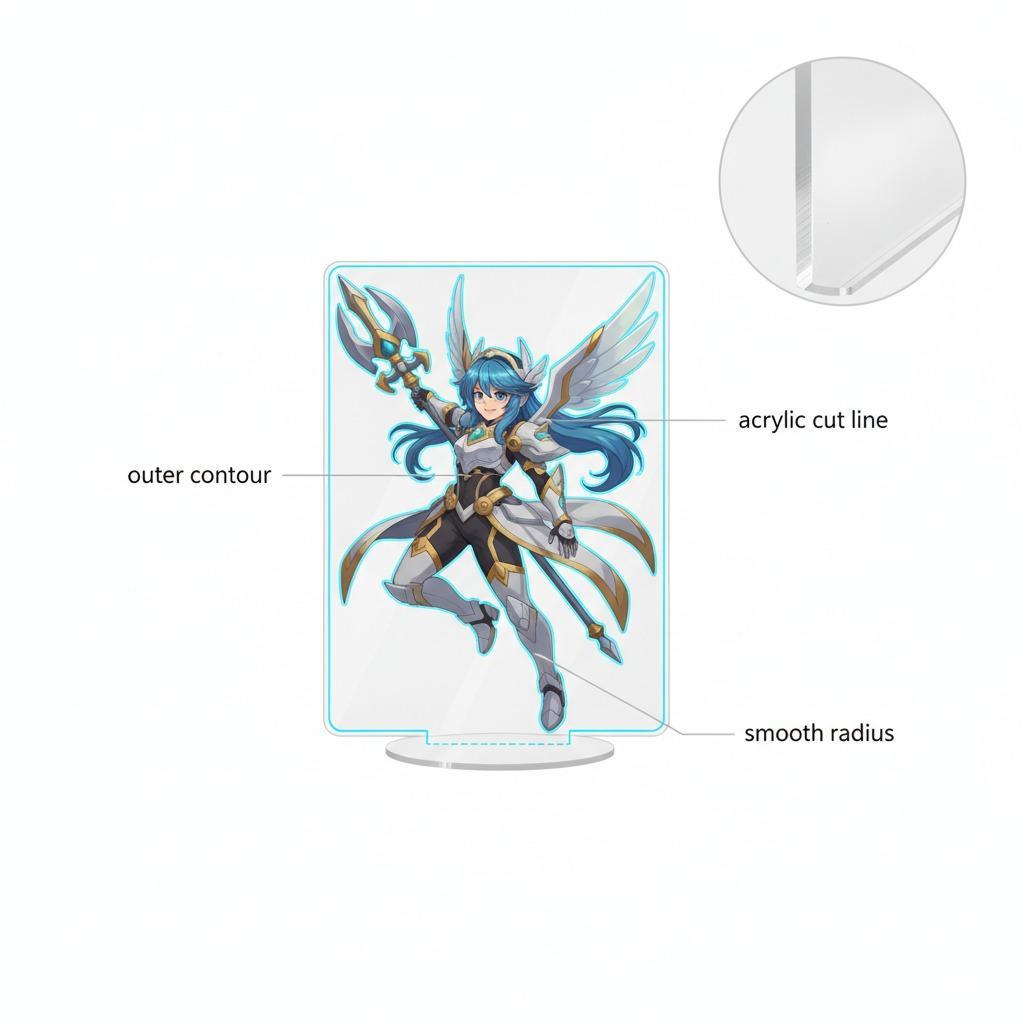
For this kind of piece, the appearance is doing most of the selling. The clear molded outline around the characters, the bright panel, and the circular disc motif all depend on registration staying tight. If the assembly is even slightly off, the visual balance falls apart. Buyers notice this immediately, even if they cannot explain the technical reason.
Quick reference: the main checks buyers should ask for
Rotation tolerance
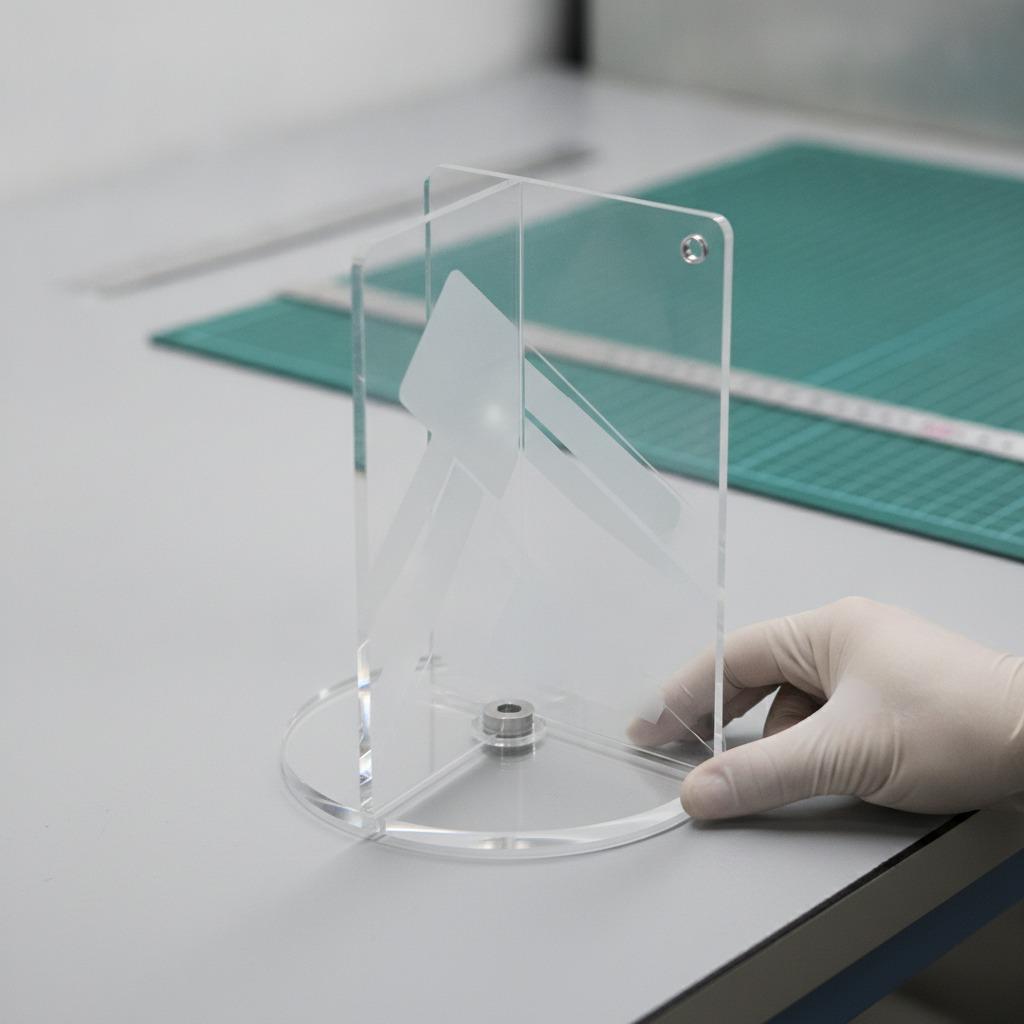
If the display is supposed to move, test whether the motion is smooth and repeatable. The goal is not laboratory perfection. It is consistent movement without scraping, sticking, or visible wobble.
Hole accuracy
The visible corner hole or eyelet should be placed cleanly and consistently. Misplaced holes can affect hanging position, packaging fit, and overall symmetry.
Acrylic assembly QC
Layered acrylic or plastic parts should align cleanly. Check for gaps, edge lift, trapped dust, and adhesive marks. Glossy surfaces make defects easier to spot, which is useful, but it also means defects are harder to hide.
Movable standee inspection
If the product includes a moving component, inspect the pivot, contact points, and retention. A display that works once but loosens after handling is a common complaint item.
Common failure modes in rotating or movable displays
One frequent issue is off-center movement. Even a small positional error can make a circular element look lopsided when it turns. Another is edge interference, where the printed or cut parts rub against each other because the clear layer or insert was not trimmed accurately. In acrylic work, that rubbing can create white stress marks or scuffs that show up quickly under room light.
Printing problems are another quiet troublemaker. This product includes bright graphics and visible text, including Vietnamese copy, so registration matters. If the image shifts against the cut line, the whole piece looks hurried. That is not a minor cosmetic issue; it changes how buyers judge the rest of the production lot.
There is also the simple matter of stability. Desk displays that are meant to sit upright or rotate need enough balance to remain presentable on uneven surfaces. A slight base warp or inconsistent thickness can make a small item lean more than intended. It is not dramatic, but it is exactly the sort of thing customers photograph and complain about.
What practical QC should look like
For this product category, QC should combine visual inspection with simple handling checks. Start with print alignment, cut quality, and surface clarity. Then check the moving function, if any, by rotating the piece several times and watching for resistance. Finally, confirm that holes, corners, and edges are clean enough for packaging and end-user handling.
A buyer should also ask for samples from more than one unit, not just the best-looking one. Small decorative merch often looks fine on a single sample and then spreads variation across a larger run. That is where rotation tolerance and hole accuracy become procurement issues rather than engineering details.
Buyer advice for merch, gift, and display programs
If your use case is fandom merchandise, shop display, or social-media-friendly decor, the visual side may matter more than high mechanical load. Still, do not ignore assembly quality. A low-force novelty product can fail in ways that are more annoying than expensive: tilted presentation, scratched surfaces, loose layers, or poor fit in the pack.
For sourcing, it helps to request clear product photos under neutral lighting, plus close-ups of the hole, edges, and any joint or moving point. If the design includes printed text, confirm the artwork version before approving production. That is especially important when the layout includes multilingual copy or copyright markings, since those details can be easy to misplace during final art handling.
What a good supplier should be able to show
A capable supplier should be able to explain how the acrylic or plastic layers are cut, printed, and assembled, even if the exact process is UV printing, insert printing, or another method. They should also be able to describe how they check hole placement, how they control edge finish, and how they verify that any rotating or movable feature remains usable after assembly.
For a product like this, the difference between “acceptable” and “returns risk” is often a few millimeters and a bit of care in QC. That may sound modest, but in decorative display manufacturing, modest errors are the ones customers see first.
Next step for teams evaluating a similar display
If you are sourcing a rotating or movable acrylic display, define the visible risks before you talk price. Ask for sample checks on rotation tolerance, hole accuracy, and acrylic assembly QC, then compare those results across multiple units. That gives engineering, sourcing, and merchandising teams a clearer basis for approval than appearance alone.
For merch programs and desk display lines, the right question is not whether the piece can be made. It is whether it can be made consistently enough to survive real customer handling without losing the look that made it worth buying in the first place.