
Why PMMA Acrylic keeps showing up in custom manufacturing
PMMA Acrylic is one of those materials that looks straightforward on a sample table and becomes much more interesting once you have to print it, cut it, and ship it at scale. Engineers and product teams keep coming back to it because it offers a clear, rigid, glass-like appearance without the weight and fragility of glass. For signage, decorative panels, and compact merchandise such as acrylic keychains, that combination is hard to beat.
In practice, the decision is rarely about the chemistry alone. Buyers are usually asking a more practical question: will the material take artwork cleanly, hold a crisp die-cut edge, and survive handling without turning the packaging into a complaint box? That is where PMMA Acrylic earns its place, but only when the process is matched to the job.
What PMMA Acrylic brings to the table
PMMA, or polymethyl methacrylate, is valued for optical clarity, surface gloss, and a clean appearance under printed graphics. Those traits matter in products where the substrate is part of the design. A clear or translucent acrylic body can make a printed illustration feel brighter and more defined, especially when the artwork is full color and the cut line is tight.
Compared with softer plastics, PMMA Acrylic has a more premium visual character. Compared with glass, it is easier to process into custom shapes, which is why it appears so often in promotional goods, display pieces, and short-run retail items. That said, the material is not magic. Surface scratching, edge quality, and print adhesion all depend on the upstream process. If a supplier treats those details casually, the finished part will look casual too.
Where it fits in production
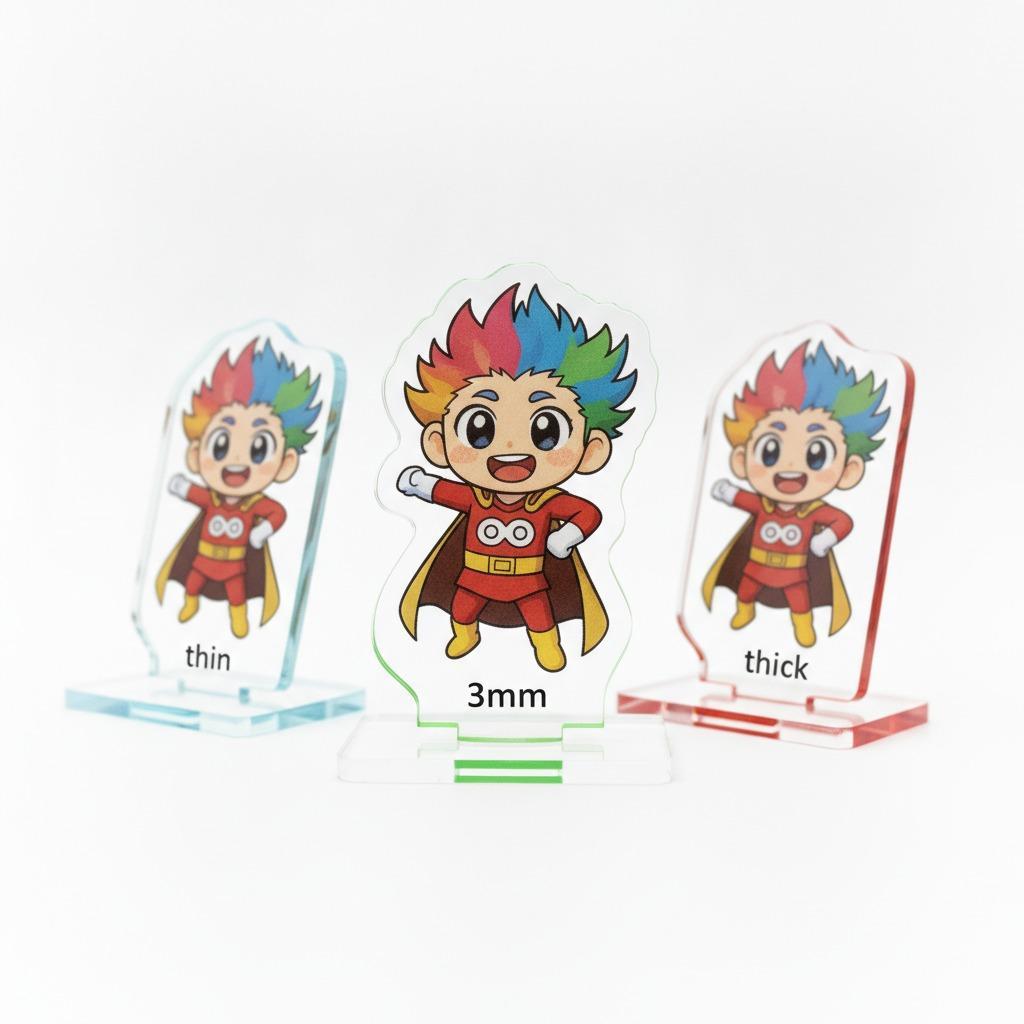
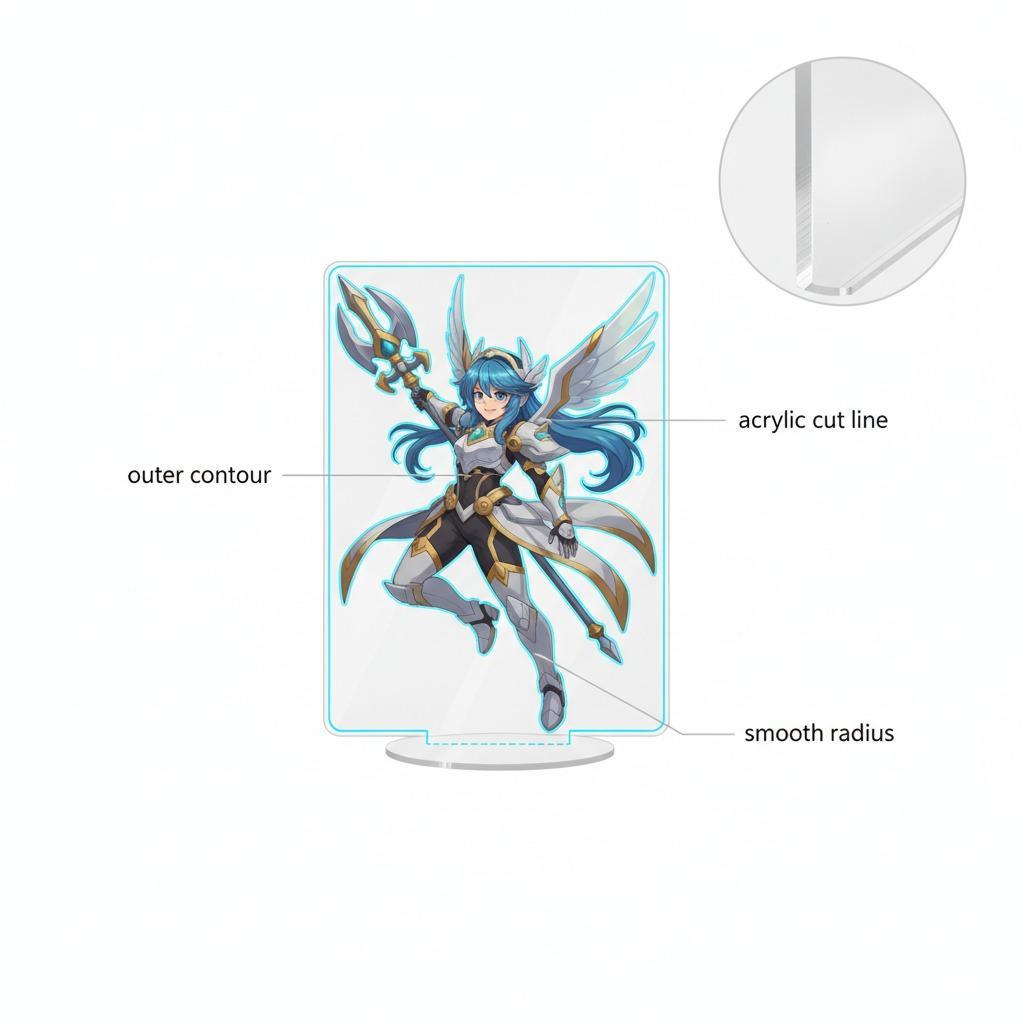
One useful way to think about PMMA Acrylic is as a substrate that rewards precision. It is commonly used for flat sheet products, cut parts, signage faces, decorative inserts, and compact consumer items. In the product example provided, the material appears in an acrylic keychain or charm with a die-cut outline, a glossy face, and a printed anime-style illustration. That is a good illustration of why the material sells: the clear body, bright artwork, and lightweight feel all work together.
The hardware matters as well. A metal split ring and swivel-style connector are simple components, but they change how the item is used and how much wear it sees. For a keychain, the substrate is not only decorative; it is part of a moving assembly that gets bumped, swung, and dropped. Buyers should care about that stress even if the part itself looks small and inexpensive.
Printing on PMMA Acrylic
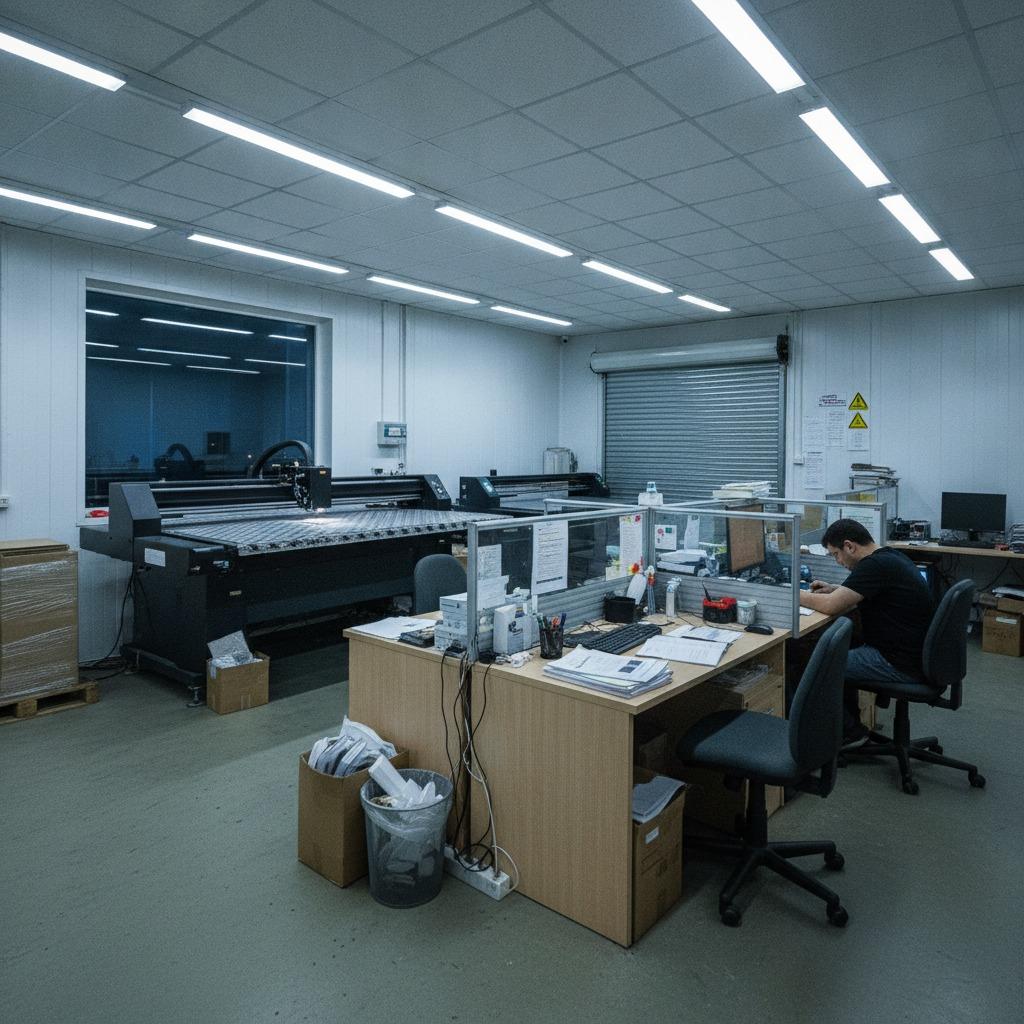
Direct printing on PMMA Acrylic is often done on a flatbed digital printer, very likely a UV flatbed printer when rigid sheets are involved. The machine description here suggests a large industrial system with a wide bed, a gantry-style carriage, and UV curing light near the print head. That setup is well suited to sheet-based materials such as acrylic, PVC, wood panels, signage boards, and similar rigid substrates.
For short runs and custom jobs, direct-to-substrate printing is attractive because it reduces setup compared with older screen-based workflows. It also makes it easier to produce variable artwork, small batches, and fast turnarounds. Still, buyers should not assume every printed acrylic part is the same. Ink system, surface preparation, curing behavior, and handling after print all affect the result. If a vendor cannot explain those basics clearly, that is a warning sign.
Why flatbed equipment matters
A flatbed printer gives the manufacturer control over placement and repeatability on rigid sheet stock. That matters when the design includes fine linework, small text, or multiple colors packed into a small area. It also helps when the part must be die-cut after printing, because registration and artwork alignment become more important than they first appear.
For decorative merchandise and promotional pieces, the machine is only half the story. The process has to respect the material. Overly aggressive handling can mar the face of the acrylic, and poorly managed curing or ink adhesion can reduce durability. Those are the details that separate a clean sample from a production run worth shipping.
Selection criteria buyers should actually use
When evaluating PMMA Acrylic parts or products made from it, start with the finished use case rather than the raw sheet description. A display panel has different requirements than a keychain. A souvenir charm can tolerate different edge conditions than a machine cover or a retail sign. The point sounds obvious, but it is where a lot of sourcing mistakes begin.
Look closely at the printed surface, the cut outline, and the hardware interface if the part is an assembled item. For the acrylic keychain example, the visible selling points are the compact form factor, bright multicolor artwork, and included attachment hardware. Those are real advantages, but they do not tell the whole story. You would still want to know how the print behaves under abrasion, whether the edges are smooth, and whether the artwork is single-sided or double-sided. In this case, those details are not visible, so they should be confirmed rather than assumed.
Common mistakes to avoid
The most common mistake is treating PMMA Acrylic as if it were interchangeable with any clear plastic sheet. It is not. Optical finish, machining response, and print behavior vary enough that the process needs to be planned around the material.
Another frequent problem is forgetting that a decorative item and an industrial panel live under very different expectations. A fan-merch keychain can prioritize vivid graphics and compact size, while a shop sign may care more about flatness, legibility, and consistent print coverage. If you buy both from the same vendor, make sure they are not simply applying one process to every order.
Finally, do not overstate performance claims. Unless a supplier provides verified data, avoid guessing at thickness, exact grade, scratch resistance, or outdoor life. Those details matter, but they must be based on actual specifications rather than wishful thinking.
Practical buyer advice
If you are sourcing PMMA Acrylic products, ask for sample photos under normal light, not only polished hero shots. Ask how the part is cut, how it is printed, and what steps are used to protect the finished surface during packing. For a keychain or charm, inspect the connector hardware as carefully as the print. A poor attachment point can undo an otherwise good-looking item.
For print shops and fabricators, the main decision is whether the material and the machine are aligned to the job. A large UV flatbed printer is a strong fit for rigid sheet work, prototype graphics, signage, and short-run decoration. It is less useful if the workflow cannot control alignment, curing, or post-print handling. That is the practical split that matters.
What PMMA Acrylic helps you decide
For sourcing managers and product teams, PMMA Acrylic is less a fashion choice than a manufacturing decision. It helps you decide whether the product should feel clear, polished, and lightweight; whether the artwork should sit directly on the substrate; and whether the finished item needs the rigidity of a hard sheet material rather than a flexible plastic.
If you are choosing between options for a custom printed acrylic part, start with the end use, then confirm the print method, cut quality, and assembly hardware. Those three details tend to determine whether the item looks like a thoughtful product or just a printed object with a ring attached.
Next step
If you are developing a PMMA Acrylic item for signage, merchandise, or a custom promotional run, request a sample with the intended print method and hardware. A small test order will usually tell you more than a specification sheet filled with optimistic language.