
How acrylic hair clips are made: what buyers should understand before they place an order
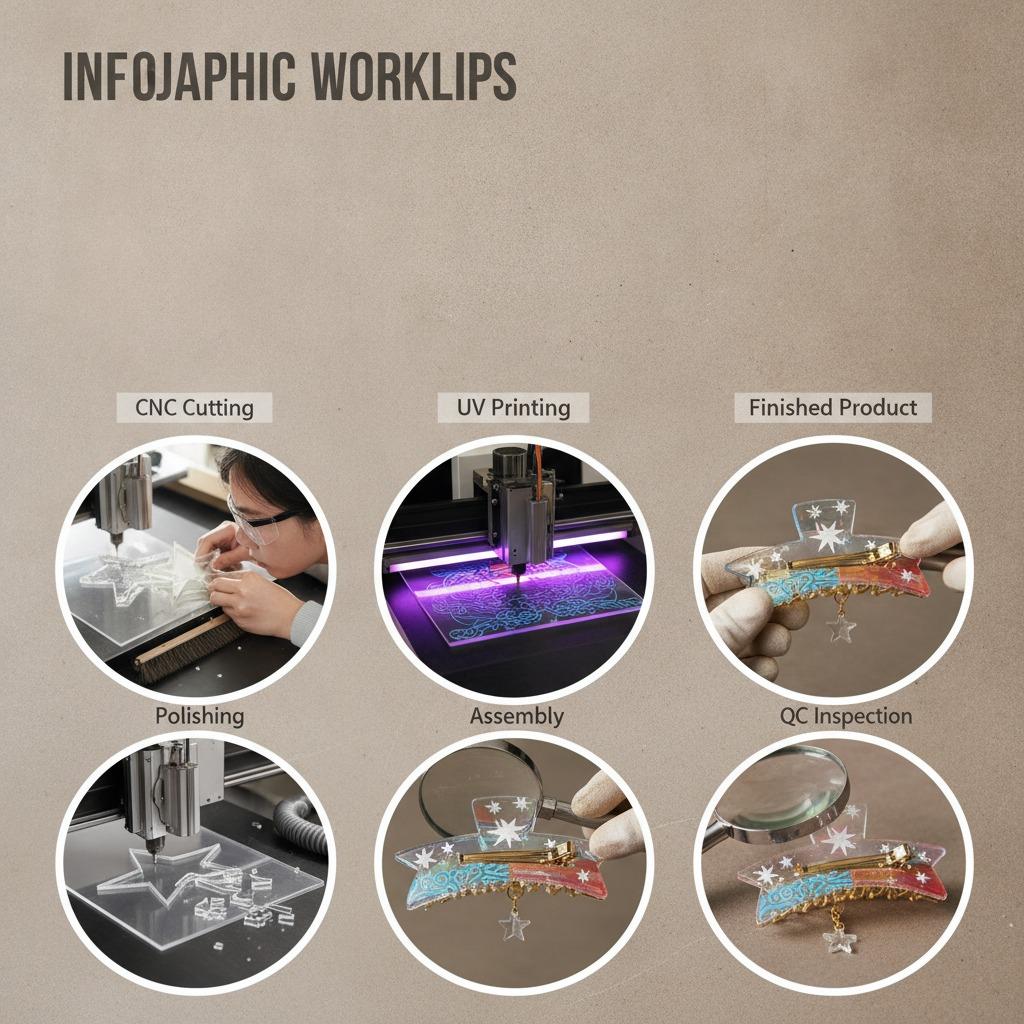
If you are trying to understand how acrylic hair clips are made, the real question is usually not academic. It is about choosing the right construction for a fashion accessory that has to look sharp, feel light, survive handling, and still be economical enough to produce in volume. For sourcing teams and product developers, acrylic hair clip manufacturing sits somewhere between jewelry fabrication and light plastic processing. The part may be small, but the production choices behind it affect appearance, breakage risk, printing quality, and how well the clip works as a finished accessory.
A piece like the translucent, iridescent clip described here shows why the process matters. You can see a molded or cut body, decorative line art on the upper section, gold-tone metal hardware, and a small charm. That combination tells you this is not just a single molded shell. It is a layered product: form, surface decoration, and assembly all have to work together.
What the typical acrylic hair clip build actually involves
In most acrylic hair clip manufacturing, the base piece starts as a sheet or a molded blank. Depending on the design, the maker may cut the shape from acrylic sheet, form it in a mold, or create a resin-like body that is later finished and decorated. The visible result can be similar, but the route to get there changes the cost structure and the design limits.
For a decorative clip with a large open frame and a printed character or graphic, the common sequence is usually something like this:
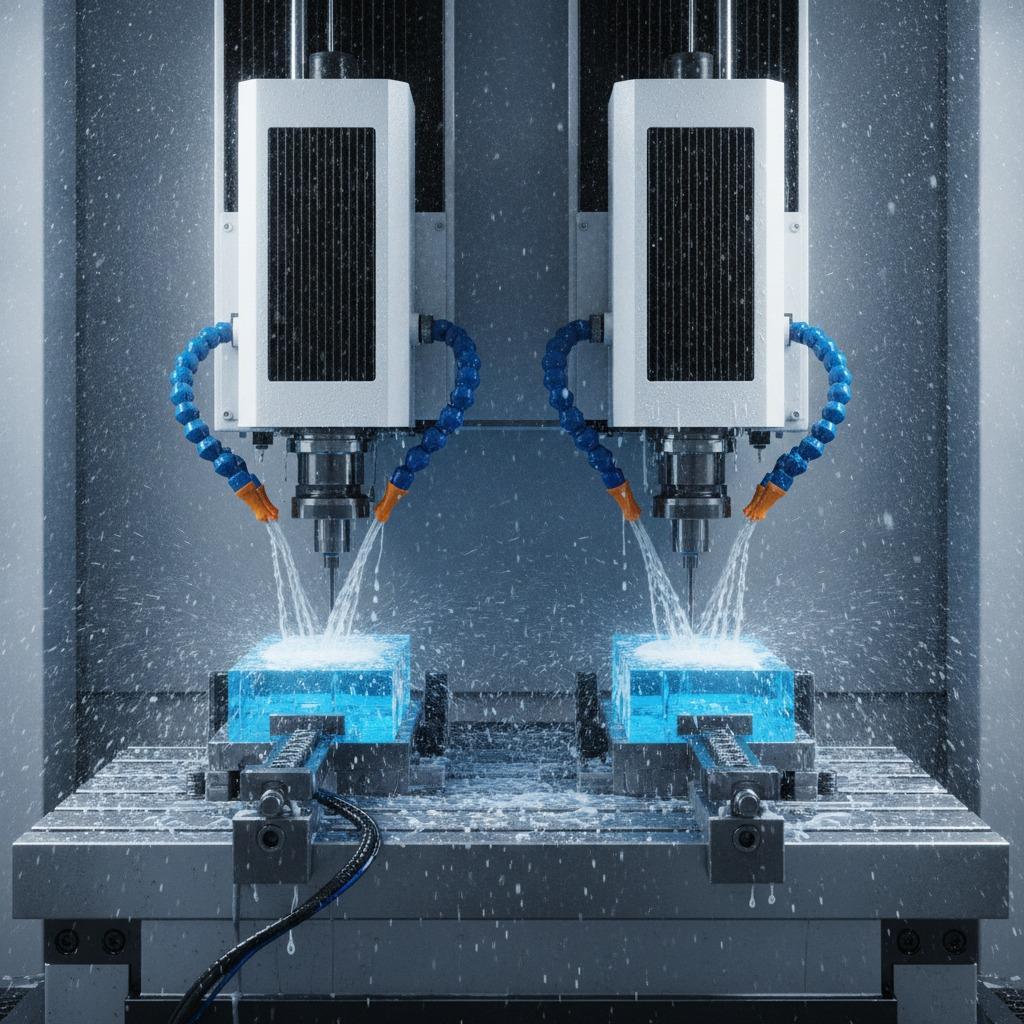
First, the body shape is created. If the factory uses sheet stock, CNC acrylic cutting is a practical method for clean outlines and repeatable edges. If the shape is more sculptural, molding may be more suitable. Either way, the raw part needs to be consistent enough that later decoration lines up correctly.
Next comes surface preparation and finishing. This is where acrylic polishing becomes important. Acrylic and acrylic-like materials can look cloudy or rough right after cutting. Polishing restores clarity at the edges, improves gloss, and reduces the mechanical feel of a machine-cut part. On a translucent or milky finish, the goal is not always full transparency; sometimes the buyer wants that soft, pearly look. Still, rough edges will ruin the effect quickly.
Then the decorative graphics are added. UV printed hair accessories are common when the design includes fine line work, color blocks, or small character details. UV printing works well because it can place graphic detail directly onto the surface without a separate label layer. In a product like the one described, the cartoon-style artwork and star motifs could be printed, coated, or applied as part of a secondary decoration process. The exact method is not visible from the item alone, so it is best to treat that as a likely rather than certain step.
Finally, the metal hardware and charms are assembled. Gold-tone pins, rings, and small dangling elements are often added after the body has been finished, so they do not interfere with polishing or printing. This stage may look simple, but it is where cheap accessories often fail. Poorly set pins loosen, rings scratch the surface, and dangling parts can pull unevenly on the body.
Why the process choice changes the product
The production method affects more than appearance. It changes how the clip feels in use, how robust the edges are, and how detailed the graphics can be. CNC acrylic cutting is useful when a buyer wants sharp contour control and relatively fast prototyping. Molding can be better when the part needs integrated shape features or a more sculpted, three-dimensional profile. UV printing is helpful for decoration density, but the surface must be prepared correctly or the print can look patchy, especially on glossy or curved sections.
There is a practical trade-off here that buyers sometimes miss: the more decorative the clip, the more operations it usually requires. Each extra step adds labor and creates one more place where a defect can appear. That is normal in fashion accessories. It is also why sample approval matters more than a spec sheet alone.
Selection criteria for sourcing teams
When reviewing a supplier’s acrylic hair clip manufacturing capability, focus on a few concrete points rather than broad promises.
Check edge quality first. If the body is cut acrylic, the edges should be smooth and visually even. If the design uses layered parts, look for glue lines, misalignment, or visible stress marks.
Inspect print registration. The decorative artwork should sit cleanly on the top section, especially around curves and transitions. On a translucent base, any offset becomes easier to see.
Review the hardware attachment method. Gold-tone accents and charms should feel secure and not wobble under light handling. If the clip is intended for regular wear, this matters more than the novelty of the design.
Ask how the finish is achieved. “Glossy,” “iridescent,” and “milky” can describe very different surface behaviors. A buyer should know whether the effect comes from the material itself, a coating, or a printed layer, because repairs and quality checks change with each approach.
Common mistakes in buying these accessories
One recurring mistake is assuming all acrylic-looking clips are made the same way. They are not. A cut-and-polished acrylic part behaves differently from a molded resin piece, even if they look similar in photos.
Another mistake is over-specifying decoration without thinking about wear. Fine printed details can look excellent in a presentation sample, then soften if the surface finish or curing process is weak. Likewise, heavy metal decoration can make a lightweight accessory feel unbalanced.
There is also a tendency to ignore the user context. A gift item, cosplay accessory, or teen fashion piece may tolerate more visual emphasis than a daily-use clip. That does not excuse poor assembly, but it does change where the budget should go.
Quick buyer guidance
If you are comparing suppliers, ask for a sample that shows the actual body material, the edge finish, the decoration method, and the final assembly. Don’t rely on a photo of the front view only. Ask what part of the clip is molded, what part is printed, and what part is metal. If the supplier cannot explain that cleanly, the production line may be too loose for repeat orders.
For a product with a translucent iridescent body, gold-tone details, and a star charm, the finishing standard is especially important. Those visible selling points are attractive only when the surface is smooth and the attachments are aligned. Otherwise the piece reads as cheap rather than playful.
FAQ
Are acrylic hair clips always made from real acrylic?
Not always. Some are acrylic sheet, some are resin-like materials, and some use similar plastics with an acrylic appearance. The manufacturing route matters as much as the label.
Is UV printing suitable for curved hair accessories?
Yes, within limits. It works best when the surface is prepared properly and the design does not depend on extreme curvature. Very small details can become less crisp on uneven shapes.
Why is polishing important?
Because cut edges can look dull or sharp. Polishing improves appearance and makes the part feel more finished in hand, which is especially important for fashion accessories.
What to do next
If you are sourcing this kind of accessory, build your brief around the visible construction: body material, edge finish, graphic application, and hardware assembly. That is the fastest way to separate a competent supplier from one that only has attractive sample photos. For buyers, that distinction usually saves more time than a round of price negotiation ever will.