
How to Judge a Glitter Acrylic Keychain Before You Buy
A Glitter Acrylic Keychain looks simple at first glance, but buyers usually care about more than the artwork. The real questions are whether the acrylic is cleanly cut, whether the print survives daily handling, and whether the hardware is strong enough for bags or keys. That matters even more for fan merchandise, where a collectible can be carried around, displayed on a shelf, or handed out as a gift and still needs to look decent after a few weeks of use.
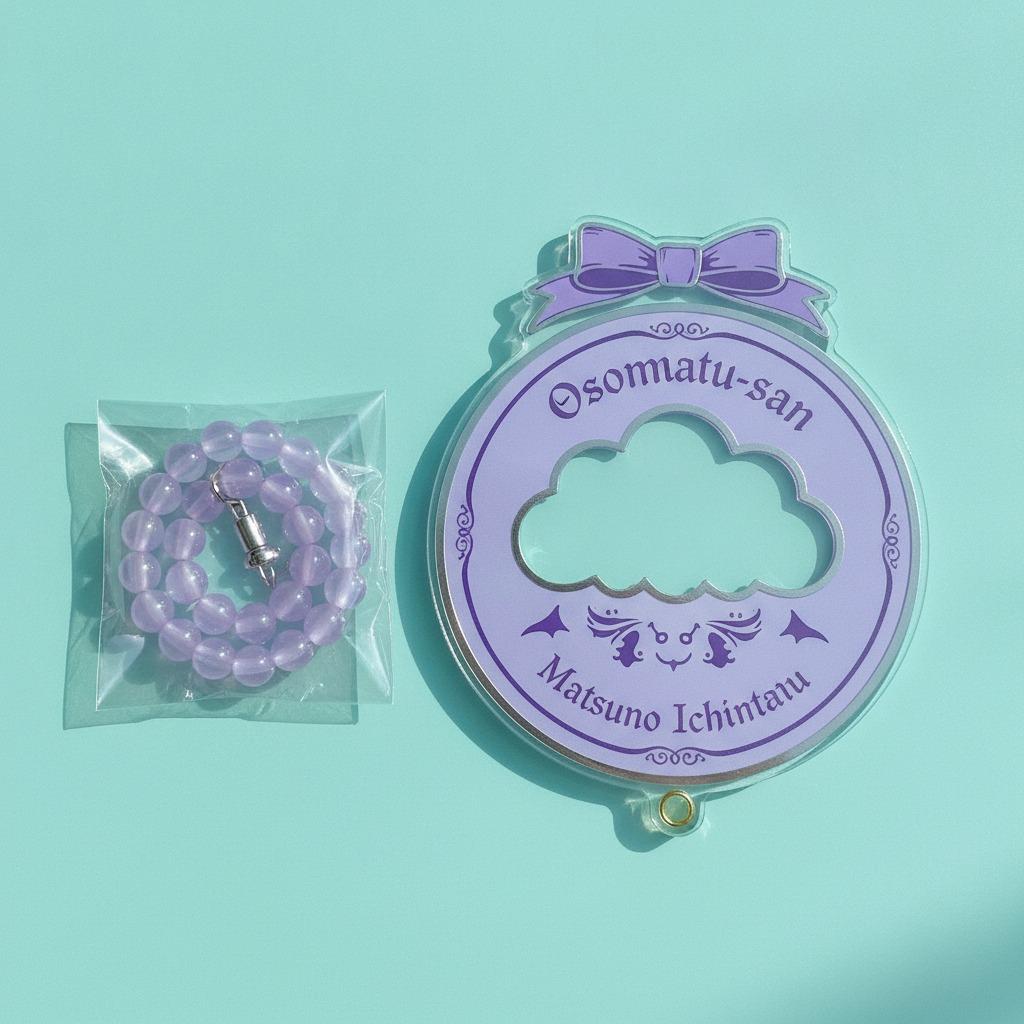
The sample item here appears to be an anime-style acrylic charm or hanger with printed character artwork, visible branding such as OsomatsuSan, Matsuno Ichimatsu, fanfancy+, and a copyright mark. It also includes a purple ball chain in a small plastic bag. That combination tells you a lot about the product class: it is meant to be attached, displayed, and noticed, not just stored in a drawer.
What the Construction Tells You
On the visible sample, the main body appears to be clear molded or die-cut acrylic or plastic with a printed purple insert. The shape is not a plain rectangle or circle. It has a scalloped top, a bow-like detail, a cloud-shaped center opening, and metal eyelets at the top and near the bottom. Those features suggest a decorative accessory with layered assembly, not a one-piece novelty charm.
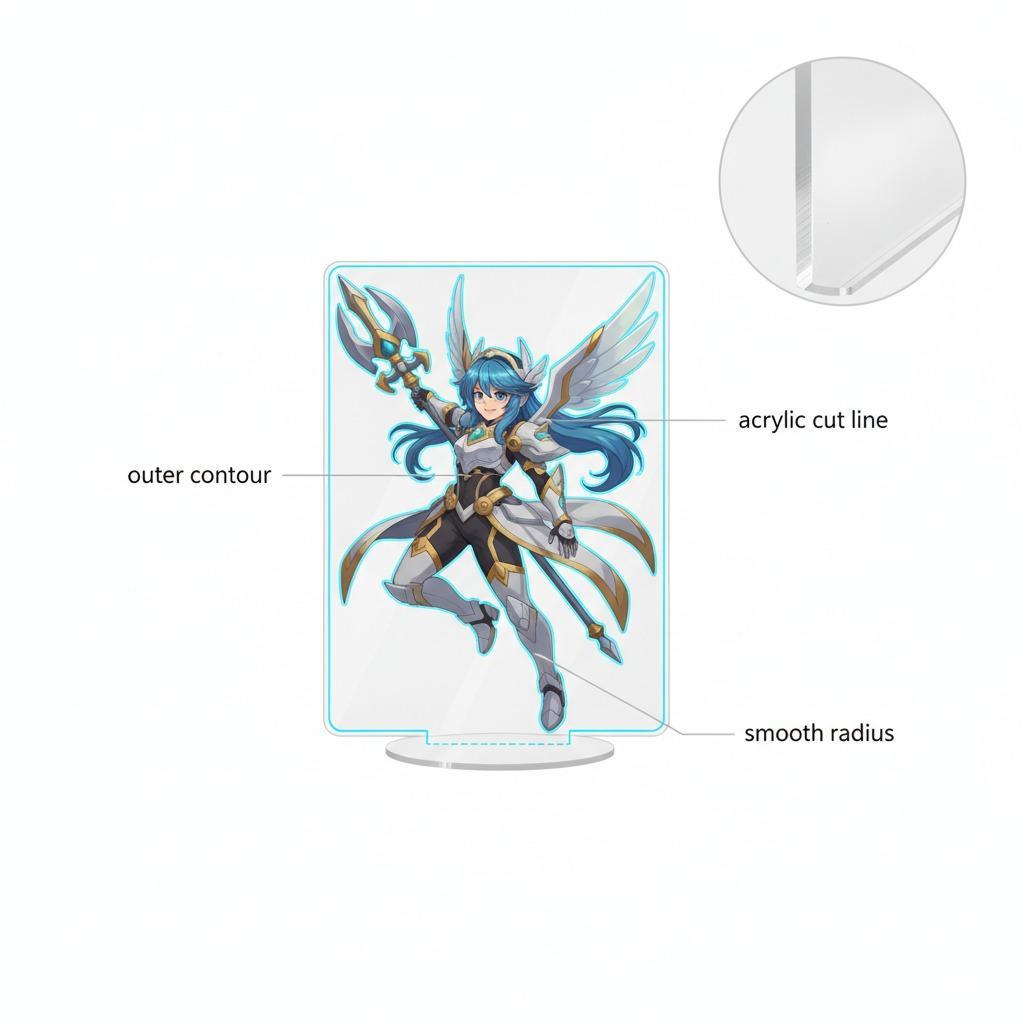
That is useful to a buyer because the shape affects both appearance and durability. Fancy cutouts look attractive, but they can also create thin points that chip if the part is too brittle or the edges are poorly finished. If you are sourcing this kind of item, ask how the acrylic is cut and whether edge polishing or a similar finishing step is part of the process. The artwork can be lovely, but a rough edge will be the first thing users notice once the piece starts moving against keys, zippers, or a bag strap.
Quick Checks for Quality
Inspect the print area
Printed acrylic merchandise should have crisp registration and even color coverage. On a fan item like this, the character art and branding usually do the selling. If the print is misaligned, cloudy, or too close to the edge, the piece may look cheap even if the acrylic itself is sound.
Check the attachment points
The eyelet or grommet is a small detail that often decides whether the item feels premium. If the top ring is loosely set, the charm can twist, rattle, or wear out faster than expected. In this sample, the presence of a second eyelet near the bottom suggests the design may also support a layered or hanging arrangement. That is a nice visual touch, though it does add another spot where alignment matters.
Look at the chain and packaging
The included purple ball chain is a practical clue. It shows the item can be used as a key holder or bag charm, but it also reminds buyers that the accessory hardware is part of the product experience. A chain packed separately is not unusual, yet it does mean the user must assemble it. For retail merchandise, that is fine; for a gift item, it helps to include a simple assembly note.
When This Format Makes Sense
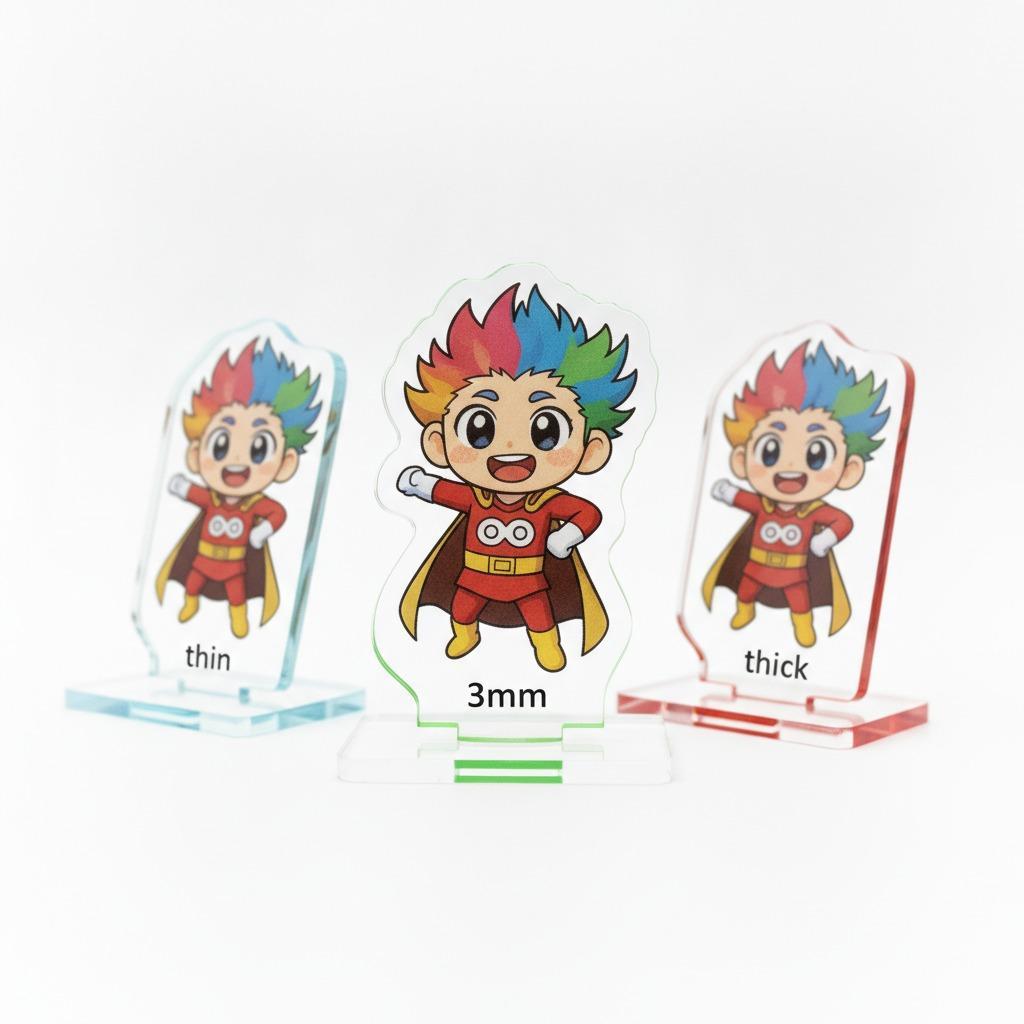
This style of acrylic keychain works well when you want a collectible that is light, colorful, and relatively inexpensive to ship. It is a common format for anime merchandise because the art stays visible from a distance and the overall piece does not add much weight to a bag or set of keys. If the goal is a display item, the clear acrylic and printed insert can look sharp on a desk stand or pinboard as well.
It is less suitable if the customer expects a hard-use tool. Acrylic accessories are decorative first. They can handle ordinary wear, but they are not the right choice for rough industrial handling, heavy tool rings, or situations where the item will be dragged across abrasive surfaces all day.
Buyer Advice for Merch Teams and Retailers
Before ordering a Glitter Acrylic Keychain in volume, confirm a few basics. Ask for the material description, the thickness if available, and the exact attachment hardware. Verify whether the chain is intended for the specific design or only included as a standard accessory. If the artwork includes licensed characters or branding, make sure the supplier can clearly explain the authorization status instead of leaving it vague.
It also helps to request a sample and inspect it under ordinary light, not just studio lighting. Acrylic can look excellent in a product photo and slightly different on a counter or in a gift shop. A small scratch, a cloudy patch, or a loose fitting may not sound serious on paper, but it changes the customer’s first impression quickly.
Common Mistakes to Avoid
One easy mistake is judging the piece only by the artwork. Decorative fan items live or die on finish quality, not concept alone. Another is overlooking packaging. A charm in a loose bag is workable for storage, but a retail-ready presentation usually needs clearer labeling and safer packing to avoid scratches during transit.
Buyers also sometimes assume all acrylic accessories behave the same. They do not. A simple rectangle with one hole is a different manufacturing problem from a shaped charm with multiple eyelets, layered printing, and a ball chain. The more complex the cutout, the more carefully the edges and fittings should be reviewed.
Practical Next Step
If you are evaluating this product class for a shop, fan event, or gift line, start with one sample and treat it like a working part, not just a collectible image. Check the print, the cut edges, the hardware, and the packaging together. That is usually enough to tell whether the item is a tidy little impulse buy or a charm that will disappoint after the first week on a backpack.
For teams planning a larger merch run, the best next step is to compare a few sample builds and decide what matters most: visual impact, durability, or cost control. A well-made Glitter Acrylic Keychain can do all three reasonably well, but only if the construction matches the way customers will actually use it.