
When custom fan products need to look good on a desk, not just in a catalog
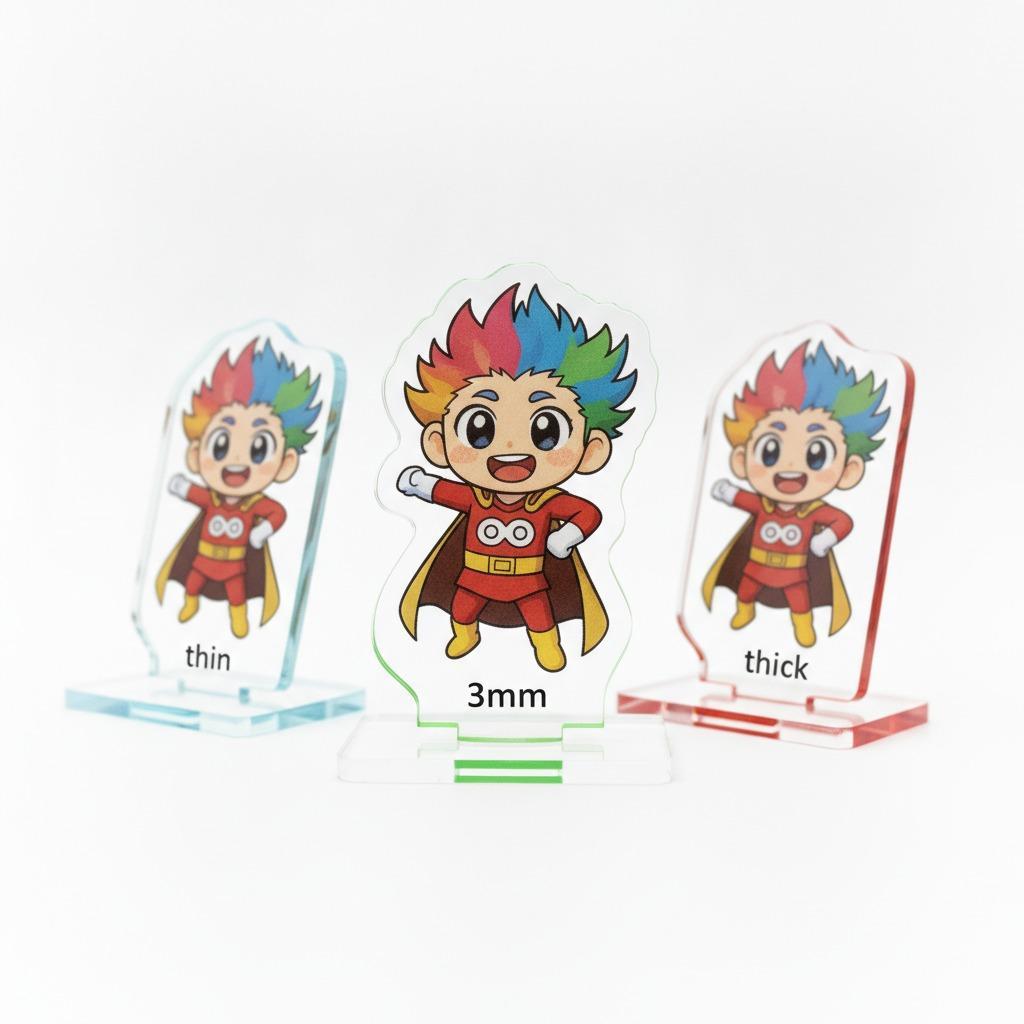
Custom Anime Charms sit in a useful middle ground between flat printed merch and higher-cost figurines. For sourcing teams, that matters. You are not just buying a cute accessory; you are deciding whether a small display item can carry character appeal, survive handling, and still make sense at retail or as an event giveaway. A piece like this—an anime-style character cut to shape, printed in full color, and mounted on a clear base—has a simple job: catch the eye quickly and hold its form on a shelf or desk.
The practical challenge is that small merch is often judged too quickly. If the linework is soft, the cut edge looks rough, or the base is unstable, the item feels cheap even when the artwork is strong. That is why buyers evaluating Custom Anime Charms usually need to think about both the art file and the production method. Good design alone does not solve a weak manufacturing choice.
What this product format is really good at
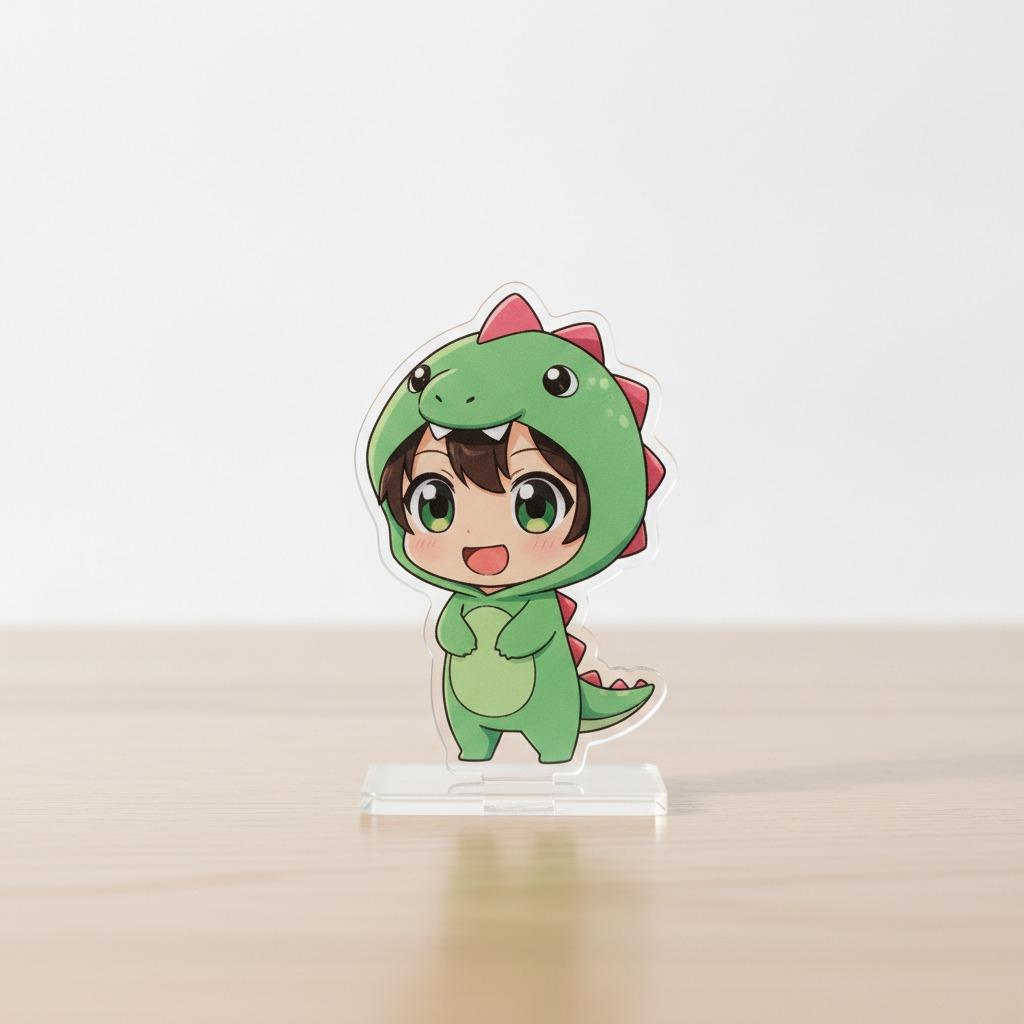
The sample product points to a compact desk/display accessory made from printed acrylic or clear plastic, with a glossy surface and a transparent support base. Visually, it uses a chibi-style character dressed in a dinosaur costume: light green body, pink or red dorsal spikes, a white-framed face opening, and a clean silhouette cut. Those details are not random decoration. They help the piece read clearly at small scale, which is exactly what retail buyers and merch planners want from fan goods.
That clarity is one reason this format works for anime merchandise, game fandom products, souvenir counters, blind-box style assortments, and promotional gifts. It is small enough for impulse purchase, but still has enough surface area for character artwork and brand color. For an Anime Merchandise Factory, that combination usually makes production and packing easier than with fully three-dimensional figures.
Quick buyer takeaways before you approve a design
1. The silhouette matters as much as the print
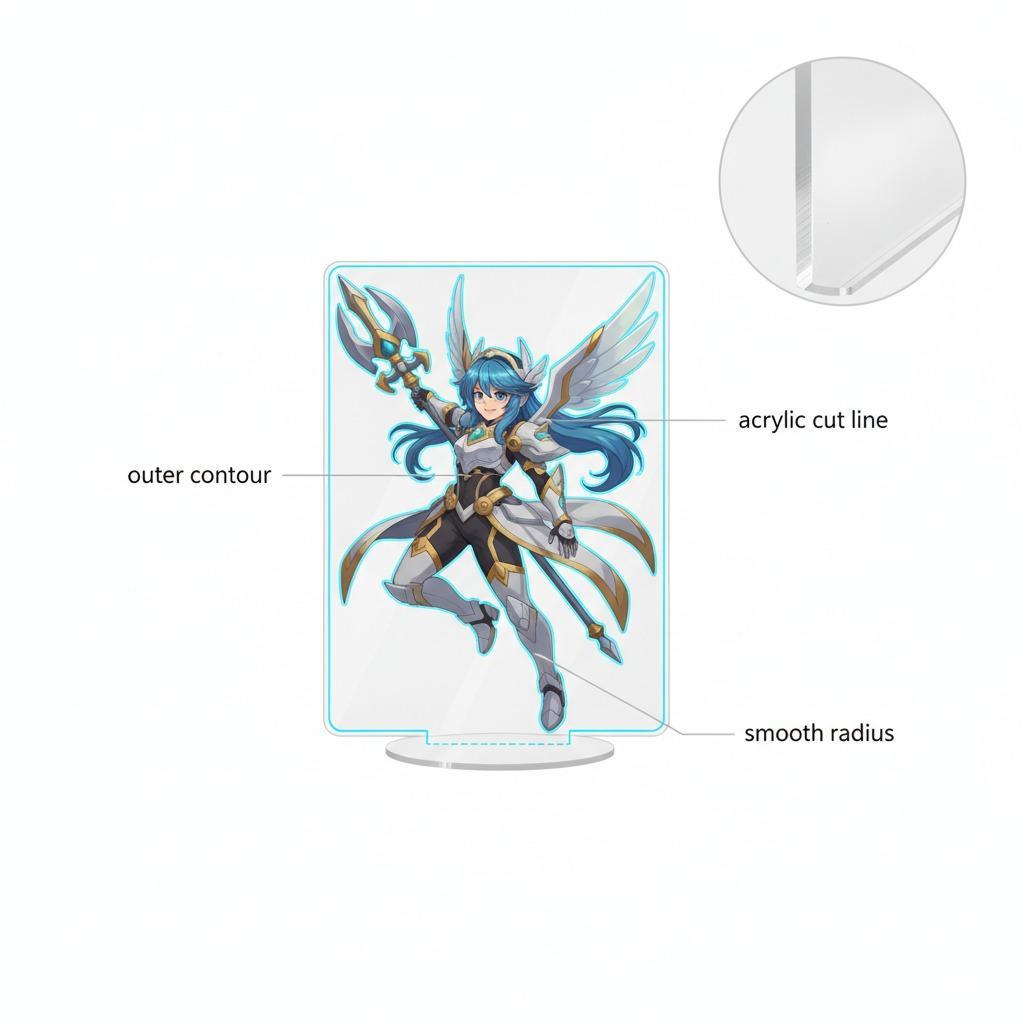
If the outline follows the character shape cleanly, the item looks intentional. If the contour is awkward, the whole product feels off. Cut-to-shape pieces depend on a tidy edge because the edge itself becomes part of the design.
2. Base stability is not a small detail
A clear stand or slot-in base is doing real work here. For desk display items, a wobble is enough to annoy customers. Even if the item is tiny, it still needs to stand without leaning, especially in retail packaging where buyers often judge it before opening.
3. Artwork resolution is the first quality test
Full-color printed characters look simple, but the source art needs to survive reduction. Fine facial details, costume textures, and edge outlines can muddy fast. That is especially true when the design includes layered color zones like teeth, hood trim, spikes, and border lines.
Likely production route and why it is popular
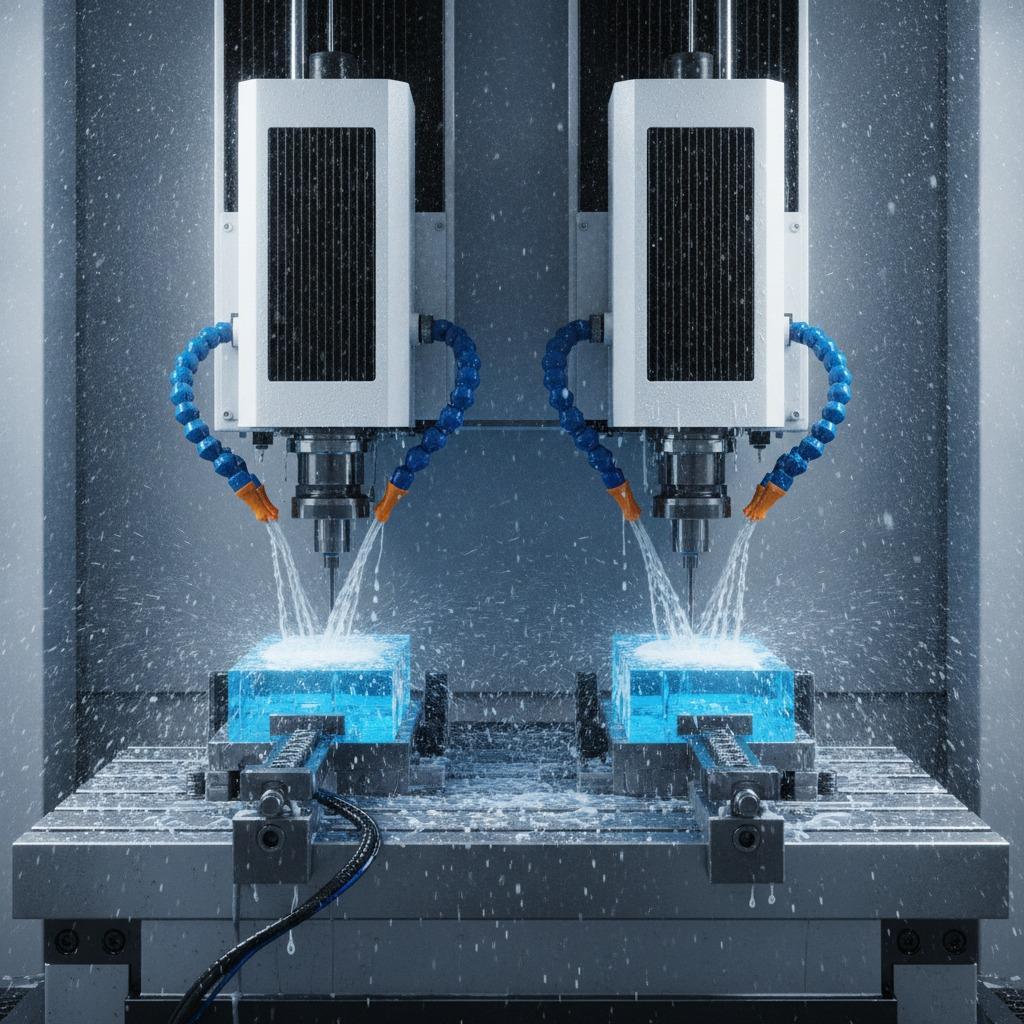
The visible build suggests UV printing or a laminated print applied to laser-cut or CNC-cut acrylic or plastic. That is an inference, not a confirmed process, but it is a common route for this type of merchandise. It allows the factory to place rich color on a flat surface, then cut the part to a character silhouette and pair it with a transparent base.
For buyers, the attraction is predictable output. Compared with molded figures, these pieces generally involve less tooling complexity. Compared with stickers or pins, they offer more presence on a desk. That middle position is why they show up so often in seasonal campaigns, artist collaborations, convention sales, and retail souvenir programs.
Common mistakes that cause trouble later
The first mistake is treating the product like a poster. A design that looks fine on screen may fail once reduced to a small freestanding piece. Thin lines vanish, and expressions become vague. The second mistake is ignoring the transparent border or edge treatment. If the cut edge is rough or visually noisy, the piece loses the clean collectible look that buyers expect.
Another practical caution: do not assume every anime merch buyer wants the same finish. Glossy surfaces are often attractive because they make color feel lively, but glare can interfere with facial details under store lighting. That is worth checking with physical samples, not just renderings.
How to decide whether this format fits your product line
If you need low-volume fandom merchandise, tabletop display items, or event-ready giveaway stock, Custom Anime Charms can be a sensible option. They are especially useful when the character art is the main selling point and the form factor must stay compact. If you are trying to sell a premium collectible with deep sculptural detail, though, this is probably the wrong format. It is a graphic product first, not a miniature statue.
When talking with an Anime Merchandise Factory, ask for proof of the exact cut profile, base fit, and print registration. Also ask how the artwork will be prepared for silhouette cutting. Those details sound minor until a production run arrives with mismatched edges or unstable stands. A buyer who checks them early usually saves time later.
FAQ for sourcing teams
Is this product only for anime brands?
No. The format fits game characters, mascots, event art, and souvenir programs as well. Anime-style characters are simply the most obvious use case.
Can it be used as a retail gift item?
Yes, as long as the design, packaging, and perceived value match the channel. It works best where small collectible display goods already sell.
What should I verify before placing an order?
Confirm the material, print method, cut quality, base structure, and whether the final product matches the approved silhouette. Those are the details that affect customer satisfaction more than most buyers expect.
A practical next step
If you are evaluating Custom Anime Charms for retail, fandom, or promotional use, start with a sample and inspect it under real lighting. Look at the edge, the stand, and the color separation on the character face. If those three elements hold up, the format is usually doing its job. From there, the rest is a matter of artwork choice and channel fit.