
Why custom acrylic hair clips keep showing up in accessory buying plans
Custom acrylic hair clips sit in an interesting corner of the accessories market: small enough to be impulse-friendly, but visible enough to carry a brand, a character, or a seasonal theme. For sourcing managers and product teams, that combination matters. A clip like this is not just a functional fastener; it is a display piece, a giftable item, and often a low-risk way to test a style direction before committing to a wider range.
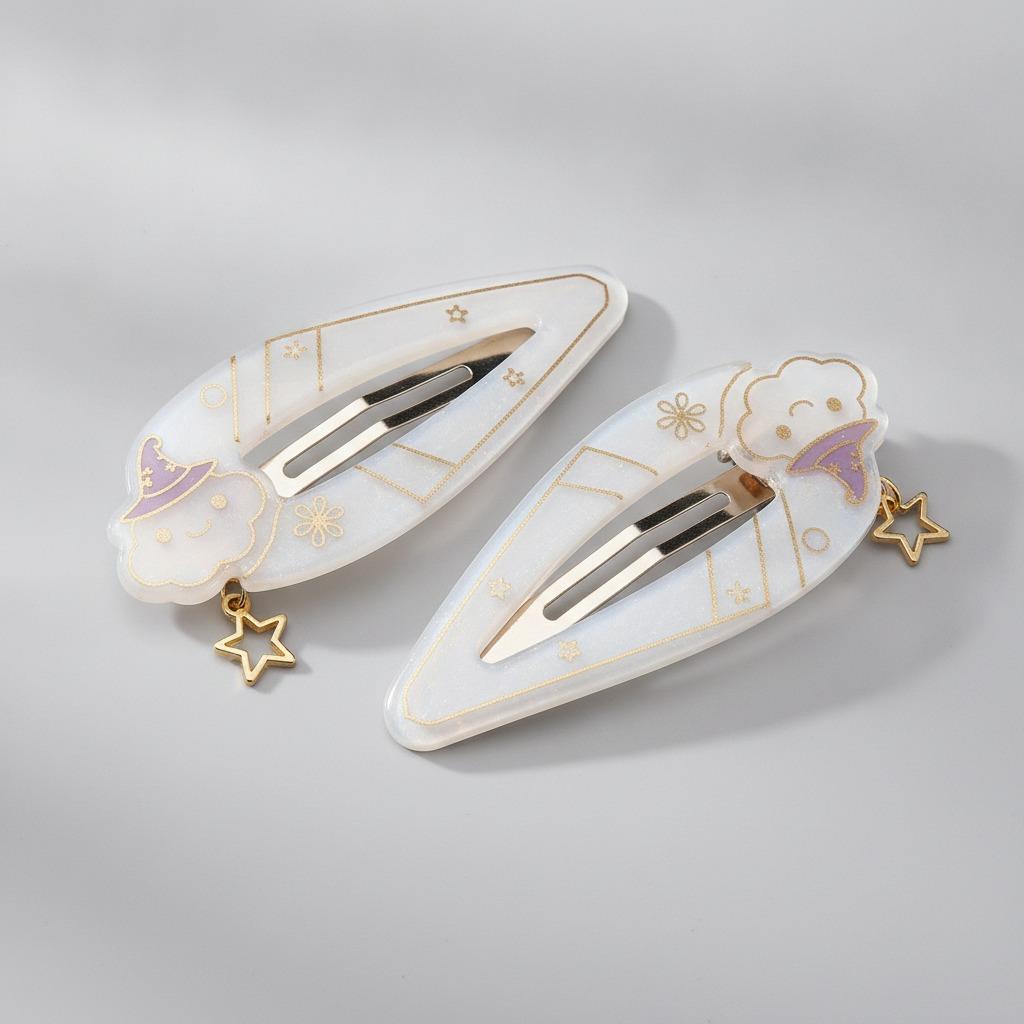
The product described here has the kind of visual language that sells on first glance: a translucent milky-white body with an opalescent sheen, gold-tone metal accents, a crescent-like open frame, and a playful character motif at one end. There is also a small star charm attached by a ring, which adds motion and a little bit of shine without making the piece feel overloaded. That balance is useful in retail. Too plain, and it disappears. Too busy, and it looks cost-cut. This one sits somewhere in the middle.
For buyers, the real question is not whether it looks charming. It is whether the design can be repeated cleanly, priced into the assortment, and used across different channels without looking off-trend six weeks later.
What this type of clip is doing from a product standpoint
The visible structure suggests a decorative hair accessory with a dual job: it secures hair and it acts as an ornament. The large curved frame gives it presence, while the metal retaining element provides the actual hold. That matters because some novelty clips look attractive but fail in day-to-day use. When the decorative shell and the clip hardware are not well matched, the product can twist, pinch, or simply feel flimsy in hand.
From a merchandising perspective, the open-frame geometry also creates visual space. That space gives the design room to breathe, especially if the surface decoration is already busy. In this case, the line-art style gold decoration and star motifs are strong enough to read from a short distance, but not so dense that the shape disappears.
Material and finish cues buyers should notice
Based on the supplied product information, the main body appears to be molded plastic or resin with a translucent, slightly milky finish and an iridescent effect. That finish is a major part of the item’s appeal. It gives the clip a soft, luminous quality that can catch store lighting well, especially in gift shops or boutique displays where small accessories need to work hard for attention.
The gold-tone details change the feel of the piece. They push it away from a purely childish novelty and toward something that can sit comfortably in themed fashion assortments. The character-shaped top element, which resembles a cartoon face or cloud motif with a hat, makes the design feel more collectible than generic. That can be valuable in OEM anime merchandise programs or other character-driven lines, provided the artwork and approvals are handled carefully.
A practical caution: translucent surfaces show molding quality and print alignment more clearly than opaque ones. Buyers should ask for close-up samples, not just catalog renders, because small flaws tend to stand out in this kind of finish.
Where custom acrylic hair clips fit in the market
These accessories are a strong fit for themed outfits, youth-focused assortments, novelty gift retail, stationery-and-gift shops, and seasonal promotions. They also work well in bundles. A single clip can be a small add-on item, but a coordinated set can support better perceived value without a dramatic jump in material complexity.
That said, not every channel wants the same thing. A boutique buyer may favor a more artful silhouette and softer color palette. A mass-market program may want clearer character recognition and durable hardware. An anime acrylic hair clip concept, for example, usually succeeds when the design language is unmistakable but not overpacked with print. The piece has to read quickly in a blister pack, on a peg wall, or in an online thumbnail.
What to ask an acrylic barrette manufacturer before approving a run
If you are working with an acrylic barrette manufacturer, ask how the body is formed, how the printed or foil details are applied, and how the metal parts are assembled. The supplied description suggests a molded main body with surface decoration and attached metal hardware, but the exact process is not confirmed. That uncertainty is normal at the early sourcing stage. Still, it is worth pinning down before samples go too far.
Buyers should also confirm the clip’s grip feel, the finish consistency, and whether the charm attachment sits securely without rattling. The visible gold ring on the star charm is a small detail, but small details are where quality often slips. If you are developing custom hair accessories for retail, those little issues can shape return rates and customer reviews more than the big design idea does.
Common mistakes in novelty hair accessory sourcing
One mistake is treating decoration as a substitute for function. A decorative clip that slips out of hair will not survive long in the market, no matter how nice the artwork looks. Another is over-specifying a concept before the first sample proves the shape. Curved frames, charms, and layered surface details can all be adjusted, but only if the buyer leaves room for practical refinements.
Another trap: assuming a translucent finish will hide internal hardware. It will not. If the metal element is crooked or the assembly line leaves a visible mark, the eye goes straight to it. This is especially true for clear or milky finishes with a sheen.
Buyer takeaway
For teams evaluating custom acrylic hair clips, the decision is less about whether the style is attractive and more about whether the design can be manufactured consistently, merchandised clearly, and sold into the right audience. This particular style suggests strong shelf appeal, gift potential, and enough personality to support themed collections.
If you are planning a new accessory line, start with sample validation: review the mold lines, the gold detailing, the clip action, and the overall visual balance. Then test whether the design works as a standalone impulse item or as part of a larger character assortment. That choice will shape the pricing, packaging, and channel strategy far more than the artwork alone.
Next step for product teams
Bring a sample image, define the target channel, and ask your supplier to quote the decoration and hardware options separately. That keeps the conversation grounded and makes it easier to compare versions without guessing at what is driving the cost or the look.